Easy Pasta Primavera
Pasta primavera is pasta tossed with a colorful mix of spring vegetables in a light garlic, lemon and Parmesan cream sauce. It is fresh, bright and easy, and it uses whatever tender vegetables are in season.
- 35 minTotal time
- 4Servings
- 520kcal / serving
- 19 gProtein
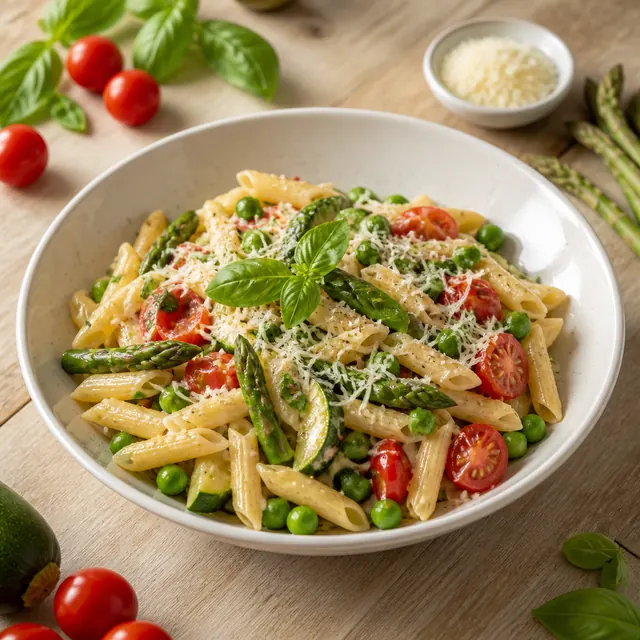

Each vegetable gets just enough time to turn tender-crisp, so everything keeps its color and bite.
The science: why this works
- Adding asparagus and peas to the pasta water for the last 2 minutes cooks them quickly and keeps them bright green.
- Browning the zucchini and carrot in a hot pan adds sweetness that boiling cannot.
- Starting the garlic in the butter and oil over moderate heat flavors the fat without scorching.
- A small amount of cream plus starchy pasta water makes a light sauce that clings without feeling heavy.
- Lemon added at the end brightens the sauce and wakes up the vegetables.
Why green vegetables stay green
Quick cooking keeps chlorophyll bright. Long heating makes vegetable acids break it down into a dull olive color. Dropping asparagus and peas into the boiling water for just 2 minutes tenderizes them while keeping their vibrant green.
Learn: Keeping greens bright →Acid at the end
Adding lemon juice off the heat preserves its fresh aroma, which cooking would drive off. Acid also balances the richness of the cream and cheese, so the dish tastes lighter and each flavor stands out more clearly.
Learn: Add acid at the end →Easy Pasta Primavera
35 min · 4 servings · Italian · Main course
Ingredients
Makes 4 servings
- 340 gpenne or farfalle
- 2 tbspolive oil
- 1 bunchasparagus (about 300 g), cut into 2-inch pieces
- 1zucchini, sliced into half-moons
- 1carrot, thinly sliced
- 240 mlfrozen peas
- 240 mlcherry tomatoes, halved
- 4 clovesgarlic, thinly sliced
- 2 tbspbutter
- 120 mlheavy cream or half-and-half
- 120 mlgrated Parmesan
- 1lemon, zest and juice
- 60 mlfresh basil, torn
- Salt and black pepper
Method

Tips for the best result
- Cut the vegetables to similar sizes so they finish cooking together.
- Stir in the lemon and basil off the heat so their flavor stays fresh.
- Use whatever vegetables look best at the market, such as broccolini, snap peas or green beans.
Mistakes to avoid
- Overcooking the vegetables, which turns them dull and mushy, so keep them tender-crisp.
- Adding all the vegetables to the pan at once, which makes them steam, so add them in stages.
- Forgetting to save pasta water, which leaves the sauce thin and watery, so scoop some before draining.
Variations and swaps
- Make it vegan with olive oil, a splash of oat milk and nutritional yeast instead of butter, cream and Parmesan.
- Add 300 g of sliced grilled chicken or shrimp for extra protein.
- Stir in a spoonful of pesto at the end for a herby twist.
- Swap heavy cream for 1/2 cup of ricotta thinned with pasta water for a lighter sauce.
- Swap asparagus for broccoli florets, adding them to the pasta water at the same time.
- Swap penne for linguine or fettuccine for a more traditional shape.
Storing and reheating
Refrigerate leftovers within 2 hours and eat within 3 days. Reheat in a skillet with a splash of water until hot throughout, at 165°F (74°C).
Easy Pasta Primavera: questions
What vegetables go in pasta primavera?
Classic primavera uses asparagus, peas, zucchini, carrots and tomatoes. You can also use broccoli, bell peppers, snap peas or spinach, depending on the season.
Is pasta primavera sauce creamy?
It can be either. Traditional versions are light and oil-based, while many American versions use cream. This recipe uses a small amount of cream and pasta water for a light, silky sauce.
Can I make pasta primavera without cream?
Yes. Use extra olive oil and a bit more pasta water, then add Parmesan for body. The sauce will be lighter but still flavorful.
Can I use frozen vegetables in pasta primavera?
Yes, frozen peas, broccoli and green beans work well and need no thawing. Add them to the pasta water for the last 2 minutes. Fresh is best for zucchini and asparagus.
Does pasta primavera reheat well?
It reheats reasonably well in a skillet with a little water. The vegetables will be softer, so it is best fresh. Add a squeeze of lemon after reheating to brighten it.