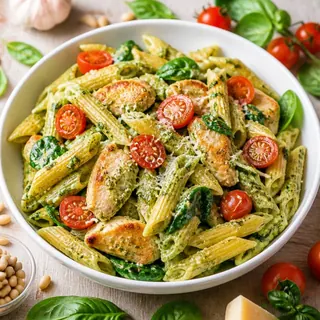
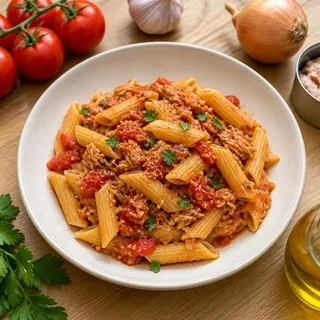
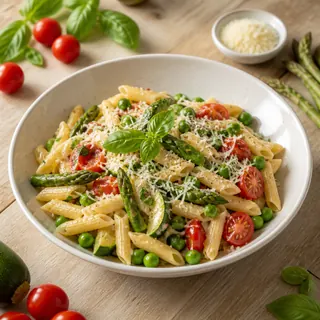
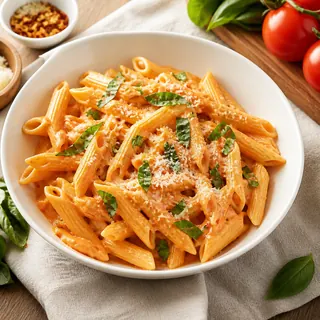
Fresh Basil Pesto Pasta
Pesto pasta is pasta tossed with a fresh sauce of basil, pine nuts, garlic, Parmesan and olive oil. It is bright, herby and rich, and a jar of homemade pesto beats any store-bought version.
- 27 minTotal time
- 4Servings
- 640kcal / serving
- 17 gProtein
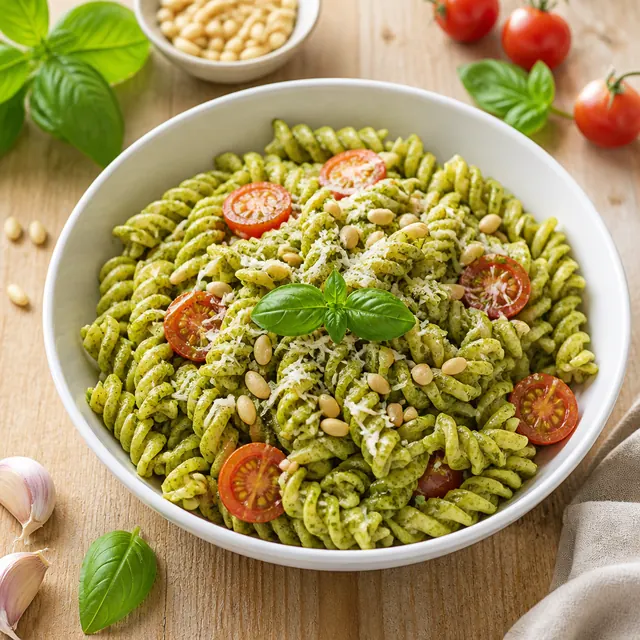

A quick blanch keeps the basil bright green, and a splash of pasta water turns the thick paste into a silky sauce.
The science: why this works
- Toasting the pine nuts brings out their sweetness and gives the pesto a deeper, nuttier flavor.
- Blanching the basil for 10 seconds stops the enzymes that turn it brown and keeps the sauce bright green.
- Pulsing the ingredients first, then adding oil slowly, creates a smooth, blended sauce.
- A splash of lemon juice lifts the flavor and slows browning.
- Tossing the pasta off the heat with starchy water keeps the pesto from turning oily or dark.
Why pesto turns brown
Cut basil contains an enzyme that reacts with oxygen and turns the leaves brown. A quick blanch deactivates the enzyme, and a little lemon juice slows what is left. A layer of oil on top also blocks air when you store pesto.
Learn: Store fresh herbs →Heat dulls fresh herbs
Basil gets its aroma from delicate volatile compounds that fade with heat. Tossing the pesto with pasta off the heat, using only a little pasta water to loosen it, protects that flavor and keeps the sauce fresh-tasting.
Learn: Fresh vs. dried herbs →Fresh Basil Pesto Pasta
27 min · 4 servings · Italian · Main course
Ingredients
Makes 4 servings
Method

Tips for the best result
- Reserve a cup of pasta water before draining because pesto is very thick.
- Pack the basil lightly when measuring, since a firmly packed cup holds much more.
- Cover leftover pesto with a thin layer of olive oil before storing.
Mistakes to avoid
- Cooking the pesto in a hot pan, which turns it dark and dull, so toss it with the pasta off the heat.
- Skipping the pasta water, which leaves the sauce thick and clumpy, so thin it with a few spoonfuls.
- Using too much garlic, which can overwhelm the basil, so start with two cloves.
Variations and swaps
- Swap pine nuts for walnuts or almonds to make it more affordable.
- Stir in a few spoonfuls of ricotta for a creamy pesto pasta.
- Add grilled chicken or shrimp and a handful of baby spinach.
- Swap basil for half basil and half baby spinach to stretch the pesto and keep it green.
- Swap Parmesan for Pecorino Romano for a sharper, saltier pesto.
- Swap pine nuts for sunflower seeds if you need a nut-free pesto.
Storing and reheating
Refrigerate leftover pasta within 2 hours and eat within 3 days. Pesto alone keeps 5 days in the fridge under a layer of olive oil, or freezes for 3 months in an ice cube tray.
Fresh Basil Pesto Pasta: questions
How do I keep pesto from turning brown?
Blanch the basil for 10 seconds, shock it in ice water and squeeze it dry before blending. Add a little lemon juice, and cover stored pesto with a thin layer of olive oil.
Do I cook pesto before adding it to pasta?
No, pesto is a raw sauce. Toss it with hot pasta off the heat, thinned with some pasta water, so the basil stays fresh and bright.
Can I make pesto without pine nuts?
Yes. Walnuts, almonds, cashews or sunflower seeds all work, and each gives a slightly different flavor. Toast them lightly first for the best taste.
Can I freeze pesto?
Yes. Freeze pesto in an ice cube tray, then move the cubes to a bag for up to 3 months. Thaw a cube or two in the fridge or stir it into hot pasta.
Why is my pesto bitter?
Bitterness can come from over-processing the basil, or from using a strong, grassy olive oil. Pulse briefly, use a mild extra-virgin olive oil, and add a pinch of salt or more cheese.