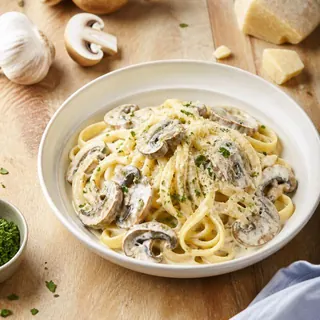
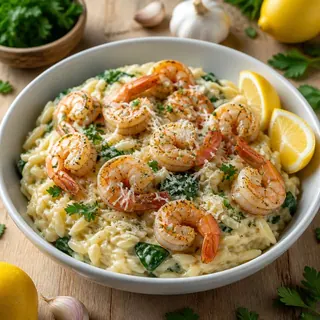
Lemon butter spinach pasta
Butter is already a sauce in disguise. It's a natural blend of fat and water, and as long as it stays fairly cool it melts into something creamy instead of oily. This lemon butter spinach pasta is built around that idea: low heat, a little starchy water and finely grated parmesan turn just four main ingredients into a silky coating.
- 20 minTotal time
- 2Servings
- 560kcal / serving
- 20 gProtein
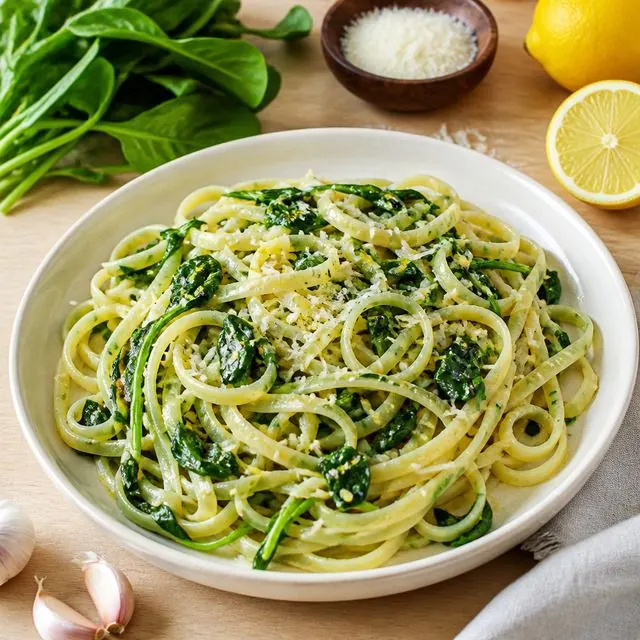

It's a 20-minute vegetarian dinner for two, made in one pot. Lemon zest and juice each bring something different, the spinach wilts in the same pot, and the whole thing goes from stove to bowl in seconds.
The science: why this works
- Butter is about 80% fat and 16% water held together as an emulsion. Melted gently into a little hot liquid and kept warm rather than hot, below roughly 60°C (140°F), it stays creamy; much hotter and the fat breaks away from the water and turns greasy.
- Parmesan proteins clump into strings when they get too hot. Adding finely grated cheese to a low-heat pot with liquid lets it melt smoothly into the coating.
- Zest and juice do different jobs. The yellow zest holds limonene and other aromatic oils, the 'lemony' smell, while the juice brings citric acid, the sour taste. The white pith underneath carries bitter compounds, so it stays out.
- Acid slowly dulls spinach. Lemon juice pulls the magnesium out of chlorophyll, and the leaves fade from bright green to olive the longer they sit in the sauce, which is one more reason to eat this straight away.
- Spinach is mostly water held inside its cells. Heat bursts the cell walls, so two big handfuls shrink to a few tender forkfuls in about a minute.
Why you save the pasta water
Pasta water is salty and full of starch. A splash helps the butter and lemon juice blend into a smooth, glossy sauce that clings to the noodles. Without it, the sauce can look greasy and separated.
Learn: How emulsions work →Why garlic stays soft, not brown
Garlic cooked in butter over low heat for a minute turns sweet and mild. If it browns, it turns bitter and overpowers the lemon. Low heat and a short time keep it gentle.
Learn: Start garlic in cold oil →Why the lemon goes in at the end
Heat dulls fresh lemon flavor. Adding the juice at the end keeps it bright and sharp. The acid also balances the rich butter and parmesan.
Learn: Add acid at the end →Lemon butter spinach pasta
20 minutes · 2 servings · Italian · Dinner
Ingredients
Makes 2 servings
Method

Tips for the best result
- Zest the lemon before you juice it and stir in the zest too, for a stronger lemon aroma.
- Zest only the yellow layer. Once you see white, turn the lemon.
- Add the saved water a splash at a time and stop as soon as the sauce coats the pasta and looks shiny.
- Use baby spinach if you can. It's tender, needs no chopping and wilts fast.
- Serve in warm bowls. Butter sauces thicken and dull as they cool.
- Chef Fizz's rule: if it looks greasy, add water; if it looks watery, add cheese and keep stirring.
Mistakes to avoid
- Adding parmesan over high heat — it seizes into rubbery clumps. Keep the pot on low or off the heat.
- Grating into the white pith — the sauce tastes bitter. Zest only the thin yellow skin.
- Squeezing lemon seeds into the pot — you get bitter, crunchy bits. Squeeze through your fingers or a small sieve.
- Letting the finished pasta sit in the pot — the butter sets and the sauce turns pasty. Plate it within a couple of minutes.
Variations and swaps
- Swap the spinach for arugula, stirred in off the heat so it just softens.
- Add a pinch of chili flakes with the garlic for gentle heat.
- Top with toasted pine nuts or breadcrumbs for crunch.
- Add a handful of frozen peas to the pasta water for the last 2 minutes.
- Use a vegetarian hard cheese instead of parmesan if you avoid animal rennet.
- Swap spinach for baby kale, cooked 2 minutes longer.
Storing and reheating
This one is best eaten straight away. If you have leftovers, refrigerate them within 2 hours in a sealed container at 4°C (40°F) or below for 3–4 days; expect the spinach to darken overnight from the lemon's acid. The butter sets solid when cold, so reheat over low heat with 2 to 3 tablespoons of water, stirring constantly so the sauce re-forms rather than splitting, until steaming hot, 74°C (165°F). Fresh lemon zest on top revives the aroma. Freezing isn't recommended: the sauce splits and the spinach turns slimy.
Lemon butter spinach pasta: questions
Can I use frozen spinach?
Yes. Thaw it, squeeze out as much water as you can, and use about 150 g in place of the fresh spinach.
Why is my parmesan clumping?
The pot was too hot or the cheese was grated too coarsely. Grate it finely and add it over low heat with a splash of pasta water.
Why does my lemon pasta taste bitter?
Usually pith got into the zest, seeds slipped in, or the garlic browned. Zest only the yellow skin, strain the juice and keep the garlic pale.
How many lemons do I need?
One lemon's juice, about 2 to 3 tablespoons, plus its zest suits 200 g of pasta. Add it gradually and taste, since lemons vary a lot in size and sourness.
Is lemon butter spinach pasta vegetarian?
It contains no meat, but traditional parmesan uses animal rennet. Pick a vegetarian hard cheese if you need it strictly vegetarian.
Can I make lemon butter pasta ahead?
It's best fresh. Leftovers keep 3–4 days in the fridge; reheat gently with a little water to loosen the sauce.
How do you make a lemon butter sauce that does not separate?
Use a splash of starchy pasta water and keep the heat low. Stir the sauce with the pasta so the starch helps the butter and lemon blend. Add the lemon off the heat.
Can I use bottled lemon juice?
Fresh lemon tastes brighter and cleaner. Bottled juice works in a pinch but can taste flat. Use fresh if you can.
How much spinach should I use?
A big bunch looks like a lot but wilts down to very little. About 5 ounces (140 g) works for two servings. Add more if you like it leafy.
Can I add protein to this pasta?
Yes, shrimp, grilled chicken or white beans all work well. Cook shrimp until pink and chicken to 165°F (74°C). Stir them in at the end.