One-pot tomato zucchini pasta
This recipe is really a bit of kitchen arithmetic. A can of chopped tomatoes plus 500 ml of water is about what 200 g of dry pasta can absorb, with the rest steaming away during a 12-minute uncovered simmer. Get that balance right and the pasta turns tender at the same moment the liquid becomes a glossy, garlicky tomato sauce.
- 25 minTotal time
- 2Servings
- 540kcal / serving
- 20 gProtein
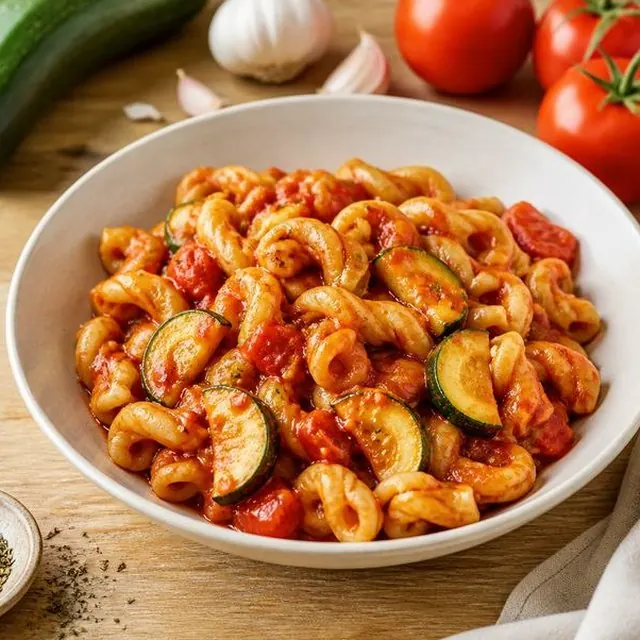

Zucchini gets a 3-minute head start in olive oil so it softens without turning watery, and dried oregano survives the long simmer far better than a fresh herb would. It is a cheap, meat-free dinner that suits students, tiny kitchens and anyone who hates washing a colander.
The science: why this works
- Tomatoes are acidic, and acid slows how quickly pasta softens. That is one reason the simmer runs a full 12 minutes, often a little longer than the packet time, and why you should judge doneness by biting a piece.
- Zucchini is about 95% water. Three minutes in oil before the liquid goes in drives off some of that surface moisture and starts to soften the flesh, so it does not dump extra water into the sauce late and thin it.
- Dried oregano is used instead of a fresh herb because its main aroma compounds, carvacrol and thymol, are sturdy. They survive a 12-minute boil and rehydrate in the liquid, while fresh basil would lose most of its scent.
- Only half a teaspoon of salt goes in because the liquid shrinks as it simmers, concentrating whatever salt is there, and the parmesan adds more at the table. The pasta absorbs the seasoned liquid, so it is salted all the way through.
- The parmesan goes on at the table, not into the pot. Scattered over the hot pasta it softens from residual heat, and nobody's portion gets stuck with a clump of cheese.
Why the sauce gets thick by itself
As the pasta cooks in the liquid, it releases starch. That starch thickens the sauce into a silky coating. This is why you do not need cream or extra thickener.
Learn: How starch thickens sauce →Why you stir often
Pasta cooked in a small amount of liquid can stick to the bottom of the pot. Stirring moves it around and spreads the starch evenly. It also helps the pasta cook at the same rate.
Learn: Boil vs. simmer →Why the pasta rests off the heat
Resting for 2 minutes lets the pasta finish absorbing the liquid. The sauce thickens a bit more as it cools slightly. Skipping the rest leaves it too loose.
Learn: Carryover cooking →One-pot tomato zucchini pasta
25 minutes · 2 servings · Italian · Dinner
Ingredients
Makes 2 servings
Method

Tips for the best result
- Bring the liquid to a full rolling boil before the pasta goes in. Pasta dropped into lukewarm liquid turns gummy on the outside.
- Dice the zucchini into roughly 1.5 cm cubes. Smaller pieces dissolve during the simmer; larger ones stay crunchy.
- Keep a kettle of hot water nearby. If the pot looks dry before the pasta is tender, add 50 ml at a time. Cold water stalls the simmer.
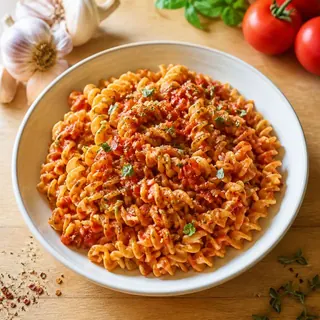
- Pick ridged penne rigate or fusilli. The grooves trap more of the thick tomato sauce than smooth shapes do.
- Finish each bowl with a thin drizzle of your best olive oil for a fruity, glossy finish.
- Grate the parmesan just before serving so it melts on the hot pasta instead of drying out on the board.
Mistakes to avoid
- Putting a lid on during the simmer — steam cannot escape and you end up with soup. Leave the pot uncovered the whole time.
- Using angel hair or thin spaghetti — it turns soft long before the sauce reduces. Choose a shape with a 10–12 minute packet time.
- Adding more salt at the start — the liquid reduces and the parmesan is salty too. Stick to the half teaspoon and adjust after the rest.
- Browning the garlic dark before the liquid goes in — it turns bitter, and no amount of simmering fixes it. Keep the heat at medium and add the tomatoes as soon as the zucchini starts to soften.
Variations and swaps
- Add a pinch of chilli flakes with the garlic for an arrabbiata-style kick.
- Stir in a drained can of white beans with the pasta for extra protein and a creamier sauce.
- Swap the zucchini for diced eggplant, giving it 5 minutes in the oil first since it soaks up more fat.
- Swirl a spoonful of ricotta or basil pesto into each bowl.
- Make it vegan by skipping the parmesan and finishing with toasted breadcrumbs and extra olive oil.
- Swap zucchini for spinach or bell pepper for a different vegetable.
Storing and reheating
Refrigerate leftovers within 2 hours (1 hour if the room is above 32°C/90°F) in a covered container at 4°C (40°F) or below, and eat within 3–4 days. As it chills, the starch firms and the pasta sets into a solid block. Break it up in a pan with 3–4 tbsp water per portion, cover for 2 minutes, then stir until piping hot, 74°C (165°F). Or turn leftovers into a pasta bake: tip them into a dish, top with extra cheese and bake at 200°C (400°F) for about 15 minutes until bubbling. It freezes for 2–3 months at −18°C (0°F), though the pasta softens. Thaw it in the fridge first.
One-pot tomato zucchini pasta: questions
Why is the sauce still watery after 12 minutes?
The simmer was probably too gentle, or the pot was narrow and tall so less liquid could evaporate. Keep cooking uncovered at a lively bubble for a few more minutes, then let it rest off the heat.
Can I use fresh tomatoes instead of canned?
Yes. Use about 400 g of chopped ripe tomatoes and add an extra 50 ml of water, because fresh tomatoes release their juice more slowly than canned ones.
Can I make it with gluten-free noodles?
Yes, but start tasting a few minutes early. Gluten-free pasta often cooks faster and releases more starch, so you may need an extra splash of water to keep it saucy.
Can I double the recipe?
Yes, in a wider pan. Double the pasta and tomatoes but start with about 850 ml of water instead of 1 litre, because a fuller pan loses proportionally less to evaporation, then add more if it gets thick.
Why did my zucchini go mushy?
It was cut too small or cooked too long before the liquid went in. Keep the cubes about 1.5 cm and give them only the 3 minutes in the oil.
Which cheese keeps it vegetarian?
Look for a hard Italian-style cheese labelled vegetarian, since traditional Parmigiano-Reggiano is made with animal rennet. Grana-style cheeses made with microbial rennet taste very similar.
Does one-pot pasta really work?
Yes, the pasta cooks in the sauce liquid and releases starch that thickens it. You need enough liquid and regular stirring. It tastes rich and uses one pot.
How do I stop one-pot pasta from sticking?
Use a wide pot, stir often and keep the pasta under the liquid. Medium heat at a steady simmer helps. Scrape the bottom as you stir.
Can I use any pasta?
Short shapes like penne, fusilli or rigatoni work best. Check the time on the packet and adjust. Thin pasta cooks faster.
What if the sauce is too thick or too thin?
If too thick, stir in a splash of hot water. If too thin, simmer a minute more or rest it longer off the heat. It thickens as it sits.