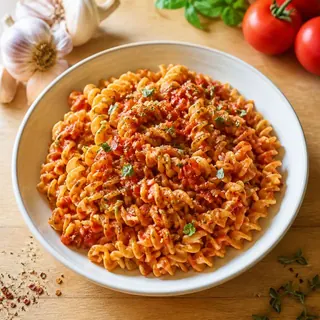
Tuna and tomato pasta
Tuna and tomato are a pantry pairing with real science behind it. Tomatoes are rich in glutamate and tuna is rich in inosinate, and when those two savoury compounds meet, they amplify each other, so the sauce tastes far meatier than a can of fish and a can of tomatoes should.
- 25 minTotal time
- 2Servings
- 560kcal / serving
- 29 gProtein
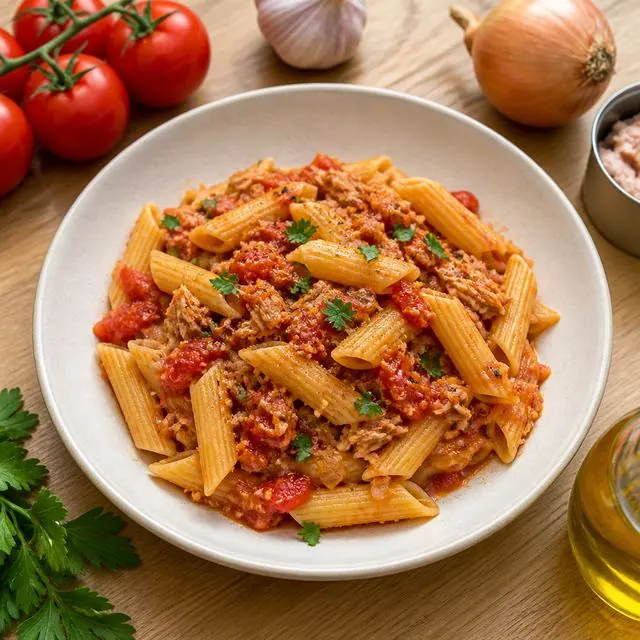

This pasta-al-tonno-style dinner serves two in about 25 minutes with 29 g of protein a bowl, and it's dairy-free. A few smart choices, like which tuna to buy and how to break it up, take it from student staple to something you'd happily serve guests.
The science: why this works
- Umami synergy: glutamate from the tomatoes and inosinate from the tuna don't just add up, they multiply. Together they can make a dish taste several times more savoury than either alone.
- Tuna is canned with salt, often in brine, so the fish seasons the sauce as it warms through. The only salt the recipe needs is the big pinch in the pasta water.
- Part of the fishy smell in fish comes from compounds called amines, which are alkaline. Lemon's acid binds them into less volatile forms, so the dish smells and tastes fresher.
- Garlic and chili flakes release their flavour into the hot oil in about 30 seconds, and the oil carries that warmth through the whole sauce.
- An 8-minute simmer thickens the chopped tomatoes enough that the sauce clings to both the pasta and the tuna flakes instead of pooling underneath.
Why the onion cooks until see-through
Cooking onion for about 5 minutes breaks down its harsh compounds and brings out sweetness. The pieces turn soft and translucent. This builds a mellow base for the sauce.
Learn: Why cooked onions turn sweet →Why the tuna goes in last
Canned tuna is already cooked, so it only needs warming. Stirring it in at the end for 1 minute keeps it tender and in flakes. Long cooking makes it dry and strong-tasting.
Learn: Building savory flavor →Why lemon is squeezed over the finished dish
Acid cuts through the richness of the tuna and oil and lifts the whole dish. It also freshens the fish flavor. Fresh lemon added at the end tastes brighter than lemon cooked in.
Learn: Add acid at the end →Tuna and tomato pasta
25 minutes · 2 servings · Italian · Dinner
Ingredients
Makes 2 servings
Method

Tips for the best result
- Break the tuna into large flakes with a fork before it goes in. Big flakes stay juicier and look better in the bowl.
- If you use oil-packed tuna, swap a little of its oil in for the olive oil.
- Choose canned light (skipjack) tuna for everyday cooking. It's lower in mercury than albacore and its softer flakes suit a sauce.
- Pick a short shape like penne or fusilli so the tuna flakes get caught inside.
- Fold, don't stir, once the tuna is in. Two or three turns with a spatula is enough.
- Cut the half lemon into two wedges and serve them on the side, so everyone can adjust the brightness.
Mistakes to avoid
- Under-salting the pasta water — the pasta tastes flat against the bold sauce. Use a big pinch, as the recipe says.
- Using tuna in brine and salting the sauce too — it ends up too salty. Taste once the tuna is in before adding any.
- Mashing the tuna into the sauce — it turns into a grainy paste. Keep the flakes chunky and add them last.
- Letting the sauce reduce too far before the tuna goes in — the flakes soak up the liquid and the pasta turns dry. Stop when it's thick but still loose enough to coat.
Variations and swaps
- Stir in a spoonful of capers or chopped olives with the tuna for a briny kick.
- Add a handful of spinach or arugula with the pasta.
- Try canned sardines instead of tuna for a bolder, oilier sauce that's also low in mercury.
- Top with toasted breadcrumbs for crunch, a classic Italian stand-in for cheese on fish pasta.
- Use gluten-free pasta to make it gluten-free.
- Swap canned tuna for canned salmon for a richer flavor.
Storing and reheating
Fish pasta is at its best on day one, so refrigerate leftovers within 2 hours, sealed, at 4°C (40°F) or below and eat within 3 days. Reheat in a pan with a splash of water over medium heat, stirring gently so the tuna doesn't break into crumbs, until steaming hot, 74°C (165°F). Cold leftovers also make a decent pasta salad with a drizzle of olive oil and a fresh squeeze of lemon. It can be frozen at −18°C (0°F) for 2–3 months, though the tuna dries a little; thaw it in the fridge.
Tuna and tomato pasta: questions
Which canned tuna is lowest in mercury?
Canned light (skipjack) tuna is lower in mercury than albacore (white) tuna. Health Canada and the FDA both point to light tuna as the better choice for regular eating, especially for pregnant people and young children.
Is tuna in oil or water better for pasta?
Oil-packed tuna is richer and more tender, so it suits a simple sauce; water-packed is leaner and lighter. Either works here.
Can I put cheese on tuna pasta?
You can, but many Italian cooks skip cheese on seafood pasta. Toasted breadcrumbs are a popular crunchy alternative, and leaving cheese out keeps this dish dairy-free.
How long does tuna pasta last in the fridge?
Up to 3 days in a sealed container. Refrigerate it within 2 hours of cooking.
Can I freeze tuna pasta?
Yes, for up to 2–3 months, though the tuna gets a little drier. Thaw it in the fridge and reheat until steaming hot.
Can I use a pouch of flavoured tuna?
Yes. Lemon-pepper or chili tuna pouches work, but they're often saltier and oilier, so skip the chili flakes or taste before adding more seasoning.
Is tuna pasta good with tomato sauce?
Yes, tuna and tomato are a classic Italian pairing. The tomato adds acidity and sweetness that balance the rich fish. Chili and lemon round it out.
Should I drain the tuna?
Yes, drain it so the sauce stays thick. If the tuna is packed in olive oil, you can add a spoonful of that oil to the pan for extra flavor. Water-packed tuna works too.
Can I use fresh tuna?
Yes, but you would cook it to 145°F (63°C) first. Canned tuna is simpler, cheaper and works better in a fast sauce. This recipe is built for canned.
How do I stop the dish from tasting too fishy?
Use good-quality tuna and finish with lemon. The acid softens the fishy flavor. Don't cook the tuna long.