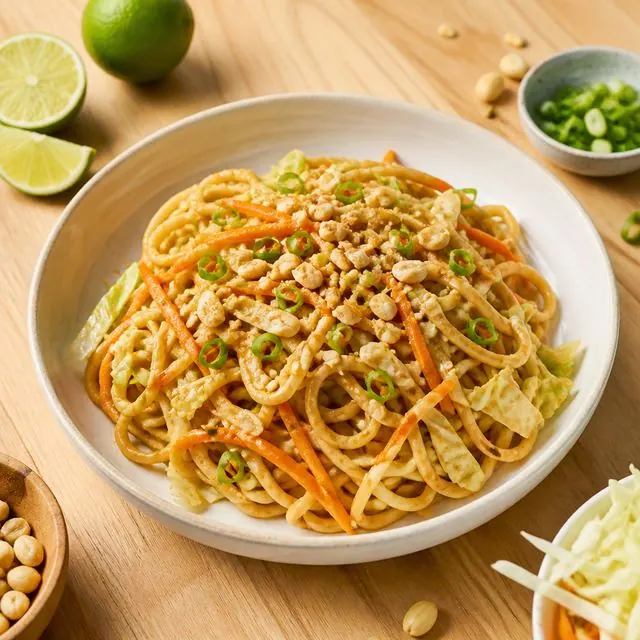
Peanut soy noodles
No wok, no specialty noodles, no blender. A box of spaghetti and a jar of peanut butter become a nutty, tangy, gently spicy bowl, and the sauce is mixed right in the pot the pasta came out of. Each serving carries about 21 g of protein, and it's fully vegan.
- 20 minTotal time
- 2Servings
- 550kcal / serving
- 21 gProtein

The science surprise is how peanut butter behaves with water. The first spoonfuls make it thicker and stiffer, not thinner. Keep stirring in water and it suddenly relaxes into a glossy sauce. Knowing that turns a scary-looking clump into the best part of dinner.
The science: why this works
- Peanut butter is ground peanut solids suspended in peanut oil, with almost no water. A small splash of water makes the protein and starch particles swell and stick together, so the sauce seizes into a thick paste; adding more water spreads those particles apart again and it loosens into a smooth, pourable sauce.
- Chili flakes release capsaicin, which dissolves in the peanut fat rather than the water. It keeps seeping out as the noodles sit, so leftovers often taste noticeably spicier the next day.
- Grated carrot has an enormous surface area, so it soaks up sauce and warms through in the single minute of tossing without actually cooking, keeping its sweet crunch.
- Raw grated garlic is sharp because grating ruptures so many cells that its enzymes produce plenty of allicin, the pungent compound. The brief warm toss in step 4 tames it just a little, so it stays punchy rather than harsh.
- As the noodles cool, the pasta starch firms up and the sauce thickens, which is why cold leftovers feel tight and clingy. A splash of warm water re-loosens both.
Why pasta water helps the sauce
Cooking water holds starch from the pasta. Stirring a few tablespoons into the peanut butter loosens it into a smooth sauce, and the starch helps the sauce cling to the noodles. Tossing the pasta with the sauce over low heat lets the two bind into one dish.
Learn: Finishing pasta in the sauce →Why lime balances the peanut butter
Peanut butter is rich and fatty. Lime juice adds acid that cuts the richness and keeps the sauce from tasting heavy. Soy sauce adds salt and savory depth. Tasting at the end lets you nudge the balance with a pinch of salt or a drop more honey.
Learn: Balancing salt, sweet, sour →Why the pasta water is salted
Pasta absorbs water as it cooks, so salted water seasons it from the inside. Unsalted pasta tastes flat even with a bold sauce. The water should taste lightly salty, like a mild broth. Salt added to the sauce alone cannot season the pasta itself.
Learn: Salt the pasta water →Peanut soy noodles
20 minutes · 2 servings · Fusion · Dinner
Ingredients
Makes 2 servings
- 200 glong pasta such as spaghetti
- 3 tbsppeanut butter
- 2 tbspsoy sauce
- 1lime
- 1carrot, grated
- 150 gcabbage, shredded
- 2green onions, sliced
- 1 clovegarlic, grated
- 1 pinchchili flakes
- 2 lwater, for boiling
Method

Tips for the best result
- Start the sauce with about 2 tablespoons of the saved water, stir until it seizes, then keep adding a spoonful at a time until it turns glossy and flows.
- Stir a jar of natural peanut butter thoroughly before measuring, or you'll scoop up mostly oil or mostly solids.
- Grate the garlic on a fine grater so there are no raw chunks in the sauce.
- Grate the carrot on the large holes of a box grater for long, crunchy ribbons.
- Toss with tongs, lifting the spaghetti high, so every strand gets coated.
- Serve in warm bowls: peanut sauce stiffens quickly on a cold plate.
Mistakes to avoid
- Panicking when the sauce turns into a stiff clump — that's normal; keep adding water a spoonful at a time and it will smooth out.
- Rinsing the drained pasta — it washes off the surface starch that helps the sauce cling; drain it and go straight to saucing.
- Letting the drained noodles sit while you hunt for ingredients — they stick together as they cool; measure the sauce ingredients before the pasta is done.
- Using an unstirred jar of natural peanut butter — the oily top layer makes a greasy, split sauce; mix the jar well first.
Variations and swaps
- Toss in a handful of sliced snap peas or bean sprouts with the carrot for extra crunch.
- Add crispy tofu, shelled edamame or a fried egg for more protein.
- Stir in a teaspoon of toasted sesame oil or a squeeze of sriracha for a more aromatic, spicier sauce.
- Add a teaspoon of maple syrup for a sweet-salty balance that keeps it vegan.
- Make it a cold noodle salad with sliced cucumber, red pepper and chopped roasted peanuts on top.
- Swap the peanut butter for tahini or almond butter if you have an allergy or preference.
Storing and reheating
Refrigerate within 2 hours (1 hour above 32°C/90°F) at 4°C (40°F) or below for 3–4 days. Leftovers tighten up as they chill: for warm noodles, add 1 tbsp of water per portion and microwave covered, stirring halfway, or toss in a pan over low heat until steaming. For cold noodles, stir in a splash of warm water, a squeeze of fresh lime and a few drops of soy sauce to wake the flavour back up. Expect the chili heat to grow overnight. Freezing isn't recommended: the pasta turns soft and the carrot and cabbage go limp. For packed lunches, keep extra sauce in a small jar and toss just before eating.
Peanut soy noodles: questions
Why did my sauce turn thick and clumpy when I added water?
Peanut butter seizes when it meets a small amount of water. Keep stirring in water a spoonful at a time and it will turn smooth and glossy.
Can I use natural peanut butter?
Yes. Stir the jar well first so the oil is mixed back in. Natural styles can need an extra spoonful of water and may look slightly less glossy.
Will crunchy peanut butter work?
Yes. The sauce will be a little less silky but you get bits of peanut throughout, which adds nice texture.
What can I use for a peanut-free version?
Sunflower seed butter is the closest match and is usually made in nut-free facilities. Check the label if you're cooking for an allergy.
Is this dish gluten-free?
Not as written, because spaghetti and regular soy sauce both contain wheat. Use gluten-free pasta and gluten-free tamari to make it so.
Is it good for meal prep?
Yes. It keeps 3–4 days in the fridge; pack a little extra sauce or warm water to loosen the noodles before eating.
Can you use spaghetti for peanut noodles?
Yes, spaghetti works well and is easy to find. Cook it to the packet time and toss it in the sauce.
How do you thin peanut sauce?
Add warm pasta water a spoonful at a time. The starch also helps keep it smooth.
Are peanut noodles served hot or cold?
Either way works. Serve them warm right away, or chill them for a cold noodle salad.