Cream
Also called heavy cream
Cream brings richness due to its high fat content.
Cream is the fat-rich layer that rises to the top of fresh milk. Depending on the type, it ranges from pourable single or light cream to thick double or heavy cream. It tastes rich and buttery, gently sweet and a little earthy, with a smooth, mouth-coating texture.
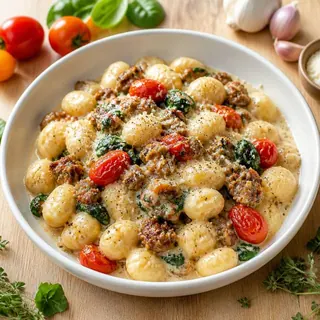
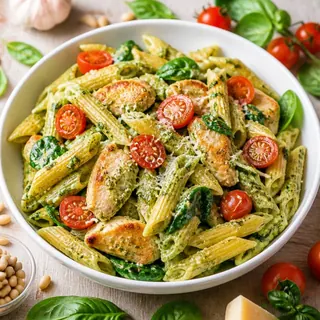
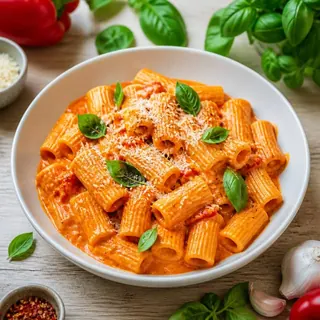
Cooks love cream because it softens, enriches and binds. It whips into clouds for strawberries and pavlova, simmers into silky pasta and mushroom sauces, makes gratins tender and custards set. A splash rounds out the sharp edges of tomato soups and spicy curries.
Flavor profile
Aroma: rich, buttery
Good to know
Origin: Europe
Forms: light, heavy, whipping
Season: Available year-round as a fridge staple.
Nutrition: Cream is high in fat, including saturated fat, and contains dairy, so it is usually used in modest amounts.
Storage: Keep cream in the coldest part of the fridge, not the door, and use within 5–7 days of opening, or by the date on the carton. Sour smell, a sharp taste, lumps or a yellowish tinge mean it has turned. Heavy cream can be frozen for up to 3 months; it may separate on thawing, so shake it well and use it in cooking rather than for whipping. Whipped cream can also be piped into blobs and frozen on a tray.
How to use cream
Whipping Cream
Agitation traps air in milk fat globules, creating stable whipped foam.
Making Sauce
Fats emulsify when reduced, thickening sauces with smoothness.
The science of cream
- Whipping works because air bubbles get trapped by partly broken fat globules that stick together into a network. Cream needs about 30% fat or more to whip, and it whips best when very cold.
- Over-whip cream and the fat globules clump so tightly that they separate from the liquid, turning into butter and buttermilk. Stop at soft or medium peaks.
- High-fat cream can boil without curdling because the fat surrounds and protects the milk proteins. Lower-fat creams, like single or light cream, can split when boiled or mixed with acid.
- In sauces, cream reduces as water evaporates, concentrating the fat and proteins so it thickens naturally without flour.
- Cream carries fat-soluble aromas, such as vanilla, coffee and herbs, extremely well. That is why infusing warm cream is a common way to flavour custards and ganache.
How to choose cream
Match the cream to the job: heavy, double or whipping cream for whipping and sauces you'll boil, single or light cream for pouring and coffee. Check the fat percentage on the label; above 35% whips best and resists curdling. Choose the freshest date, as cream picks up off-flavours as it ages.

Substitutes for cream
| Swap | Amount | What changes |
|---|---|---|
| Milk + melted butter | 3/4 cup milk + 1/4 cup butter per 1 cup cream | Works in sauces and baking, but won't whip. |
| Full-fat coconut milk or coconut cream | 1:1 | Dairy-free and rich; chilled coconut cream can even be whipped. |
| Crème fraîche | 1:1 | Thicker and tangier; very stable in hot sauces. |
| Evaporated milk | 1:1 | Lower fat but creamy in soups and sauces; doesn't whip like cream. |
What goes with cream
- Egg. Cream and egg set into custard because yolk proteins thicken as they heat.
- Potato. Cream softens potato in a gratin, and its fat carries the starch's mild flavor.
- Vanilla. Vanilla's aromatic compounds dissolve in cream's fat, boosting its sweet aroma.
- Mushroom. Mushrooms add umami which deepens cream's flavor.
- Spinach. Cream's fat coats spinach, softening its bite.
- Strawberry. Cream's fat softens strawberry's acidity, offering smoothness.
- Coffee. Cream's fat smooths out coffee’s bitter tannins.
- Parmesan. Parmesan melts into cream and its salt and umami season the sauce, as in cream-style alfredo.
- Nutmeg. Cream's fat softens nutmeg's spicy edge, promoting its mellow notes.
- Sage. Cream's fat carries sage's terpenes in sauces.
Mistakes to avoid
- Over-whipping turns cream into butter by rearranging fat molecules.
- Acid causes curdling when in contact with heat.
Ideas for tonight
- Alfredo pasta
- Creamy tomato soup
- Whipped cream topping
Cream: questions
What is the difference between heavy cream and whipping cream?
Heavy or double cream has more fat, usually 36% or more, while whipping cream sits around 30–35%. Both whip, but heavier cream holds its shape longer and is more stable in sauces.
Why won't my cream whip?
It may be too warm or too low in fat. Use cream with at least 30% fat, and chill the cream, bowl and whisk before starting.
Can you boil cream?
Heavy or double cream can be boiled and reduced without curdling, thanks to its high fat. Lighter creams are more likely to split, especially with acid like lemon or wine.
Can you freeze cream?
Yes, for up to 3 months. It may look grainy or separated when thawed, so shake or whisk it and use it in cooking rather than for whipping.
How do you fix over-whipped cream?
Gently fold in a few spoonfuls of liquid cream until it smooths out. If it has fully turned to butter, keep going and use the butter and buttermilk.
What can I use instead of heavy cream?
Milk mixed with melted butter works in cooking. For a dairy-free option, full-fat coconut milk or cream is rich and can even be whipped.
What does cream taste like?
Cream brings richness due to its high fat content., with an aroma that is rich, buttery.
What goes well with cream?
Cream pairs best with egg, potato, vanilla, mushroom, spinach. Cream and egg set into custard because yolk proteins thicken as they heat.
How do you use cream in cooking?
Whipping Cream: agitation traps air in milk fat globules, creating stable whipped foam.
How should you store cream?
Refrigerate and use within a week of opening.
What is the most common mistake with cream?
Over-whipping turns cream into butter by rearranging fat molecules.
 Milk
 Butter
 Strawberry
 Vanilla
 Mushroom
 Parmesan
 Potato
 Sour Cream