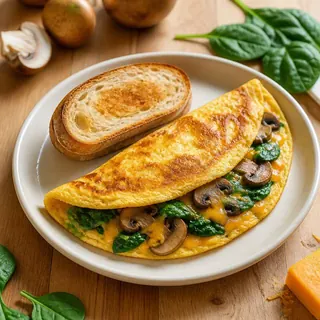
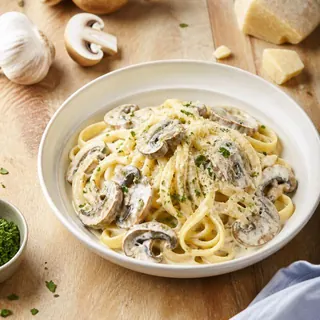
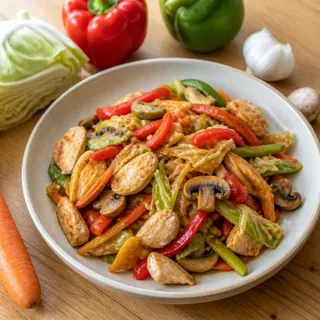
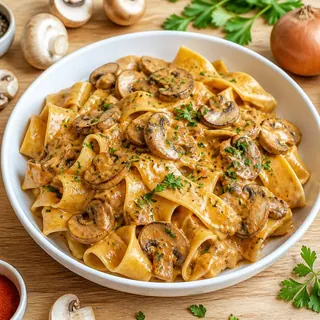
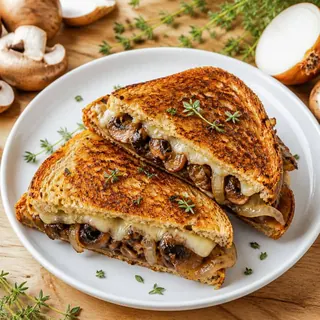
Mushroom
Also called fungi

Mushrooms add umami, with textural changes in cooking.
Mushrooms are the fruiting bodies of fungi, and the kitchen favourites include white button, chestnut (cremini), portobello, shiitake and oyster. They taste deeply earthy and meaty, with a rich umami savouriness that grows stronger when they are browned or dried.
Cooks love mushrooms because they add a meaty depth to vegetarian dishes and make meat dishes taste even more savoury. Sizzle them in butter until golden and they become one of the most satisfying things in the pan.
Flavor profile
Aroma: earthy, umami
Good to know
Origin: Globally, various species
Forms: fresh, dried, canned
Season: Cultivated mushrooms are available year-round; many wild varieties, such as chanterelles and porcini, peak in late summer and autumn.
Nutrition: Mushrooms add a lot of savoury flavour for very few calories and provide some fibre.
Storage: Keep mushrooms in a paper bag or their original box loosely covered in the fridge, never sealed in plastic, which traps moisture and makes them slimy. Fresh mushrooms keep about 5–7 days. To freeze, sauté them first and freeze in portions for up to 3 months, as raw mushrooms go watery and spongy when thawed. Dried mushrooms keep for a year in an airtight jar. Throw out mushrooms that are slimy, very dark or smell off. Only eat wild mushrooms identified by an expert, as some are dangerously toxic.
How to use mushroom
Sauteing Mushrooms
Heat evaporates water, intensifying flavors and umami compounds.
Mushroom Stock
Simmering amplifies umami, adding depth to broths.
The science of mushroom
- Mushrooms are rich in glutamate, the amino acid behind umami taste. Dried shiitake are also high in guanylate, a nucleotide that multiplies the savoury effect of glutamate, which is why a few dried mushrooms deepen a whole stock.
- Mushrooms are about 90% water, held in a sponge-like structure of chitin-walled cells. In a crowded pan that water floods out and they steam; in a hot, uncrowded pan it evaporates and the surface browns through the Maillard reaction.
- Unlike most vegetables, mushrooms barely soften from overcooking, because their cell walls are made of chitin rather than pectin. That means you can cook them hard and long for deep browning without them turning to mush.
- Their flesh browns when cut or bruised because of the enzyme polyphenol oxidase, the same enzymatic browning seen in apples. It is harmless but is a reason to slice mushrooms just before cooking.
- Many mushroom aromas, including the earthy compound often called mushroom alcohol (1-octen-3-ol), dissolve readily in fat, so butter, cream and oil carry their flavour through a dish.
How to choose mushroom
Look for firm, plump mushrooms with dry, smooth caps and a fresh, earthy smell. Avoid any that are slimy, wrinkled, spotted or smell sour. For button and chestnut mushrooms, closed caps are fresher and milder, while open caps with visible gills taste stronger.

Substitutes for mushroom
| Swap | Amount | What changes |
|---|---|---|
| Dried porcini or shiitake, rehydrated | about 30 g dried per 250 g fresh | Much stronger umami; use the soaking water as a ready-made stock. |
| Eggplant | 1:1 | Gives a similar soft, meaty texture in stews and pasta sauces. |
| Zucchini | 1:1 | Milder in flavour but browns well; add a splash of soy sauce for savouriness. |
| Firm tofu or tempeh | 1:1 by weight | A protein swap for vegetarian dishes; season well with soy or miso for umami. |
What goes with mushroom
- Butter. Butter browns and adds nutty richness to mushroom's earthy flavor.
- Cream. Mushrooms add umami which deepens cream's flavor.
- Beef Chuck. Mushroom's glutamates deepen the savory flavor of braised beef.
- Bok Choy. Mushroom's savory umami deepens bok choy's mild flavor.
- Thyme. Thyme’s earthy aroma echoes the foresty flavor of mushrooms.
- Sage. Mushrooms' umami and sage's aroma provide a savory base.
- Soy Sauce. Mushrooms intensify soy sauce’s umami through their own savory compounds.
- Garlic. Garlic's sulfur compounds boost mushroom's umami flavor.
- Bread. Mushrooms provide earthy umami that deepens bread's blandness.
- Gruyere. Mushrooms' umami deepens gruyere’s complex flavor.
Mistakes to avoid
- Washing traps moisture, hastening spoilage.
- Overcrowding stops dehydration and browning.
Ideas for tonight
- Mushroom risotto
- Stuffed mushrooms
- Creamy mushroom soup
Mushroom: questions
Should you wash mushrooms?
A quick rinse is fine just before cooking; mushrooms absorb very little water in a brief wash. Dry them well, or simply brush or wipe off any dirt. Don't soak them.
How do you brown mushrooms instead of steaming them?
Use a hot pan, give them plenty of space, and don't move them for the first couple of minutes. Let the released water evaporate, then add butter and salt once they have started to brown.
Can you eat raw mushrooms?
Common cultivated mushrooms like button and chestnut are often eaten raw in salads. Some, such as shiitake, are better cooked, and wild mushrooms should always be cooked and identified by an expert.
Can you freeze mushrooms?
Yes, but sauté or roast them first. Cooked mushrooms freeze well for about 3 months and can go straight into soups, sauces and stews from frozen.
When should you salt mushrooms?
Salt them once they have started to brown. Salt draws out water, so adding it at the start makes them release liquid and steam rather than sear.
What can I use instead of mushrooms?
Eggplant or zucchini give a similar texture, while a little soy sauce, miso or dried mushroom powder adds the savoury umami flavour.
What does mushroom taste like?
Mushrooms add umami, with textural changes in cooking. Its strongest notes are earthy, with an aroma that is earthy, umami.
What goes well with mushroom?
Mushroom pairs best with butter, cream, beef chuck, bok choy, thyme. Butter browns and adds nutty richness to mushroom's earthy flavor.
How do you use mushroom in cooking?
Sauteing Mushrooms: heat evaporates water, intensifying flavors and umami compounds.
How should you store mushroom?
Refrigerate in a paper bag to maintain dryness while allowing moisture to escape.
What is the most common mistake with mushroom?
Washing traps moisture, hastening spoilage.
 Butter
 Cream
 Thyme
 Garlic
 Miso
 Parmesan
 Leek
 Eggplant