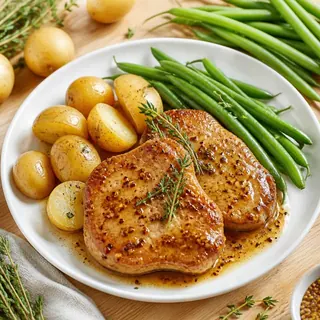
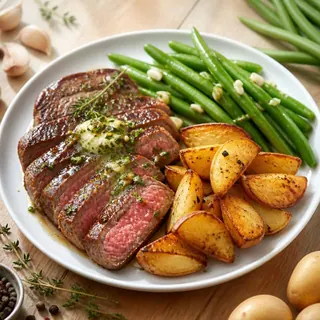
Thyme

Sturdy thyme slowly releases its flavor, making it perfect for roasts, braises, and stocks.
Thyme is a small-leaved, woody herb from the mint family that grows wild across the Mediterranean. It tastes earthy, woody and gently minty, with a warm, slightly peppery bite and a faintly lemony edge.
Cooks love thyme because it is tough enough to cook for hours. Drop a few sprigs into a stew, stock, roast or pot of beans and it slowly perfumes the whole dish. It is one half of the classic bouquet garni and a quiet backbone of French, Mediterranean and Caribbean cooking.
Flavor profile
Aroma: earthy, minty, woody
Good to know
Origin: Mediterranean
Forms: fresh sprig, dried
Season: Evergreen and available year-round; garden thyme is most aromatic in early summer, just before it flowers.
Nutrition: Used in small amounts, so it adds flavour more than nutrition.
Storage: Wrap fresh sprigs loosely in a damp paper towel, put them in a bag or box and refrigerate for up to 2 weeks. Thyme freezes well: freeze whole sprigs flat in a bag, then crumble the leaves off straight from frozen, or freeze leaves in olive oil in ice-cube trays for up to 6 months. Dried thyme keeps about a year in an airtight jar away from heat and light. Toss it once the aroma fades.
How to use thyme
Add early
Sturdy herbs like thyme need time in heat and fat to give up their oils.
Strip the leaves
Pull leaves off the woody stem backwards and discard the stem, or drop whole sprigs in and fish them out.
The science of thyme
- Thyme's main aroma compounds are thymol and carvacrol, the same family of warm, slightly medicinal phenols found in oregano. They are fat-soluble and fairly heat-stable, so thyme gives its best when cooked in butter, oil or a fatty braise.
- Its small, thick leaves have a waxy coating and little water, which is why thyme survives long cooking and dries so well. Dried thyme keeps much of its character, unlike tender herbs such as basil.
- Heat and time help release the oils from the leaf's glands. That is why thyme added at the start of a braise tastes rounder and more integrated than thyme sprinkled raw on top, which can taste dusty and sharp.
- Lemon thyme contains citral and geraniol, the same compounds that give lemongrass and lemon peel their aroma, so it tastes noticeably citrusy and suits fish and chicken.
- Grinding thyme with coarse salt breaks the leaf cells and releases the oils into the salt, which is how a quick herb salt for roasts and potatoes is made.
How to choose thyme
Choose sprigs with fresh, grey-green leaves and a strong scent when rubbed. Avoid bunches with black, mushy leaves or a musty smell. Dried thyme should be green rather than brown and still smell strongly when crushed in your palm.

Substitutes for thyme
| Swap | Amount | What changes |
|---|---|---|
| Dried thyme | 1 tsp dried per 1 tbsp fresh | Dried thyme is strong and works well in stews and rubs; add it early. |
| Oregano | use half as much | Shares thymol and carvacrol but is bolder and more peppery. |
| Herbes de Provence | 1:1 | Usually already contains thyme, plus rosemary and others; great for roasts. |
| Za'atar | 1:1 | Thyme-based blend with sesame and sumac; best for flatbreads, eggs and roast vegetables. |
What goes with thyme
- Bay Leaf. Bay and thyme are the core of a bouquet garni, giving stocks a layered herbal depth.
- Chicken thigh. Thyme's earthy, woody oils hold up through roasting and flavor the fat.
- Beef Chuck. Thyme's thymol resists long cooking and flavors beef stews.
- Lemon. Lemon's brightness lifts thyme's earthy depth, and both smell of lemony thymol.
- Rosemary. Both herbs have camphor and pinene, giving them a resinous aroma.
- Butter. Butter's fat captures thyme's aromas, releasing them over time.
- Mushroom. Thyme’s earthy aroma echoes the foresty flavor of mushrooms.
- Shallot. Thyme's earthy terpenes amplify shallots' subtle sweetness.
- Zucchini. Thyme's light herbal notes contrast zucchini's mild sweetness.
- Vegetable Oil. Thyme's oils steep into the oil, adding its distinct aroma.
Mistakes to avoid
- Using it as a last-minute garnish, where it tastes dry and sharp.
- Leaving the woody stems in the finished dish.
Ideas for tonight
- Roast chicken thighs on a bed of thyme.
- Add sprigs to a pot of beans.
- Fry in butter and spoon over mushrooms.
Thyme: questions
What does thyme taste like?
Thyme tastes earthy, woody and slightly minty, with a warm peppery edge and a faint lemony note. Lemon thyme is noticeably citrusy. Its flavour is strong but not as sharp as rosemary.
How do you strip thyme leaves from the stem?
Hold the top of the sprig and run your fingers down the stem against the direction of the leaves; they slide off easily. For very fine sprigs, just chop the tender tips and all. Woody stems should be discarded or fished out.
How much dried thyme equals fresh?
Use about 1 teaspoon of dried thyme for every tablespoon of fresh leaves, or about 3 fresh sprigs. Dried thyme keeps its flavour well, so it is one of the best herbs to keep in the cupboard.
When should you add thyme to a dish?
Add it early. Thyme needs time in heat and fat to release its oils, so it suits roasts, braises, soups and stocks. Raw thyme sprinkled at the end can taste dry and sharp.
Can you freeze fresh thyme?
Yes. Freeze whole sprigs in a bag, then strip the brittle leaves straight from frozen, or freeze leaves in olive oil in ice-cube trays. It keeps well for about 6 months.
What can I use instead of thyme?
Dried thyme is the easiest swap. Oregano, herbes de Provence or a little rosemary also work in roasts and stews. For flatbreads and eggs, za'atar brings a thyme-led flavour with extra tang.
What goes well with thyme?
Thyme pairs best with bay leaf, chicken thigh, beef chuck, lemon, rosemary. Bay and thyme are the core of a bouquet garni, giving stocks a layered herbal depth.
How do you use thyme in cooking?
Add early: sturdy herbs like thyme need time in heat and fat to give up their oils.
How should you store thyme?
Wrap sprigs in damp paper in the fridge for up to 2 weeks.
What is the most common mistake with thyme?
Using it as a last-minute garnish, where it tastes dry and sharp.
 Bay Leaf
 Rosemary
 Sage
 Oregano
 Chicken thigh
 Garlic
 Mushroom
 Lemon