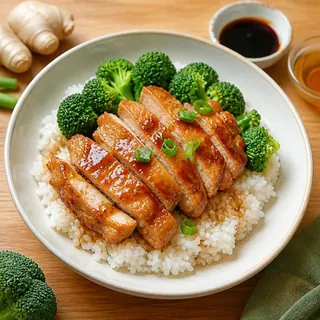
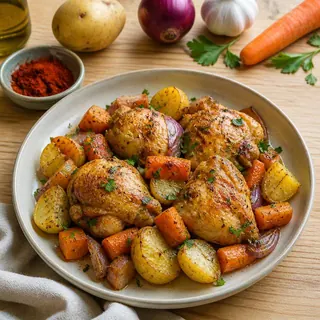
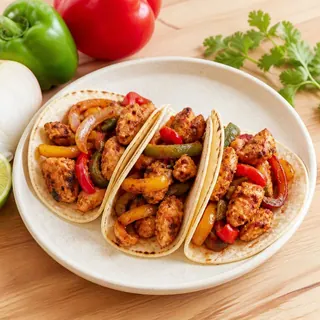
Chicken thigh
Also called dark meat chicken

Chicken thighs stay juicy due to more fat and connective tissue than breasts, forgiving overcooking.
Chicken thigh is the dark meat from the upper leg, sold bone-in with skin or as boneless, skinless fillets. It tastes deeper and more savoury than breast meat, with gentle earthy, roasted notes and a little natural sweetness that comes forward once the skin browns.
Cooks love thighs because they are forgiving. Extra fat and connective tissue keep them juicy even when a few minutes overcooked, and they soak up marinades, rubs and braising liquids like a sponge. From jerk chicken to tagines, tacos and gochujang-glazed traybakes, the thigh does the heavy lifting.
Flavor profile
Aroma: savory, roasted
Good to know
Origin: Worldwide
Forms: bone-in skin-on, boneless
Season: Available year-round.
Nutrition: A good source of protein; with the skin on it also carries a fair amount of fat.
Storage: Keep raw chicken thighs on the bottom shelf of the fridge, below anything ready to eat, and cook within 1–2 days. Wrapped tightly, they freeze well for up to 3 months; freeze marinated thighs in a flat bag so they thaw quickly in the fridge. Never thaw chicken on the counter. Cooked thighs keep 3–4 days chilled. A sticky or slimy surface, sour smell or greyish tint means they should go in the bin.
How to use chicken thigh
Sear skin-side down
Start in a cool-to-medium pan so fat renders slowly and the skin turns crisp.
Season ahead
Salt at least 30 minutes before cooking so seasoning reaches below the surface.
The science of chicken thigh
- Thigh muscles do more work than breast muscles, so they hold more myoglobin, the oxygen-storing protein that gives dark meat its colour and deeper taste.
- Thighs carry more collagen, the connective tissue that tightens when raw. Cooked past about 75°C (167°F), it starts melting into gelatin, which is why thighs taste silkier the further you take them.
- Starting skin-side down in a moderate pan renders the fat under the skin slowly. Once the water has cooked off, the skin proteins and sugars brown through the Maillard reaction and turn crisp.
- Salting at least 30 minutes ahead lets salt dissolve some of the muscle proteins near the surface, so the meat holds on to more of its juice as it cooks.
- Many aroma compounds in spices dissolve in fat, not water. Thigh fat picks up paprika, cumin and garlic and spreads them through every bite.
How to choose chicken thigh
Look for plump, pinkish meat with creamy skin and no grey patches or sour smell. Bone-in, skin-on thighs are best for roasting and crisp skin; boneless thighs are quickest for grilling, stir-fries and tacos. Check the pack date and avoid trays with lots of pooled liquid.

Substitutes for chicken thigh
| Swap | Amount | What changes |
|---|---|---|
| Chicken drumsticks | 1:1 by weight | Same dark meat and juiciness, with a little longer cooking time on the bone. |
| Chicken breast | 1:1 | Leaner and quicker to dry out, so cook to 74°C (165°F) and pull it straight away. |
| Turkey thigh | 1:1 by weight | Richer and larger; braise or roast low and slow. |
| Extra-firm tofu | 1:1 | A plant-based swap for marinades and glazes; press it well first so it browns. |
What goes with chicken thigh
- Garlic. Garlic turns sweet in rendered chicken fat and perfumes the whole pan.
- Lemon. Acid cuts through rich chicken fat and brightens the browned skin.
- Gochujang. Gochujang's sugars brown on chicken thigh skin, giving sticky, spicy-sweet roasts and wings.
- Tortilla. Juicy chicken thigh shreds into tacos, burritos and enchiladas.
- Thyme. Thyme's earthy, woody oils hold up through roasting and flavor the fat.
- Paprika. Paprika's fat-soluble color and sweet-smoky flavor spread through chicken fat.
- Ginger. Ginger's clean heat cuts the richness of chicken thigh.
- Mustard. Mustard's sharp tang cuts through the rich fat of chicken thigh.
- Rosemary. Resinous rosemary flavors the rich fat of roasted chicken thigh.
- Yogurt. Yogurt's lactic acid gently tenderizes chicken thigh and its fat tempers spice.
Mistakes to avoid
- Moving the meat too early; it releases from the pan once browned.
- Crowding the pan, which steams instead of sears.
Ideas for tonight
- Roast with cumin, garlic and lime.
- Braise with cinnamon and tomatoes.
- Sear and finish in a pan sauce.
Chicken thigh: questions
What internal temperature should chicken thighs reach?
Chicken is safe at 74°C (165°F), but thighs taste best taken to about 80–85°C (175–185°F). At that point more collagen has melted and the meat is tender rather than springy.
Are chicken thighs healthier than breasts?
Both are good sources of protein. Thighs have more fat, especially with the skin on, which is a big part of why they stay juicy and taste richer.
How do you get crispy skin on chicken thighs?
Pat the skin very dry, salt it, and start skin-side down in a cool-to-medium pan so the fat renders slowly. Leave it alone until it releases on its own, then flip or finish in a 200°C (400°F) oven.
How long do chicken thighs take to cook?
Boneless thighs take about 6–8 minutes per side in a pan or 20–25 minutes in a 200°C (400°F) oven. Bone-in thighs need around 35–45 minutes at the same oven temperature.
Can you overcook chicken thighs?
It is much harder than with breast meat. Their extra fat and collagen keep them moist well past the safe temperature, though very long, hot cooking will eventually dry them out.
Can you freeze chicken thighs?
Yes, raw thighs freeze well for up to 3 months. Freezing them in a marinade saves a step, and they thaw overnight in the fridge.
Should I use bone-in or boneless chicken thighs?
Bone-in, skin-on thighs give more flavour and crisp skin for roasting and braising. Boneless thighs cook faster and are easier to slice for tacos, skewers and stir-fries.
What does chicken thigh taste like?
Chicken thighs stay juicy due to more fat and connective tissue than breasts, forgiving overcooking., with an aroma that is savory, roasted.
What goes well with chicken thigh?
Chicken thigh pairs best with garlic, lemon, gochujang, tortilla, thyme. Garlic turns sweet in rendered chicken fat and perfumes the whole pan.
How do you use chicken thigh in cooking?
Sear skin-side down: start in a cool-to-medium pan so fat renders slowly and the skin turns crisp.
How should you store chicken thigh?
Refrigerate and cook within 2 days, or freeze for up to 3 months.
What is the most common mistake with chicken thigh?
Moving the meat too early; it releases from the pan once browned.
 Garlic
 Lemon
 Thyme
 Paprika
 Yogurt
 Chicken Breast
 Turkey