
Turkey
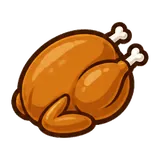
Turkey's mild flavors and tender meat make it versatile, especially for roasting.
Turkey is a large poultry bird with pale, lean breast meat and richer, darker legs and thighs. Its flavour is mild, gently warm and savoury, with a quiet umami depth that comes through most in the dark meat and the roasting juices.
Cooks love turkey because it feeds a crowd and soaks up whatever you give it: sage, rosemary, butter, garlic or a spicy rub. Ground turkey is a lean, everyday swap for beef in burgers, chilli and stuffed peppers.
Flavor profile
Aroma: mild, savory, umami
Good to know
Origin: North America
Forms: whole, ground, breasts, legs, thighs
Season: Available year-round; whole fresh birds are easiest to find around Thanksgiving and Christmas.
Nutrition: A lean source of protein, especially the breast with the skin removed.
Storage: Keep raw turkey in the fridge at 4°C (40°F) or below and cook a fresh bird within 1–2 days. Thaw a frozen turkey in the fridge, allowing about 24 hours for every 2 kg (4–5 lb), set in a tray to catch drips. Frozen turkey keeps its quality for up to a year. Refrigerate leftovers within 2 hours of cooking and eat within 3–4 days, or freeze sliced meat in gravy or stock for 2–3 months. Never stuff a bird and store it raw.
How to use turkey
The Roast Game Plan
Roast hot to start, then lower the temperature. Skin stays crispy. Juiciness and tenderness come from collagen breakdown and moisture retention.
Bind Those Burgers
Mix ground turkey with breadcrumbs. Protein strands bind for tenderness, avoiding dryness when cooked at medium heat.
The science of turkey
- Breast meat is lean, fast-twitch muscle that dries out once it passes about 70°C (158°F), while leg meat is full of collagen and myoglobin and tastes best cooked to around 80°C (176°F). That gap is the central challenge of roasting a whole bird.
- Brining (wet or dry) lets salt dissolve some muscle proteins so they hold on to more water. A dry brine also dries the skin, helping it crisp and brown through the Maillard reaction.
- Starting the roast hot browns the skin; lowering the heat afterwards lets the inside catch up without the outside overcooking. Spatchcocking (flattening) the bird evens the cooking even more.
- Ground turkey is very lean, so its proteins bind tightly and can turn dry and crumbly. A panade of breadcrumbs soaked in milk traps moisture between the proteins and keeps burgers and meatballs tender.
How to choose turkey
Allow roughly 500–700 g (1–1.5 lb) of whole bird per person. Look for plump breasts, unbroken skin and no off smell. Fresh turkeys need no thawing, while frozen ones need several days in the fridge, so plan ahead. Pre-brined or self-basting birds already contain salt, so skip brining them yourself.

Substitutes for turkey
| Swap | Amount | What changes |
|---|---|---|
| Chicken | 1:1 by weight | Very similar flavour and texture, smaller and quicker to cook. |
| Ground chicken | 1:1 | Swap straight in for ground turkey in burgers, chilli and meatballs. |
| Lean ground pork | 1:1 | Juicier and richer than ground turkey; safe at 71°C (160°F). |
| Capon or goose | 1:1 by weight | For a festive roast; capon is richer than chicken, goose much fattier. |
What goes with turkey
- Sage. Sage has earthy oils that match turkey's mild richness for a classic pairing.
- Butter. Butter adds fat, helping keep turkey moist as it cooks.
- Garlic. Garlic's sulfur compounds add a sharp savoriness to turkey.
- Poblano. Poblano adds gentle heat and earthy depth to mild ground turkey fillings.
- Rosemary. Rosemary's resin perfumes mild turkey during roasting.
- Salt. Salt in a brine seasons lean turkey and helps it hold moisture.
- Scallion. Scallion's fresh bite lifts mild turkey in stir-fries.
- Shallot. Shallot's mild sweetness flavors lean turkey in pan sauces.
- Cumin. Cumin's earthy notes add a warm undertone to turkey.
Mistakes to avoid
- Over 165°F, proteins toughen and dry out.
- Without enough salt, turkey lacks umami.
Ideas for tonight
- Lemon-herb roasted turkey breast with garlic mashed potatoes
- Turkey and spinach stuffed bell peppers
- Spicy turkey chili with black beans
Turkey: questions
What temperature should turkey be cooked to?
Turkey is safe at 74°C (165°F), measured in the thickest part of the breast and the innermost thigh without touching bone. Dark meat is more tender when it reaches around 80°C (176°F). Stuffing cooked inside the bird must also reach 74°C (165°F).
How long does it take to roast a turkey?
At 165°C (325°F), an unstuffed turkey takes roughly 30–40 minutes per kg (13–15 minutes per lb). A spatchcocked bird roasts much faster. Always check with a thermometer rather than the clock.
How long does it take to thaw a frozen turkey?
In the fridge, allow about 24 hours per 2 kg (4–5 lb), so a 6 kg bird needs about 3 days. In a hurry, submerge it in its wrapping in cold water and change the water every 30 minutes, allowing about 30 minutes per 500 g (1 lb).
Should I brine my turkey?
Brining helps lean turkey stay juicy and seasoned. A dry brine of salt rubbed over the bird 1–3 days ahead is easy and gives crisper skin. Skip it if your turkey is labelled pre-brined, kosher or self-basting.
Why is my turkey dry?
Usually the breast was overcooked while waiting for the legs to finish. Brine it, start hot then lower the heat, spatchcock it, or take the breast off earlier and finish the legs separately.
How long should turkey rest?
Rest a whole turkey for 30–45 minutes, loosely covered with foil. It stays hot, the juices settle, and you get time to make gravy.
What does turkey taste like?
Turkey's mild flavors and tender meat make it versatile, especially for roasting., with an aroma that is mild, savory, umami.
What goes well with turkey?
Turkey pairs best with sage, butter, garlic, poblano, rosemary. Sage has earthy oils that match turkey's mild richness for a classic pairing.
How do you use turkey in cooking?
The Roast Game Plan: roast hot to start, then lower the temperature. Skin stays crispy. Juiciness and tenderness come from collagen breakdown and moisture retention.
How should you store turkey?
Store in the refrigerator at or below 40°F until cooked, or freeze for long-term storage.
What is the most common mistake with turkey?
Over 165°F, proteins toughen and dry out.
 Sage
 Rosemary
 Butter
 Chicken Breast
 Chicken thigh
 Poblano
 Shallot
 Garlic
