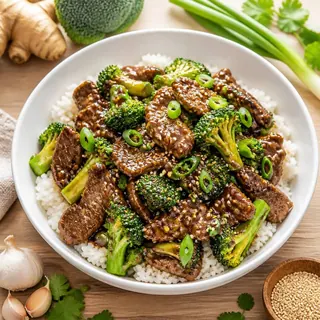
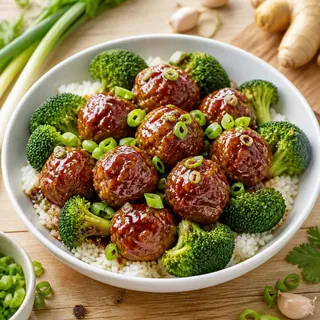
Soy ginger chicken rice bowl
The sauce in this bowl is only three tablespoons of liquid, and it is added in the last 2 minutes. That short window matters: honey browns at much lower temperatures than table sugar, so it goes from glossy to burnt quickly. Time it right and you get the shiny, sweet-salty chicken of a takeout bowl without marinating anything.
- 30 minTotal time
- 2Servings
- 660kcal / serving
- 40 gProtein
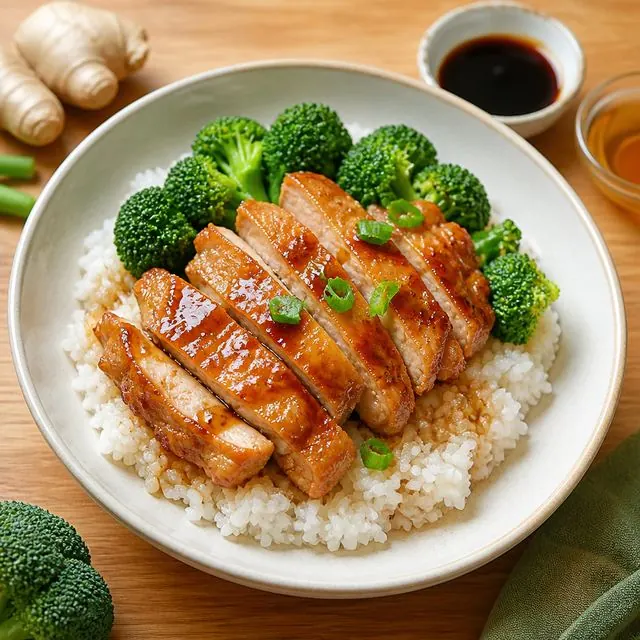

It is a high-protein dinner (40 g per serving) that reheats well for lunches, and it is a good way to learn how sugar behaves in a hot pan. Once you can read a reducing glaze by its bubbles, you can make teriyaki, sticky wings and honey-garlic anything.
The science: why this works
- Thigh meat stays pleasant well past the safe minimum. Food safety needs 74°C (165°F), but thighs are still tender at 80–85°C (175–185°F) because their collagen slowly turns to gelatin as they heat. That gives you room to let the sauce reduce without the meat going dry.
- Honey is mostly fructose and glucose. Fructose starts to caramelize at roughly 110°C (230°F), far below the 160°C (320°F) or so table sugar needs. Combined with the amino acids in soy sauce, it browns very quickly, which is why the sauce gets only the last 2 minutes.
- Garlic and ginger go in with the broccoli, not into bare oil. The florets release a little moisture that keeps the pan surface from scorching the aromatics during their 4 minutes, so they turn fragrant instead of bitter.
- Heat converts some of ginger's sharp gingerol into zingerone, a gentler and sweeter compound. Four minutes of cooking takes the raw edge off while keeping enough bite to cut through the honey.
- Sweetness and salt mask each other. As the sauce reduces, its salt concentrates, but the honey softens how salty it tastes, so a reduced soy glaze tastes balanced rather than harsh.
Why chicken thighs stay juicy
Thighs have more fat and connective tissue than breasts, so they stay tender even if cooked a little longer. They are done when no pink remains, the juices run clear and they reach 165°F (74°C).
Learn: Bone-in or boneless →Why the glaze turns sticky
Honey and soy sauce contain sugar and salt. As they reduce in the pan, water cooks off and the sugars thicken into a glaze. Watch the pan, because the sugar can burn quickly.
Learn: Soy and mirin glaze browns fast →Why the broccoli stays bright green
Four minutes in a hot pan cooks broccoli until just tender and still vivid green. Longer heat breaks down the color and makes it dull and soft. Adding it after the chicken browns keeps it crisp.
Learn: Keeping greens bright →Soy ginger chicken rice bowl
30 minutes · 2 servings · Fusion · Dinner
Ingredients
Makes 2 servings
- 200 grice
- 400 mlwater
- 300 gboneless chicken thigh, cut into 2 cm pieces
- 200 gbroccoli, cut into small florets
- 2 tbspsoy sauce
- 1 tbsphoney
- 1 tspgrated ginger
- 2 clovesgarlic, chopped
- 1 tbspvegetable oil
- 2green onions, sliced
Method

Tips for the best result
- Pat the chicken dry with paper towel before it goes in. Surface water has to boil off before any browning can start.
- Freeze your ginger and grate it straight from frozen. It turns into fluffy snow without stringy fibres, and keeps for months.
- Mix the soy sauce and honey in a cup before you start. If the honey is stiff, warm the cup for 10 seconds in the microwave so it blends.
- Watch the bubbles. Small, fast bubbles mean there is still water in the sauce; large, slow, glossy bubbles mean it is ready to come off the heat.
- Slice the green onion and keep the white and green parts apart: the whites can go into the pan for the final 30 seconds, the greens on top.
- If the pan looks dry when the broccoli goes in, add 1 tbsp water and let the steam finish the stems.
Mistakes to avoid
- Crowding all 300 g of chicken into a small pan — it leaks liquid and boils grey. Use a large pan, or brown it in two batches.
- Reducing the sauce until it turns dark and tacky — it tastes bitter and sticks to your teeth. Pull the pan off as soon as the sauce coats the back of a spoon.
- Tipping in broccoli still wet from washing — it spits, cools the pan and steams the chicken. Shake it dry first.
- Cutting florets in very different sizes — big ones stay raw in the middle while small ones go soft. Keep them about 3 cm across.
Variations and swaps
- Add a squeeze of lime or 1 tsp rice vinegar at the end to balance the sweetness.
- Stir 1 tsp sriracha or chilli crisp into the sauce for heat.
- Swap the broccoli for snap peas or sliced bell pepper, cooking them 2–3 minutes.
- Finish with a few drops of toasted sesame oil and a sprinkle of sesame seeds.
- Use pressed, cubed firm tofu instead of chicken for a meat-free bowl, browning it for 8 minutes before the broccoli goes in.
- Swap chicken thigh for chicken breast, cooked to 165°F (74°C) and watched closely to avoid drying out.
Storing and reheating
Refrigerate the chicken and rice in separate containers within 1–2 hours, spreading the rice out so it cools quickly, at 4°C (40°F) or below. Eat the rice within a day or two and the chicken within 3–4 days, and reheat the rice only once. The honey glaze sets hard in the fridge, so reheat the chicken in a pan with 1 tbsp water, which melts the glaze back to glossy, until it reaches 74°C (165°F). In the microwave, cover the bowl loosely and use short bursts so the broccoli does not go limp. Keep the green onion separate and add it fresh. The glazed chicken freezes for 2–3 months at −18°C (0°F). Thaw it in the fridge.
Soy ginger chicken rice bowl: questions
Why did the honey burn?
It went in too early or the heat was too high. Honey's sugars brown at low temperatures, so add the soy and honey only once the chicken is cooked, and lower the heat to medium if it bubbles hard.
Do I need to marinate the chicken?
No. The sauce reduces onto the chicken in the final 2 minutes, which coats the outside with flavour without any marinating time.
Can I use ground ginger instead of fresh?
Yes, use about 1/4 tsp ground ginger in place of 1 tsp fresh. It tastes warmer and less zesty, so stir it into the soy and honey rather than frying it.
Can I use low-sodium soy sauce?
Yes, and it is a good idea if you are watching salt. The sauce reduces, which concentrates saltiness, and low-sodium soy keeps the glaze balanced.
Is it gluten-free?
Not with regular soy sauce, which is brewed with wheat. Use tamari or a soy sauce labelled gluten-free to make it gluten-free.
What can I serve instead of rice?
Noodles, quinoa or cauliflower rice all work. The glazed chicken and broccoli are the star, so pick whatever base you like best.
Can I use chicken breast instead of thigh?
Yes, but it dries out faster. Cut it into even pieces and cook only until it reaches 165°F (74°C). Thigh is more forgiving.
How do I make the sauce thicker?
Cook it for another minute or two so more water evaporates. The sugars will thicken and cling to the chicken. Watch closely to avoid burning.
How do I know the chicken is done?
It should have no pink inside, juices running clear and a reading of 165°F (74°C). Cut the biggest piece open to check.
Can I meal prep this bowl?
Yes, store the rice and chicken in the fridge for up to 3 days. Reheat until steaming hot. Eat rice sooner rather than later.