Sticky gochujang shrimp rice bowls
The whole trick here is a 30-second finish. The shrimp sear on their own first, then meet a spoonful of honey and gochujang that bubbles down into a glossy lacquer right as they finish cooking, so the glaze never burns and the shrimp stay snappy.
- 25 minTotal time
- 2Servings
- 600kcal / serving
- 34 gProtein
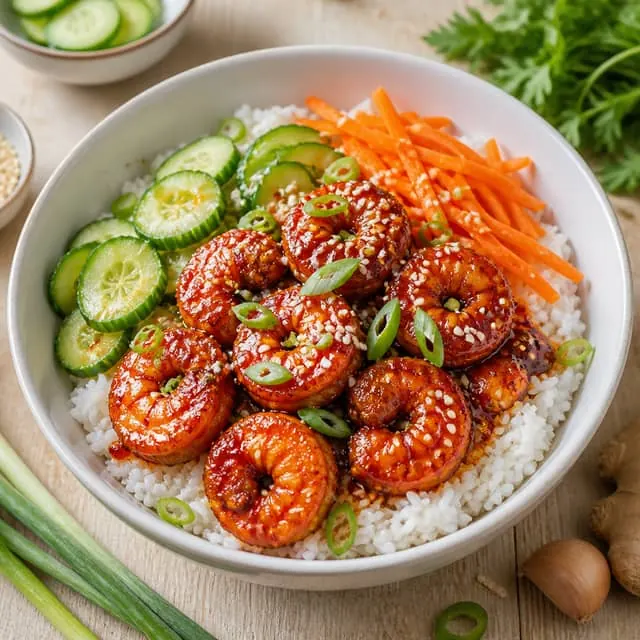

Gochujang does the heavy lifting: because it's fermented, a tablespoon and a half already brings sweetness, salt, heat and body, so the sauce needs only three other ingredients. The rice simmers and rests while you slice the vegetables, giving 2 bowls with 34 g of protein each and very little washing up.
The science: why this works
- The pink is a reveal, not a dye. Shrimp hold astaxanthin, a red-orange pigment, locked inside a protein called crustacyanin that makes raw flesh look grey-blue. Heat unfolds that protein and frees the pigment, so colour is a handy sign the flesh has heated through.
- Gochujang is brewed from chilli, fermented soybeans and glutinous rice. During fermentation, enzymes turn some rice starch into maltose and glucose, and the starch that's left gives the paste body, so the sauce thickens and clings within seconds instead of running off.
- Honey is rich in fructose, which browns at a lower temperature than table sugar and pulls moisture from the air. That's why the glaze can catch fast, and also why it stays tacky on the shrimp instead of drying into a hard shell.
- Patting dry is about energy. Every drop of surface water has to boil off at 100°C (212°F) before browning really gets going at around 140°C (285°F) and above. Dry shrimp start colouring almost at once, so the outside browns before the inside overcooks.
- Rice cooked by absorption needs about twice its weight in water, which is the 300 ml used here for 150 g. Leaving the lid on off the heat lets the trapped steam finish the top layer of grains while the starch firms slightly, so the rice separates instead of clumping.
Balancing sweet, salty and spicy
Gochujang is a fermented chili paste with built-in sweetness and umami. Honey adds sweetness, soy adds salt and the chili adds heat. Sweetness softens the heat, so the flavors feel round, not harsh. Sweet, salty and sour notes help tame the burn so heat becomes a pleasure.
Learn: Cooling a too-hot dish →Quick pickling the vegetables
Rice vinegar softens cucumber and carrot slightly and flavors them in minutes. The acid adds a bright, tangy contrast to the rich shrimp glaze and keeps the bowl from feeling heavy. Even 10 minutes in vinegar changes the taste and texture of fresh vegetables.
Learn: Make quick pickles →Short, hot cooking for shrimp
Shrimp turn pink and opaque in 1 to 2 minutes per side. High heat sears them fast, and tossing in the sauce for 30 seconds only glazes them. Longer would make them tough. Watch the color and the curl, since shrimp go from perfect to rubbery fast.
Learn: Cooking shrimp quickly →Sticky gochujang shrimp rice bowls
25 minutes · 2 servings · Korean · Dinner
Ingredients
Makes 2 servings
- 300 graw peeled shrimp
- 1½ tbspgochujang
- 1 tbsphoney
- 1 tbspsoy sauce
- 1 clovegarlic, grated
- 150 grice
- 300 mlwater
- ½cucumber, thinly sliced
- 1carrot, cut into thin sticks
- 1 tbsprice vinegar
- 2green onions, sliced
- 1 tspsesame seeds
- 1 tbspvegetable oil
Method

Tips for the best result
- Rinse the rice in a sieve until the water runs mostly clear; washing off loose surface starch keeps the grains from turning gummy under the glaze.
- Cut the carrot into matchsticks no thicker than 3 mm so the vinegar can season them in the 15 minutes the rest of the bowl takes.
- Listen to the pan: a loud, steady sizzle when the first shrimp goes in means it's hot enough. A weak hiss means wait another 30 seconds.
- Turn each shrimp when the pink has crept about halfway up its sides, usually after 60 to 90 seconds.
- If your gochujang is very stiff, stir 1 tsp water into the sauce so it pours and coats instead of landing in clumps.
- Toast the sesame seeds in the dry pan for a minute before the oil goes in, until they smell nutty and start to pop.
Mistakes to avoid
- Cooking shrimp that are still icy in the middle — the outside turns rubbery before the centre thaws. Make sure they bend easily and feel soft all the way through before they hit the pan.
- Pouring the sauce into a smoking pan — the honey lands on the hottest metal and blackens instantly. Lift the pan off the burner for a few seconds, then pour and toss.
- Leaving the glazed shrimp sitting in the hot pan — stored heat keeps cooking them and the glaze reduces to a burnt crust. Spoon them straight into the bowls.
- Fluffing the rice the moment the timer goes — the soft grains break and turn pasty. Let it stand, lid on, for at least 5 minutes first.
Variations and swaps
- Use 2.5 cm cubes of salmon instead of shrimp, seared 2 to 3 minutes per side until they flake, then glazed the same way.
- Go plant-based with pressed firm tofu tossed in 1 tbsp cornstarch and fried until crisp; use agave or rice syrup in place of honey to keep it vegan.
- Add a 7-minute boiled egg and a spoonful of kimchi for a bibimbap-style bowl.
- Serve over chilled rice noodles or soba, rinsed cold, for a noodle bowl on hot days.
- Stir 1 tsp toasted sesame oil into the glaze off the heat for a deeper, roasted aroma.
- Swap shrimp for thin chicken strips, and cook until 165°F (74°C).
Storing and reheating
Pack the shrimp, rice and pickles in separate containers and refrigerate within 2 hours at 4°C (40°F) or below; get the rice in within an hour, spread thin to cool, and eat it within a day or two. The shrimp keep up to 3 days. To reheat without rubbery shrimp, microwave the rice first with a splash of water under a lid until steaming hot, then lay the shrimp on top for the last 30 to 45 seconds until they reach 74°C (165°F); reheat rice only once. The cucumber goes limp after a day while the carrot stays crunchy for 3 to 4, so add fresh cucumber to later bowls. Don't freeze the pickles; glazed shrimp can be frozen at −18°C (0°F) for up to 2 months, though they lose some snap.
Sticky gochujang shrimp rice bowls: questions
Why did my glaze burn?
Usually the pan was still ripping hot when the sauce went in, or the shrimp stayed in it too long. Take the pan off the heat for a few seconds before pouring, toss for 30 seconds and get everything out.
Can I use frozen ready-to-eat shrimp?
Yes, but only warm them, don't cook them again. Thaw them in the fridge, pat them dry and toss them in the bubbling sauce for 30 to 60 seconds until hot.
Is this bowl gluten-free?
Not as written, because most gochujang and regular soy sauce contain wheat. Choose a gochujang labelled gluten-free and swap the soy sauce for tamari.
How can I make it milder for kids?
Drop the gochujang to 2 tsp and add an extra teaspoon of honey. The pickles and rice also cool each bite, so serve extra of both.
Can I meal prep these bowls?
Yes, for up to 3 days if you keep the parts separate. Eat the rice within a day or two and reheat the shrimp gently on top so they don't toughen.
Do I need to devein the shrimp?
Not for safety; the dark vein is the digestive tract and is harmless once cooked, but it can be gritty. Most raw peeled shrimp are sold already deveined.
What does gochujang taste like?
Gochujang tastes sweet, spicy, salty and savory all at once. It is a Korean fermented chili paste with a thick, sticky texture. Brands vary in heat.
How do I know the shrimp are cooked?
Shrimp are cooked when they turn pink and opaque and curl into a C shape. This takes about 1 to 2 minutes per side. Tight O shapes mean overcooked.
Where do I find gochujang?
Gochujang is sold in the international aisle of many supermarkets, in Asian grocery stores and online. It is usually in a red tub or tube. Once opened, store it in the fridge.