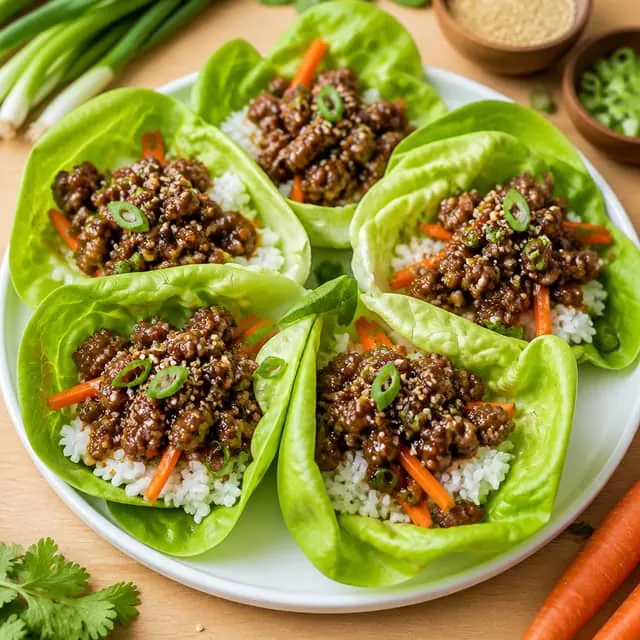
Korean beef lettuce wraps
These wraps borrow from Korean ssam, where everyone builds their own bites at the table. Hot, glossy beef and warm rice meet ice-cold lettuce, so every mouthful is a mix of temperatures and textures. It is a fun, hands-on dinner that kids and adults both get into.
- 25 minTotal time
- 2Servings
- 640kcal / serving
- 34 gProtein

The science is in the glaze. Gochujang brings ready-made sweetness and body from fermented rice, honey thickens fast, and the garlic and ginger cook only briefly so they stay fresh and punchy. Two minutes in the pan is all the sauce needs.
The science: why this works
- Gochujang is made from glutinous rice, fermented soybeans, chili and salt. During its long fermentation, enzymes break the rice starch into sugars and the soy protein into savoury amino acids. That leftover rice starch also thickens the glaze, which is why 2 minutes is enough.
- Honey is rich in fructose, which starts to caramelize at about 110°C (230°F), lower than table sugar. Once the soy sauce's water cooks off, the glaze turns sticky in seconds, and a minute or two too long takes it from glossy to burnt.
- Fresh ginger gets its bite from gingerol. Long cooking turns gingerol into zingerone, which is milder and sweeter, so the short 2-minute cook keeps the ginger sharp and zingy.
- Toasted sesame oil carries a roasted aroma that fades fast at high heat. That is why it goes into the sauce for the last 2 minutes instead of being used to fry the beef.
- Lettuce crunch is all about water pressure inside its cells. Limp leaves soaked in ice water for 10 minutes take water back in by osmosis, firm up and snap again.
Rice by absorption
Simmering rice covered in a measured amount of water lets the grains absorb all of it. Resting off the heat for 5 minutes lets the steam spread evenly. The rice turns fluffy, not wet or gluey.
Learn: Cooking rice by absorption →Crisp the beef first
Pressing the beef flat in a hot pan creates crispy brown spots before the sauce goes in. Browning adds savory flavor that the sauce alone cannot. Add the sauce at the end so it coats rather than steams the meat.
Learn: Brown food in batches →Balancing sweet, salty and hot
Honey adds sweetness, soy brings salt and gochujang adds heat and fermented depth. Together they hit all the notes at once. Taste the sauce and adjust at the end, adding more honey or soy to suit you.
Learn: Balancing salt, sweet, sour →Korean beef lettuce wraps
25 minutes · 2 servings · Korean · Sandwiches
Ingredients
Makes 2 servings
- 300 gground beef
- 2 tbspsoy sauce
- 1 tbsphoney
- 1 tbspgochujang
- 2 clovesgarlic, crushed
- 1 tspginger, grated
- 1 tspsesame oil
- 150 grice
- 300 mlwater
- 1 headlettuce, leaves separated
- 1carrot, cut into matchsticks
- 2green onions, sliced
- 1 tspsesame seeds
Method

Tips for the best result
- Use short- or medium-grain rice if you have it. It is slightly sticky, so a spoonful stays together in the leaf.
- Do not lift the lid while the rice simmers. Every peek lets out steam, and the measured water runs short.
- Whisk the honey into the soy sauce before adding the gochujang. Thick honey blends more easily with a thin liquid first.
- Cut the carrot into thin matchsticks, about 3 mm wide, or use a julienne peeler. Thin sticks bend with the wrap instead of snapping it open.
- Put everything on the table and let everyone build their own. Eating with your hands is the point.
- If a leaf tears, layer two together. Small inner leaves make good bite-size cups for kids.
Mistakes to avoid
- Adding sauce to a pan full of fat — the glaze slides off the beef. Spoon off all but about 1 tablespoon of fat before pouring in the sauce.
- Cooking the glaze too long — the honey burns and turns bitter and tacky. Pull the pan off as soon as the sauce coats the beef.
- Using wet lettuce — water dilutes the sauce and makes the wraps slippery. Spin or pat the leaves completely dry.
- Overfilling the leaves — they split and drip. About 2 tablespoons each of rice and beef per leaf is plenty.
Variations and swaps
- Quick-pickle the carrot: toss it with 1 tbsp rice vinegar, a pinch of sugar and a pinch of salt while the rice cooks.
- Add a spoonful of kimchi to each wrap for a sour, spicy crunch.
- Make it with crumbled firm tofu instead of beef. Press the tofu dry and crisp it in a little oil before adding the sauce.
- Add thin cucumber slices or top each wrap with a fried egg.
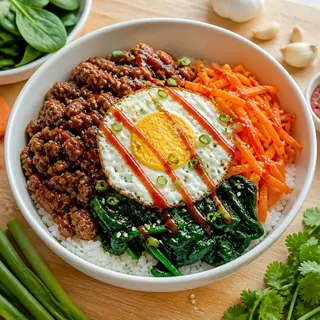
- Skip the lettuce and serve everything in a bowl, bibimbap-style.
- Swap the ground beef for ground chicken or turkey, cooked to 165°F (74°C).
Storing and reheating
Store the beef, rice and lettuce separately. The beef keeps in the fridge at 4°C (40°F) or below for 3 to 4 days, or 2 to 3 months frozen at −18°C (0°F). Revive it in a hot dry pan for 2 to 3 minutes so the edges crisp again, until it reaches 74°C (165°F). Rice needs extra care: spread it out to cool fast, refrigerate within 1 hour if you can (2 hours at most) and eat it within a day or two, reheated only once until steaming hot. Wrap washed, dried lettuce in a paper towel inside a bag for 3 to 5 days. If it goes limp, soak it in ice water for 10 minutes. Lettuce does not freeze.
Korean beef lettuce wraps: questions
How hot are these wraps?
They are mild to medium. One tablespoon of gochujang spread across 300 g of beef gives a gentle warmth, so use 2 teaspoons for kids or add chili flakes for more heat.
Are Korean beef lettuce wraps gluten-free?
Not usually. Regular soy sauce contains wheat, and many gochujang brands contain wheat or barley. Use tamari and a gluten-free gochujang to make them gluten-free.
How do I stop lettuce wraps from falling apart?
Use whole, dry leaves, do not overfill them, and fold the sides in before you bite. Slightly sticky rice also helps hold everything together.
Is this the same as bulgogi?
No. Bulgogi uses thin slices of beef marinated in a soy-based sauce, while this recipe uses ground beef and a quick gochujang glaze. It is Korean-inspired and much faster.
What rice is best for lettuce wraps?
Short- or medium-grain white rice works best because it clings together. Long-grain rice works too but falls out of the leaf more easily.
What is gochujang?
Gochujang is a Korean fermented chili paste that is spicy, sweet and savory. Find it in the international aisle. A little goes a long way.
Can I make Korean beef ahead?
Yes, the beef keeps for 3 to 4 days in the fridge. Reheat to 165°F (74°C). Assemble the wraps fresh.
Why is leftover rice risky?
Cooked rice can grow bacteria if left warm. Chill it within 2 hours. Reheat until steaming hot.