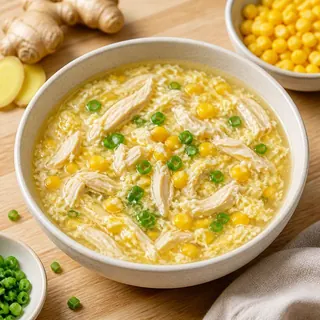
Chicken noodle soup
Most quick chicken noodle soups assume you have cooked chicken in the fridge. This one doesn't. Raw chicken breast goes straight into the simmering broth, alongside the pasta, so there's no second pan and no waiting on a roast. Each bowl brings about 31 g of protein.
- 30 minTotal time
- 3Servings
- 370kcal / serving
- 31 gProtein
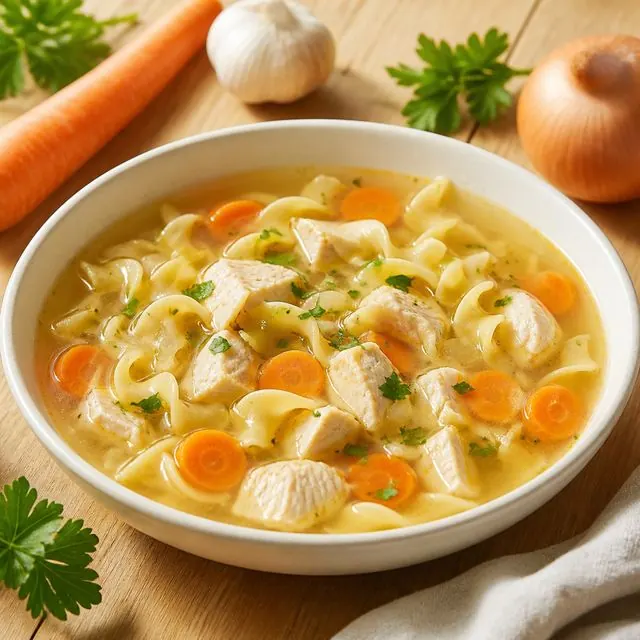

The science hook is a two-way flavour swap. As the chicken poaches, its juices and a little fat enrich the store-bought broth. Meanwhile the pasta cooks in that broth instead of plain water, so it drinks up seasoned liquid and tastes savoury all the way through.
The science: why this works
- Pasta cooked in broth absorbs the broth itself, so every piece is seasoned from the inside, and the starch it sheds gives the soup a slightly silkier body than a clear broth. It's also why 120 g of pasta needs a full litre of liquid: the pasta soaks up a good share of it.
- The grey foam that rises after the chicken goes in is soluble protein from the meat setting in the heat. It's harmless, but skimming it off keeps the broth cleaner looking and tasting.
- Frozen peas are picked young, when they're high in sugar, and frozen within hours, before that sugar turns to starch. Two minutes heats them through; much longer and heat and the mild acids in the pot turn their bright chlorophyll into olive-coloured pheophytin.
- The garlic gets only 30 seconds before the broth goes in. Once liquid hits the pot it can't get hotter than about 100°C (212°F), which stops the garlic well short of browning and keeps its flavour sweet and soft.
- Small chicken pieces and pasta both keep cooking in the hot broth after the heat goes off. Turning off the burner as soon as the peas are hot keeps the breast tender and the pasta from going soft.
Why the soup simmers, not boils
A gentle simmer keeps the chicken tender. Hard boiling tightens the meat proteins and squeezes out moisture, which makes chicken tough and the broth cloudy. Small bubbles are all you need. Keep the heat low enough that only small bubbles rise.
Learn: Boil vs. simmer →Why the vegetables cook first
Cooking onion and carrot in oil for 5 minutes softens them and builds a sweet flavor base. This step gives the broth more depth than simply boiling the vegetables. This is why patient onions taste so different from raw ones in the finished dish.
Learn: Why cooked onions turn sweet →Why the chicken is cut small
Small 1.5 cm pieces cook through in about 10 minutes, the same time as the pasta. Cutting evenly means no piece stays raw while others dry out. Even pieces mean even cooking, so nothing is raw while something else is overdone.
Learn: Cut food the same size →Chicken noodle soup
30 minutes · 3 servings · American · Soup
Ingredients
Makes 3 servings
- 300 gchicken breast, cut into 1.5 cm pieces
- 1onion, diced
- 2carrots, sliced
- 2 clovesgarlic, chopped
- 1 lchicken broth
- 120 gsmall pasta shapes
- 100 gfrozen peas
- 1 tbspolive oil
- Salt
- Black pepper
Method

Tips for the best result
- Wait for the broth to reach a full boil before adding the chicken and pasta, then turn it down to a simmer.
- Stir the pot a few times in the first 2 minutes after the pasta goes in so it doesn't clump or stick to the bottom.
- Skim off the grey foam with a spoon a couple of minutes after the chicken goes in.
- Slice the carrots into coins about 5 mm thick so they're tender by the time the pasta is done.
- Squeeze a little lemon into each bowl right before eating to brighten the broth.
- If the soup thickens while it sits, loosen it with a splash of hot broth rather than water, which would dilute the flavour.
Mistakes to avoid
- Adding the pasta before the broth is boiling — it sits on the bottom and turns gummy; bring it to a full boil first.
- Using full-salt broth and salting early — the broth already carries plenty, so use low-sodium broth and season only at the end.
- Leaving the soup simmering after it's done — the chicken tightens and the pasta bloats; take it off the heat once the peas are hot.
- Letting the garlic brown — 30 seconds is enough; browned garlic leaves a bitter edge in a light broth.
Variations and swaps
- Use gluten-free pasta and a broth labelled gluten-free for a gluten-free bowl.
- Add a sliced celery stalk with the onion and carrot for the classic diner flavour.
- Swap the pasta for broken egg noodles; most cook in 6–8 minutes, so add them a little later.
- Go ginger-garlic: add a few slices of fresh ginger with the garlic and finish with a dash of soy sauce and sliced green onion.
- Finish with a big handful of chopped dill or parsley and a grind of black pepper.
- Swap the pasta for rice, which takes about 12 minutes to cook in the broth.
Storing and reheating
Refrigerate within 2 hours (1 hour above 32°C/90°F) at 4°C (40°F) or below and eat within 3–4 days. Reheat on the stove to a rolling boil, stirring, and only reheat each portion once. Leftover pasta swells overnight, so loosen it with hot broth rather than water to keep the flavour strong. For the freezer, cool the soup first and freeze it in portions with about 2 cm of headspace for expansion, ideally before the pasta goes in; it keeps 2–3 months at −18°C (0°F). Thaw in the fridge, bring to a boil and cook a fresh handful of pasta in it.
Chicken noodle soup: questions
Can raw chicken go straight into the pot?
Yes. Small raw pieces poach safely in simmering broth in about 10 minutes, as long as the largest piece has no pink and reaches 74°C (165°F).
Why does my soup taste bland?
Usually it needs more salt or acid. Low-sodium broth is a blank slate, so season at the end, a pinch at a time, and add a squeeze of lemon.
Can I use leftover rotisserie chicken?
Yes. Skip the raw chicken, cook the pasta in the broth, then add shredded cooked chicken with the peas and heat until steaming.
Does it freeze well?
Yes, best without the pasta. Freeze the broth, vegetables and chicken for up to 3 months and cook fresh pasta in it when you reheat.
Is chicken soup actually good when you have a cold?
It won't cure a cold, but warm fluids and steam can ease a stuffy nose and help you stay hydrated. It's also gentle to eat when you have little appetite.
Can I make it gluten-free?
Yes. Use a gluten-free small pasta and check that your broth is labelled gluten-free, since some contain wheat.
How do you keep noodles from getting mushy in soup?
Add them near the end and cook only until tender. For leftovers, store noodles and broth separately.
How long does chicken noodle soup last in the fridge?
It lasts 3 to 4 days in a sealed container. Cool it quickly and reheat until it reaches 165°F (74°C).
What internal temperature is chicken done?
Chicken is done at 165°F (74°C). In soup, cut the largest piece open and check for no pink.