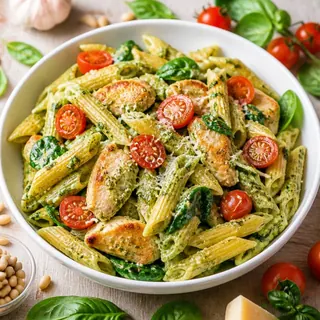
Chicken and broccoli pasta
There is no sauce to make here. The coating is built in the last 30 seconds: drained pasta still carries a film of starch, and when finely grated parmesan and a squeeze of lemon hit it, that starch keeps the cheese loose and glossy instead of letting it clump. Get the order and the heat right and you get a silky finish with nothing heavier than olive oil.
- 25 minTotal time
- 3Servings
- 490kcal / serving
- 35 gProtein
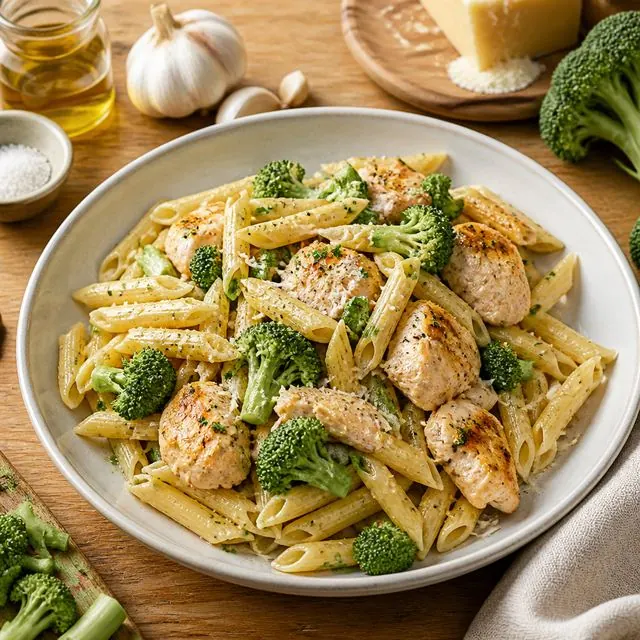

That makes this a bright, clean-tasting bowl for anyone who finds cream sauces too much. Each serving has 35 g of protein, so it works as a post-gym dinner or a next-day lunch, and the method teaches three habits worth keeping: brown in small pieces, add aromatics late, and let residual heat do the melting.
The science: why this works
- Starch is what stops the parmesan clumping. When cheese gets hot, its proteins want to cling together into rubbery strands. Gelatinized starch from the pasta surface slips between those proteins and keeps them apart, so the cheese spreads into a smooth film rather than a ball on your fork.
- Chicken breast dries out on a schedule. Its muscle proteins tighten in stages, and the big squeeze, when actin firms up, happens at roughly 66–73°C (150–163°F). That pushes out juice right as the meat nears the safe 74°C (165°F), so small 2 cm pieces that reach temperature fast and come straight off the heat keep the most moisture.
- Salting the pasta water seasons the pasta from the inside. Starch granules soak up the salty water as they swell, and with no heavy sauce here to cover a bland noodle, that is the only chance to get seasoning into the middle. (The salt does not meaningfully change the boiling point. It is there for flavour.)
- A brief dip also tames the brassica smell. Cut florets hold glucosinolates that break down into sharp, mustardy compounds, and long boiling converts those into the sulphurous notes people dislike. Pulling the pasta and florets on time keeps the taste mildly peppery.
- The drained pasta keeps cooking from its own heat while it waits and again in the hot pan. Pulling it about a minute early means it lands perfectly tender rather than soft once everything is tossed.
Why the broccoli goes in for 3 minutes
Three minutes in boiling water softens broccoli but keeps it bright green. Cooking longer turns it dull and mushy as the color pigments break down. Adding it near the end saves a pan too.
Learn: Keeping greens bright →Why chicken must reach 165°F (74°C)
Chicken is safe once the thickest part reaches 165°F (74°C). The juices should run clear with no pink. Turning it now and then browns it evenly and keeps it from drying out.
Learn: Cooking juicy chicken breast →Why garlic goes in at the end
Garlic burns fast in a hot pan. Adding it for just 30 seconds at the end gives flavor without bitterness. The residual heat of the pasta finishes the job.
Learn: Start garlic in cold oil →Chicken and broccoli pasta
25 minutes · 3 servings · American · Dinner
Ingredients
Makes 3 servings
- 250 gpasta
- 250 gchicken breast, cut into 2 cm pieces
- 200 gbroccoli, cut into small florets
- 2 clovesgarlic, chopped
- 30 gparmesan, grated
- 1 tbspolive oil
- ½lemon
- Salt
- Black pepper
- 2 lwater, for boiling
Method

Tips for the best result
- Drain the pasta 1 minute before the packet time. It finishes in the pan with the chicken and stays springy.
- Leave the chicken alone for the first 2 minutes. When a piece lifts off the pan easily and shows a golden underside, it is ready to turn.
- Grate the parmesan on a microplane. The 30 g fluffs into a little mountain that melts in seconds, where coarse shreds tend to knot together.
- Zest the lemon half over the pan before you squeeze it. The zest carries fragrant oils that add lemon aroma without making the dish more sour.
- Peel the broccoli stalk, slice it into 5 mm coins and add it with the florets. It cooks in the same 3 minutes and nothing goes in the bin.
- Listen to the chicken. A steady sizzle means it is browning. If the pan goes quiet and pools with liquid, raise the heat or spread the pieces out.
Mistakes to avoid
- Adding the parmesan with the burner still on high — it seizes into stringy clumps. Turn the heat off first, then toss in the cheese and lemon.
- Under-salting the pasta water — the noodles taste flat however much cheese goes on. Use about 2 tsp of salt in the 2 litres.
- Leaving the pasta in the colander for 5 minutes or more — the starch film dries, the pieces glue together and the cheese has nothing to cling to. Time it so the pasta goes straight into the pan.
- Using bottled lemon juice — it tastes dull and slightly bitter next to fresh. Half a real lemon makes the dish.
Variations and swaps
- Scatter 2 tbsp toasted pine nuts or chopped almonds over each bowl for crunch.
- Stir a few chopped sun-dried tomatoes in with the garlic for sweet, chewy bites.
- Replace half the broccoli with frozen peas, added for the last 2 minutes of the pasta's cooking time.
- Add 1/4 tsp chilli flakes with the garlic for a gentle kick.
- Use whole-wheat pasta. It needs 1–2 minutes longer, and its nutty taste suits the lemon.
- Swap broccoli for green beans or asparagus, with similar cooking time.
Storing and reheating
Refrigerate leftovers in a sealed container within 2 hours (1 hour if the room is above 32°C/90°F), keep the fridge at 4°C (40°F) or below, and eat within 3–4 days. For the best texture, reheat in a frying pan over medium heat with 1–2 tbsp water, tossing until the chicken reaches 74°C (165°F), then add a fresh grating of parmesan and a squeeze of lemon. The microwave can toughen the edges of chicken breast, so if you use it, cover the bowl and stir halfway. Cold leftovers also make a decent pasta salad with extra lemon and a drizzle of oil. Frozen portions keep 2–3 months at −18°C (0°F). Thaw them in the fridge.
Chicken and broccoli pasta: questions
Why is my pasta dry and sticky instead of glossy?
The pasta lost its surface starch film before the cheese went in, usually because it sat drained for too long. Toss it in the pan straight from the colander and loosen with 2–3 tbsp hot water if it looks dull.
Why did my parmesan clump into strings?
The pan was too hot. Cheese proteins tighten and clump at high heat, so turn the burner off before adding the parmesan and toss quickly while the pasta is still steaming.
Can I make it with rotisserie chicken?
Yes. Skip the browning step, warm the garlic in the oil for 30 seconds, then add about 250 g of shredded rotisserie chicken with the pasta and toss until everything is piping hot.
Which pasta shape works best?
Short shapes with ridges or cups, such as penne rigate, fusilli or orecchiette, hold the small florets and grated cheese best. Long spaghetti works too, but the broccoli slides to the bottom of the bowl.
How much salt goes in the pasta water?
About 2 teaspoons for the 2 litres of water. That seasons the pasta without making it salty, which matters because the parmesan adds more salt at the end.
Can I pack it for lunch and eat it cold?
Yes, as long as it was refrigerated within 2 hours of cooking and stays cold until you eat it. Add a fresh squeeze of lemon to wake up the flavour, since chilled food tastes milder.
How do you keep chicken breast from drying out?
Cut it into even pieces and cook just until it reaches 165°F (74°C). Turning it now and then helps it brown without overcooking. Pulling it right at temperature keeps it juicy.
Can I cook the broccoli with the pasta?
Yes, add it for the last 3 minutes of the pasta cooking time. This keeps it tender and bright green and saves washing a pan. Drain both together.
How do I know the chicken is cooked through?
It should be golden, with no pink inside, juices running clear and a thermometer reading of 165°F (74°C). Cut a piece open to check if needed.
Can I use frozen broccoli?
Yes, frozen broccoli works and can go in for the last 3 minutes too. It may be a bit softer. Drain well.