One-pan paprika chicken and rice
Paprika does double duty in this pan. It browns onto the chicken, and because its red pigment dissolves in fat, it also tints the oil that every grain of rice gets stirred through. The peas never touch the heat at all: they ride on top of the hot rice while it rests and cook in its leftover steam.
- 30 minTotal time
- 3Servings
- 500kcal / serving
- 33 gProtein
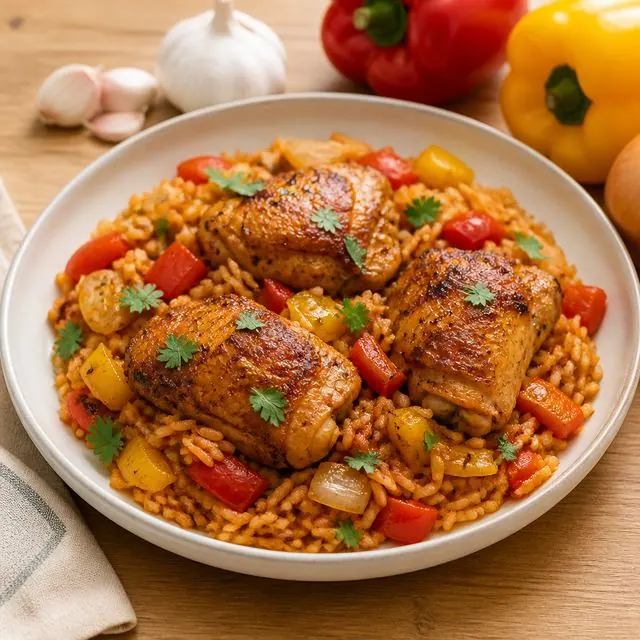

It is a loose cousin of Spanish chicken and rice, built for a family of three, and it teaches the most useful one-pan skill there is: knowing when to leave the lid alone. If you catch a faint crackle at the end and find a toasty layer on the bottom, you have made the bit paella fans fight over.
The science: why this works
- Paprika gets its red from carotenoid pigments such as capsanthin, which dissolve in oil, not water. Cooked with the chicken, the spice turns the fat red, and that red oil coats the rice. Paprika also contains natural sugars that scorch fast, so it goes in with the moist chicken rather than into a dry pan.
- There is a little more liquid here than a plain pot of rice would need: 450 ml broth for 200 g rice, against the 2:1 ratio of a saucepan. A wide pan has more surface for steam to escape, and the vegetables absorb some too, so the extra broth keeps the top layer from drying out.
- As long as there is liquid in the pan, the base stays close to 100°C (212°F). Once the rice has absorbed it all, the bottom heats quickly, which is why the simmer stops at 15 minutes. A short overrun gives a crisp golden layer, like socarrat in paella; a long one burns it.
- The peas sit on top of rice that is still close to boiling point, under a lid full of steam. Three minutes is enough to heat them through while they stay bright and sweet, which they would not after 15 minutes in the broth.
- Broth is already salted, so the recipe adds only a pinch with the chicken. The liquid concentrates as the rice drinks it up, and extra salt at the start would leave the rice tasting too salty.
Why the chicken is browned first
Browning chicken at medium-high heat triggers the Maillard reaction, which creates deep roasted flavor. Those browned bits stick to the pan and dissolve into the broth later, flavoring the rice from the inside. It only happens on a dry, hot surface, so pat the food dry first.
Learn: Maillard vs. caramelization →Why the rice cooks in the broth
Rice grains swell as they absorb liquid and heat. Cooking them in chicken broth lets them soak up flavor instead of plain water. Keeping the lid on traps steam so the rice cooks evenly. Lifting the lid lets that steam escape, so keep it closed until the time is up.
Learn: Cooking rice by absorption →Why chicken thighs stay juicy
Thighs have more fat and connective tissue than breast, so they stay tender even when cooked fully to 165°F (74°C). The fat also carries the paprika flavor through the pan. Dark meat also forgives a few extra minutes in the pan, which suits a busy cook.
Learn: Bone-in or boneless →One-pan paprika chicken and rice
30 minutes · 3 servings · Mediterranean · Dinner
Ingredients
Makes 3 servings
- 400 gboneless chicken thigh, cut into 2 cm pieces
- 200 grice
- 1onion, diced
- 1bell pepper, diced
- 2 clovesgarlic, chopped
- 2 tsppaprika
- 450 mlchicken broth
- 100 gfrozen peas
- 1 tbspolive oil
- Salt
Method

Tips for the best result
- Use a pan with a tight lid. If yours is loose, lay a sheet of foil over the pan and press the lid on top.
- Stir the rice in the paprika oil for 30 seconds before the broth goes in so every grain is coated.
- Warm the broth first. It brings the pan back to the boil faster, so the rice does not sit soaking in lukewarm liquid.
- Use low-sodium broth if you can, then adjust the salt at the end, since the liquid concentrates as the rice absorbs it.
- Listen at the 15-minute mark: a faint crackle means the liquid is gone and the bottom is toasting. Wet bubbling means it needs a couple more minutes.
- Fluff the rice with a fork after the rest to separate the grains.
Mistakes to avoid
- Running the burner too high once the lid is on — the bottom scorches before the rice is tender. Use the lowest setting that keeps a gentle simmer.
- Swapping in brown rice without changing the liquid — it stays hard. Brown rice needs about 150 ml more broth and 35–40 minutes.
- Adding the peas with the broth — 15 minutes of simmering turns them grey and mushy. Scatter them on top for the rest.
- Using a pan smaller than about 26 cm — the rice layer gets too deep, so the bottom turns mushy while the top stays firm. Choose a wide pan with a lid.
Variations and swaps
- Add a pinch of chilli flakes or cayenne with the paprika for heat.
- Stir 1 tbsp tomato paste in with the vegetables for a richer, redder rice.
- Steep a pinch of saffron in the warm broth for a golden, paella-like colour and scent.
- Add sliced chorizo with the chicken for a smoky, Spanish-inspired twist.
- Use a broth labelled gluten-free to make the dish gluten-free.
- Swap the frozen peas for green beans cut small, and add them with the onion.
Storing and reheating
Cool leftovers quickly in a shallow container and refrigerate within 1 hour if possible (2 hours max), at 4°C (40°F) or below. Because the dish contains cooked rice, eat it within a day or two. Chilled rice firms up, so sprinkle about 1 tbsp water over each portion, cover, and reheat in the microwave or a covered pan until steaming hot throughout, 74°C (165°F). The steam softens the grains again. Reheat only once. It freezes in single portions for 2–3 months at −18°C (0°F). Thaw it overnight in the fridge, never at room temperature.
One-pan paprika chicken and rice: questions
Why is my rice still crunchy?
Steam escaped, or the heat was too low to keep a simmer. Add 2–3 tbsp hot broth or water, cover tightly and cook on low for 5 more minutes.
What kind of rice works best?
Long-grain white rice is the most reliable for this ratio and timing. Basmati works well too. Rinse it first to keep the grains separate.
Why did the bottom burn?
The heat was too high, the pan was thin, or the rice cooked well past the point where the liquid was gone. Use a heavy pan on the lowest simmer and check at 15 minutes.
Can I bake it in the oven instead?
Yes. After the broth comes to the boil, cover with a lid or foil and bake at 180°C (350°F) for about 20–25 minutes, then add the peas and rest as written. Use an ovenproof pan.
Can I make it ahead?
Yes, if you cool it quickly and eat it within a day or two. Reheat until steaming hot with a splash of water to loosen the rice.
What internal temperature should chicken reach?
Chicken is safe once it reaches 165°F (74°C) in the thickest part. With no thermometer, cut the largest piece open and check that no pink remains and the juices run clear.
Why is my one pan rice mushy?
Too much liquid or too much stirring often makes rice mushy. Stick to the amount of broth in the recipe, keep the lid on and rest it before serving.
Can I use chicken breast instead of thighs?
Yes, but breast cooks faster and dries out more easily. Cut it into similar pieces and take care not to overcook it.