Eggs in spiced tomato sauce
The classic headache with shakshuka-style eggs is timing: the yolks firm up while the thick white around them is still clear. This version solves it with a spoonful of hot sauce over each white, a wide lidded pan and a sauce that's at a steady simmer before the eggs go in.
- 30 minTotal time
- 2Servings
- 380kcal / serving
- 19 gProtein
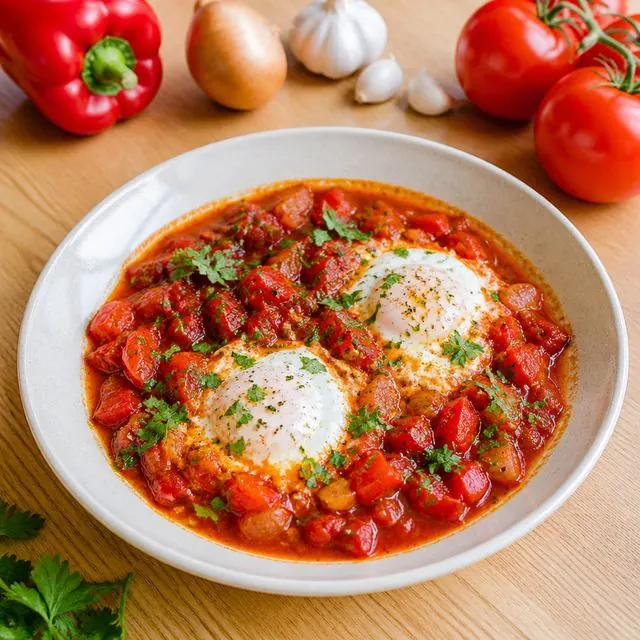

The result is four eggs set evenly in a sweet pepper and tomato sauce, ready in 30 minutes with toast for dipping. It's vegetarian, dairy-free, cheap and just as good for brunch as for a weeknight dinner.
The science: why this works
- Egg white is a mix of proteins with different setting points. Ovotransferrin firms at about 62°C (144°F), but ovalbumin, the main white protein, needs closer to 80°C (176°F). That's why the thick white next to the yolk is the last part to set, and why spooning hot sauce over it helps.
- Tomato sauce is acidic, around pH 4 to 4.5, and acid speeds up egg white coagulation. It's the same reason some cooks add vinegar to poaching water: the whites firm up faster and hold their shape in the sauce.
- Six minutes of gentle cooking softens the pepper and onion as heat breaks down the pectin that glues their cells together, and lets some of their sugars brown, which gives the sauce a sweet, rounded base.
- Some canned tomatoes contain calcium chloride, a firming agent that keeps the pieces from breaking down. If yours stay chunky after simmering, crush them with the back of a spoon for a smoother bed for the eggs.
- Tomato and egg yolk share a savoury link: tomatoes are high in glutamate, and the rich fat in the yolk carries flavour, so each bite of yolk and sauce tastes fuller than either alone.
Why the spices cook in the oil first
Cumin and paprika flavors dissolve in fat. Stirring them into the hot oil for 30 seconds wakes them up and spreads them through the sauce. Longer than that and the paprika can burn and turn bitter.
Learn: Bloom spices in hot oil →Why the sauce is simmered before the eggs go in
Simmering for 8 minutes evaporates water, so the sauce thickens and tastes more concentrated. A thick sauce also holds the eggs in their dips. A thin sauce would let the whites spread out.
Learn: Why reducing strengthens a sauce →Why the pan is covered
The lid traps steam, which cooks the tops of the eggs while the sauce below heats the bottoms. Seven minutes sets the whites and yolks fully. Without a lid the tops stay raw.
Learn: Why poaching stays below a simmer →Eggs in spiced tomato sauce
30 minutes · 2 servings · Middle Eastern · Dinner
Ingredients
Makes 2 servings
Method

Tips for the best result
- Use a 26 to 28 cm (10 to 11 in) pan with a lid so four eggs sit in a single layer.
- Crack each egg into a small cup first, then slide it into its hollow. No shell, no broken yolks.
- Spoon a little hot sauce over each white, avoiding the yolk, before you put the lid on.
- Dice the pepper to about 1 cm so it's tender in 6 minutes.
- Turn the heat down to a low simmer once the eggs are in. A hard boil toughens the whites.
- For a fully dairy-free meal, check the bread label: some sandwich breads contain milk.
Mistakes to avoid
- Cracking eggs into lukewarm sauce — they take ages to set and the whites spread. Bring the sauce to a steady simmer first.
- Lifting the lid every minute — the steam escapes and the eggs take longer. Check once, at about 6 minutes.
- Simmering the sauce in bare cast iron — the acid can pick up a metallic taste and strip the seasoning. Use stainless steel, enamelled or non-stick.
- Cutting the pepper into big chunks — it's still crunchy when the eggs are done. Keep the dice small and even.
Variations and swaps
- Add a pinch of chili flakes or a spoonful of harissa with the spices for heat.
- Crumble feta over the top before serving (no longer dairy-free).
- Stir a drained can of chickpeas into the sauce with the tomatoes for a heartier dinner.
- Swap the fresh pepper for a roasted red pepper from a jar, sliced and added with the tomatoes.
- Finish with a handful of chopped parsley or coriander.
- Swap the paprika for smoked paprika to add a smoky taste.
Storing and reheating
Only the sauce really keeps. Cool it and refrigerate within 2 hours at 4°C (40°F) or below for 3–4 days, or freeze it in portions at −18°C (0°F) for 2–3 months and thaw in the fridge. Bring it back to a rolling boil, drop to a simmer and cook fresh eggs in it. Cooked eggs don't freeze well, as the whites turn rubbery and watery. If you do have leftover eggs in sauce, reheat them covered over low heat until steaming, 74°C (165°F); the yolks will firm right through.
Eggs in spiced tomato sauce: questions
Why are my whites still runny when the yolks look set?
The thick white near the yolk sets at a higher temperature than the yolk. Spoon hot sauce over the whites, keep the lid on and give them a minute or two more.
Why does my tomato sauce taste sour or tinny?
Underripe canned tomatoes or a reactive pan are the usual causes. Simmer a few minutes longer, add a tiny pinch of sugar if needed, and cook in stainless steel, enamel or non-stick.
Can I finish shakshuka in the oven?
Yes, if your pan is ovenproof. After adding the eggs, bake at 190°C (375°F) for about 8 to 12 minutes until the whites and yolks are set.
Can I leave the yolks runny?
You can, by taking the lid off a few minutes sooner. Runny yolks carry a small risk of salmonella, so use pasteurized eggs or cook them fully for pregnant people, young children, older adults and anyone immunocompromised.
Can I freeze shakshuka?
Freeze the sauce only, for up to 2–3 months. Cooked eggs go rubbery in the freezer, so add fresh ones when you reheat.
What do you serve with eggs in tomato sauce?
Toast or crusty bread for dipping is the classic. A simple cucumber salad on the side keeps it fresh.
What is the difference between this and shakshuka?
It is essentially a simple version of shakshuka, with eggs cooked in a spiced tomato and pepper sauce. Classic shakshuka often uses harissa or extra spices. This one keeps to cumin and paprika.
Can I use fresh tomatoes instead of canned?
Yes, but canned tomatoes give a thicker, more consistent sauce in less time. If you use fresh, you will need to chop them and simmer longer. Ripe tomatoes work best.
How do you know when the eggs are done?
The whites should be opaque and firm and the yolks should no longer be runny. This takes about 7 minutes with the lid on. Cook a minute or two longer if needed.
Can I make the sauce ahead?
Yes, the sauce keeps in the fridge for up to 4 days. Reheat it in the pan until simmering, then make dips and add the eggs fresh. This makes it a very fast meal.