Korean beef bibimbap bowls
This bibimbap runs like a relay. While the rice simmers and rests, one frying pan takes turns: carrot and spinach first, then the garlicky beef, then the eggs. It's a weeknight version of the Korean mixed rice bowl, with about 38 g of protein in each serving.
- 30 minTotal time
- 2Servings
- 720kcal / serving
- 38 gProtein
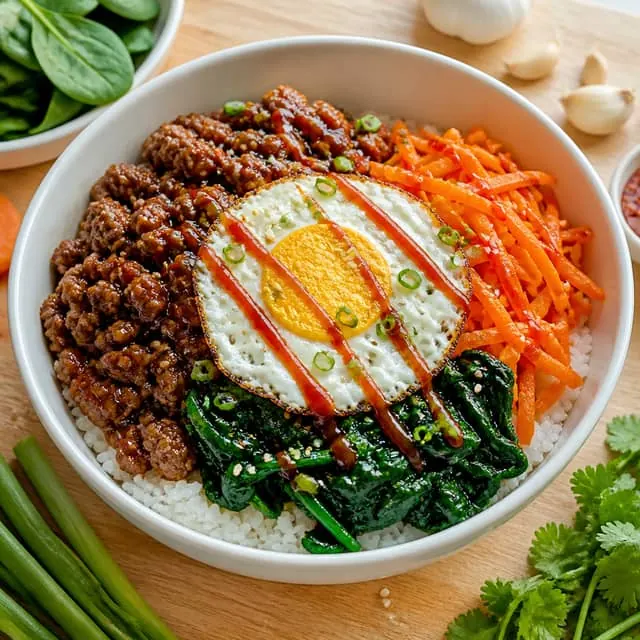

The smart move is splitting the sauce. Half of the sweet, spicy gochujang mix gets cooked into the beef so it clings and glazes. The other half stays raw for drizzling, so the fermented chili and toasted sesame aromas are still bright when you stir everything together at the table.
The science: why this works
- The 5-minute covered rest after simmering isn't optional. The outer layer of each grain is wetter than the centre when the heat goes off, and the trapped steam lets that moisture spread evenly inward while the surface starch firms slightly, so the grains end up tender and separate rather than gummy outside and firm inside.
- Gochujang is sweetened with rice syrup and burns easily, so it goes in only after the beef has browned. Cooking half the sauce turns it into a sticky glaze, while the raw half keeps its fresh, funky, fermented aroma for drizzling.
- The garlic goes in with the raw beef instead of into hot, empty oil. As the beef releases its juices, the garlic cooks gently in that moisture over the 6–7 minutes, so it softens into the meat instead of scorching.
- Toasted sesame oil gets its nutty smell from pyrazines formed during toasting. Those aroma compounds are volatile and fade with heat, which is why the oil goes into the raw sauce and over the finished bowls instead of the pan.
- Spinach wilts in a minute because heat breaks its cell membranes and lets the water inside escape. That's why 100 g collapses to a few spoonfuls, and why it shouldn't sit in the pan any longer, or it starts to stew in its own liquid.
Why the sauce balances sweet, salty and hot
Gochujang brings chili heat and fermented depth, soy sauce adds salt and honey adds sweetness. Together they balance, so no one taste takes over. Sesame oil adds a toasty finish. Tasting at the end lets you nudge the balance with a pinch of salt or a drop more honey.
Learn: Balancing salt, sweet, sour →Why the beef is browned and broken up
Browning ground beef creates savory flavor through the Maillard reaction. Breaking it up cooks it evenly to 160°F (71°C) with no pink, and lets the sauce coat every piece. It only happens on a dry, hot surface, so pat the food dry first.
Learn: Maillard vs. caramelization →Why gochujang tastes so deep
Gochujang is a fermented paste. Fermentation builds savory, complex flavors that add umami, so a little makes the whole bowl taste richer. Fermented pastes and sauces are shortcuts to savory flavor in a quick recipe. A small spoonful is enough, so taste before adding more.
Learn: Building savory flavor →Korean beef bibimbap bowls
30 minutes · 2 servings · Korean · Dinner
Ingredients
Makes 2 servings
Method

Tips for the best result
- Rinse the rice two or three times, until the water is only slightly cloudy, for fluffier grains.
- Keep the lid on through both the simmer and the 5-minute rest; every peek lets steam escape.
- Cut the carrot into thin matchsticks about 5 mm thick so they turn tender-crisp in 2 minutes.
- Press the wilted spinach lightly with a spoon on the plate and tip away the liquid so it doesn't water down the rice.
- Season the carrot and spinach with a tiny pinch of salt and a few drops of sesame oil, the way Korean namul side dishes are dressed.
- Arrange the toppings in separate sections over the rice, then mix everything with a spoon at the table.
Mistakes to avoid
- Peeking at the rice — lifting the lid lets out the steam it needs; leave it covered until the rest is done.
- Adding the sauce before the beef has browned — its sugars burn while the meat is still wet and grey; brown the beef fully first, until no pink remains and it reaches 71°C (160°F).
- Leaving the spinach in the pan for more than a minute — it turns watery and dull; move it to the plate as soon as it wilts.
- Leaving cooked rice on the counter after dinner — spread leftovers out to cool and refrigerate them within an hour if possible.
Variations and swaps
- Thinly sliced sirloin, seared fast in the hot pan, makes a bulgogi-style topping; cook whole-cut beef to at least 63°C (145°F).
- Use crumbled firm tofu or chopped mushrooms instead of beef for a vegetarian bowl.
- Add kimchi or quick-pickled cucumber for crunch and tang.
- Crisp the rice in a hot, oiled pan for a few minutes before topping, for a crunchy dolsot-style base.
- Prefer a runny yolk, as many traditional bowls have? Use pasteurized eggs, especially for anyone pregnant, very young, older or immunocompromised.
- Swap the ground beef for ground chicken or turkey, cooked to 165°F (74°C).
Storing and reheating
Cool the rice fast by spreading it out, and refrigerate it within 1 hour ideally (2 hours max), because Bacillus cereus spores can survive cooking; eat it within a day or two and reheat it only once, sprinkled with a little water and covered, until steaming hot throughout. Store the beef and vegetables separately at 4°C (40°F) or below for 3–4 days; reheat the beef to 74°C (165°F), and the carrot and spinach are fine eaten cold, like namul. Keep the reserved raw sauce in a sealed jar in the fridge for up to a week. The cooked beef freezes for 2–3 months at −18°C (0°F); thaw it in the fridge. Fry eggs fresh, and don't freeze the spinach or eggs.
Korean beef bibimbap bowls: questions
Can I meal prep these bowls?
Yes. Store the rice, beef and vegetables separately, eat the rice within a day or two, and fry a fresh egg when you reheat.
Is a runny egg safe in this bowl?
A runny yolk carries a small risk of salmonella. This recipe cooks the egg fully set; if you want it runny, use pasteurized eggs, especially for higher-risk people.
Is gochujang gluten-free?
Usually not. Many brands contain wheat or barley, and regular soy sauce has wheat too, so check labels or buy a certified gluten-free gochujang and tamari.
Can I use leftover rice?
Yes, and it works well. Reheat it covered with a splash of water until steaming, or crisp it in an oiled pan for a crunchy base.
How do you eat it?
Stir everything together in the bowl with a spoon before you start, breaking the egg and mixing in the sauce so every bite has a bit of everything.
Can I use brown rice?
Yes, but it needs more water and about 35–45 minutes of simmering, so start it first or use precooked brown rice.
What is bibimbap?
Bibimbap is a Korean rice bowl topped with seasoned vegetables, meat and egg. You mix everything together with a spicy sauce before eating.
What can I use instead of gochujang?
Sriracha with a little miso or tomato paste and sugar can stand in. The flavor will be less deep and fermented.
Is bibimbap spicy?
It has mild to medium heat that depends on the gochujang. Add less sauce or more honey to tone it down.