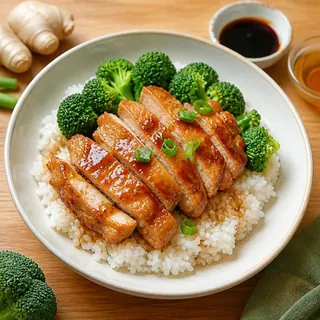
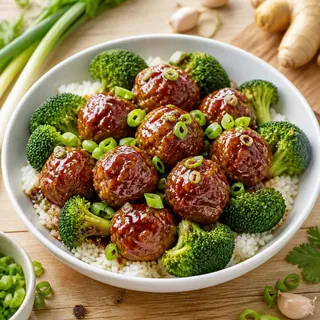
Soy and mirin glaze browns fast

Mirin is a sweet rice wine, rich in sugars. Soy sauce adds salt, amino acids and a little sugar. Heated together, the sugars caramelize and react with the amino acids (Maillard). That's why teriyaki browns fast, and goes black just as fast.
Glaze late and reduce to coat
Cook the protein mostly through first. Then add the glaze for the last few minutes, or simmer it in a separate pan until the water evaporates and it thickens. A thick glaze clings and shines. Teriyaki roughly means "shiny grilled."

Test yourself
Questions from the interactive lesson, with the answer and the why.
Why does a soy and mirin glaze brown so quickly?
Sugars and amino acids brown fast when heated together. Caramelization and the Maillard reaction both happen in the glaze.
True or false: For the best teriyaki finish, brush the glaze on chicken at the start of a long grilling session.
False. Sugar burns over a long cook, so the glaze goes on near the end.
What went wrong? You coat salmon in thick teriyaki and broil it for 12 minutes. The edges blacken before the middle is done.
The sugar in the glaze burned over the long hot cook. Add the glaze late, or lower the heat, so the sugars don't scorch.
Fill the blank: As the glaze simmers, water evaporates and the sauce ___.
As the glaze simmers, water evaporates and the sauce thickens. Less water leaves a concentrated, syrupy sauce that clings.
Your glaze tastes saltier after reducing than before. Why?
Evaporation concentrates the salt along with the sugar. The same amount of salt sits in less liquid, so it tastes stronger.