Crispy chicken parm with spaghetti
Most chicken parm goes soggy because the crumbs meet wet sauce before they've set. This version gets the order right: a 6-minute shallow fry turns the coating into a hard, golden shell first, and only then does a spoonful of sauce and the mozzarella go on for 10 minutes in a hot oven.
- 40 minTotal time
- 2Servings
- 880kcal / serving
- 58 gProtein
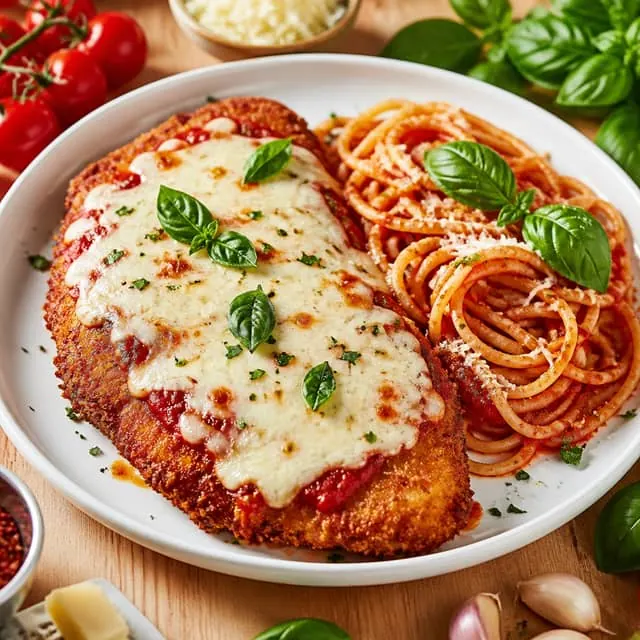

One pot of garlicky tomato sauce does two jobs, topping the cutlets and coating the noodles, and the pasta boils while the chicken bakes. It feeds 2 hungry people with 58 g of protein each: a red-sauce-restaurant Friday night without leaving the house.
The science: why this works
- The oven finish is gentler than more time in the pan. After 6 minutes of frying the crust is set, and 10 minutes in 220°C (425°F) air carries the 1.5 cm cutlet to 74°C (165°F) from every side at once, so the bottom never sits on hot metal long enough to scorch.
- Mozzarella stretches because long strands of casein protein loosen as they warm. Low-moisture mozzarella holds roughly 45 to 52% water, while fresh balls can be closer to 60%, so the low-moisture kind melts into stretchy sheets without leaking whey onto the crust.
- Garlic gets one minute in oil before the tomatoes go in. Its sharp sulphur compounds mellow and turn nutty as it warms, but past light gold they turn acrid. Adding the tomatoes stops the browning, because their water holds the pot at about 100°C (212°F).
- Tossing drained spaghetti through the hot sauce with the rest of the parmesan lets starch from the noodle surface thicken the sauce, so it clings to each strand instead of pooling at the bottom of the plate.
- A thin egg layer bonds best. Excess egg drips, puffs in the hot oil and forms a loose skin that peels away, so letting each cutlet drip for a few seconds before crumbing leaves just enough protein to set the crumbs in place.
Flattening for even cooking
A thick end of chicken breast would dry out before the center cooks. Pounding it to an even thickness means the whole piece cooks at the same speed. It reaches 165°F (74°C) with a juicy middle.
Learn: Cooking juicy chicken breast →A crunchy panko crust
Panko crumbs are large and airy, so they fry up crisp and golden. The egg acts like glue between the chicken and the crumbs, and the parmesan adds salty flavor and browning. Dry surfaces and high heat are what turn a coating crunchy.
Learn: Crispy chicken skin →A quick tomato sauce
Canned tomatoes already have deep flavor, so a short simmer with garlic is enough. A pinch of salt brings out sweetness. Simmering reduces extra water and concentrates the taste. Good tomatoes and a little time are all a simple sauce really needs.
Learn: Tomato sauce: short or long simmer →Crispy chicken parm with spaghetti
40 minutes · 2 servings · Italian · Dinner
Ingredients
Makes 2 servings
- 350 gchicken breast (2 small)
- 1egg
- 50 gpanko
- 30 gparmesan, grated
- 1 can(400 g) chopped tomatoes
- 2 clovesgarlic, chopped
- 100 gmozzarella, sliced
- 150 gspaghetti
- 2 lwater, for boiling
- 1 handfulbasil
- 3 tbspolive oil
- Salt
- Black pepper
Method

Tips for the best result
- If a breast is thicker than 3 cm, slice it in half horizontally first; you'll need far less pounding to reach 1.5 cm.
- Test the oil with a pinch of panko: it should sizzle at once and turn golden in about 30 seconds.
- Buy low-moisture mozzarella, or blot fresh mozzarella slices on paper towel for 5 minutes before they go on.
- Put the pasta water on as soon as the sauce starts simmering; 2 litres takes around 10 minutes to boil, so the spaghetti finishes as the chicken comes out.
- Let the baked chicken stand for 3 minutes so the cheese firms up and doesn't slide off when you cut.
Mistakes to avoid
- Pounding with the edge of a pan — it tears holes in the meat. Use the flat base and work from the centre outward.
- Squeezing both cutlets into a small pan — the oil cools and the crumbs soak up grease. Leave a finger's width between them.
- Leaving the drained spaghetti in the colander — it sticks into a clump and won't take the sauce. Toss it with the sauce within a minute.
- Cutting into the top to check doneness — steam and juice escape through the crust and soften it. Slide a thermometer in from the side and look for 74°C (165°F).
Variations and swaps
- Make eggplant parm: 1 cm eggplant rounds, salted for 15 minutes and blotted dry, then crumbed and fried the same way.
- Use boneless chicken thighs pounded to 1.5 cm for a juicier cutlet that forgives a couple of extra minutes.
- Mix dried oregano and a pinch of chilli flakes into the crumbs, not the sauce, for a seasoned crust.
- Swap half the mozzarella for provolone or fontina for a tangier melt.
- Use gluten-free panko and gluten-free spaghetti; GF crumbs brown faster, so keep the heat on the low side of medium.
- Swap chicken breast for thin pork cutlets, cooked to 145°F (63°C) with a rest.
Storing and reheating
Refrigerate leftovers within 2 hours at 4°C (40°F) or below; they keep 3 to 4 days. For the crunchiest reheat, use an air fryer at 180°C (350°F) for 6 to 8 minutes, with a loose piece of foil over the cheese for the first half so it doesn't scorch, until the centre reaches 74°C (165°F). Warm the spaghetti separately in a pan with 1 to 2 tbsp water. For freezing, the best option is crumbed but uncooked cutlets: freeze them flat on a tray, then bag them at −18°C (0°F) for up to 3 months. Fry from frozen over medium-low heat, adding a few minutes per side, then bake as usual and check for 74°C (165°F).
Crispy chicken parm with spaghetti: questions
Can I make it in an air fryer?
Yes. Spray the crumbed cutlets with oil and air fry at 200°C (400°F) for about 10 minutes, flipping once, then add the sauce and cheese for 2 to 3 minutes more until the centre reaches 74°C (165°F).
Why is the underside of my cutlet soggy?
Steam got trapped beneath it. Rest fried cutlets on a rack, not paper towels, and never spoon sauce under them before baking.
Fresh or low-moisture mozzarella?
Low-moisture mozzarella is the safer choice because it melts without releasing water. Fresh mozzarella tastes milkier but should be sliced and blotted dry first.
Can I freeze leftovers?
Yes, cooked and sauced cutlets freeze for 2 to 3 months, though the crust softens. Freezing them crumbed but uncooked gives a crisper result.
Is chicken parm the same as chicken milanese?
No. Milanese is a crumbed cutlet served plain, usually with lemon, while parm adds tomato sauce and melted cheese on top.
How do I keep the breading from falling off?
Pat the chicken dry, dip it in egg and press the crumbs on firmly. Do not move the chicken too much in the pan. A dry surface helps the coating stick.
What temperature is chicken parm done?
Chicken is done at 165°F (74°C) in the thickest part. Flattening it to about 1.5 cm helps it cook evenly. The juices should run clear.
Can I bake chicken parm instead of frying?
Yes, bake the breaded chicken on an oiled tray at 425°F (220°C) until golden and cooked through. Spray or drizzle with oil to help it crisp. Frying first gives the best crust.