Miso butter salmon, sesame green beans
The trick here is a compound butter. Mashing miso into soft butter turns it into a spread that melts over the fish and bastes it as it bakes. Miso also arrives loaded with the raw materials for browning, so the top turns bronze in the same short window the salmon needs to cook through.
- 30 minTotal time
- 2Servings
- 640kcal / serving
- 38 gProtein
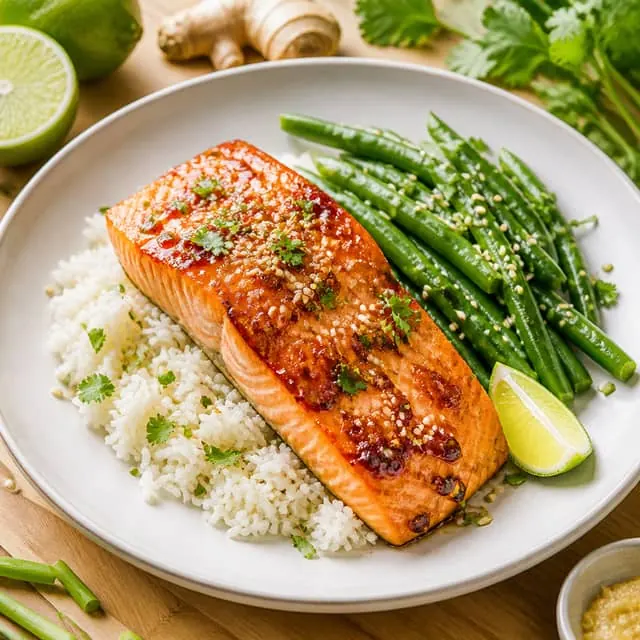

The timing is built so nothing sits around: the rice simmers while the oven heats and rests while the fish bakes, and the beans hit the pan once the tray goes in. It serves two with 38 g of protein each, and the whole thing doubles neatly on one large tray.
The science: why this works
- Koji fermentation breaks soybean protein into free amino acids and starch into simple sugars, the two ingredients the Maillard reaction needs. With both already loose in the paste, the surface browns once it climbs past roughly 140°C (285°F), which a 220°C (425°F) oven manages within minutes.
- Honey is mostly fructose and glucose, and fructose starts to caramelize at around 110°C (230°F), far lower than table sugar at about 160°C (320°F). That is why one teaspoon is plenty: more would scorch before the middle of the fillet is cooked.
- The white curd that can bead on salmon is albumin, a protein that liquefies and gets squeezed out as the muscle fibres contract. It coagulates as it reaches the surface, so pulling the fish as soon as it flakes keeps it to a few small spots.
- Raw green beans look dull because tiny air pockets between their cells scatter light. Heat drives that air out and the chlorophyll shows through bright green, but acid swaps the magnesium in chlorophyll for hydrogen and turns it olive, so the lime waits for the table.
- Rice simmered at a 1:2 ratio has absorbed all its water by 12 minutes, but the grain centres are still finishing. Resting covered lets the trapped steam gelatinize the last of the starch and lets moisture even out, so the grains firm up instead of sticking.
Why miso adds so much flavor
Miso is fermented soybean paste full of glutamate, the compound behind umami. Mixed with butter and honey, it coats the salmon in savory depth. In the oven the honey and miso also brown a little for extra flavor.
Learn: Building savory flavor →Cooking salmon until just opaque
Salmon proteins tighten as they heat. Pulled when the flesh turns opaque and flakes easily, the fish stays moist. Cooked much longer, the proteins squeeze out water and the fillet turns dry and chalky. Gentle, short cooking is the secret to moist, tender fish every time.
Learn: Cooking fish gently →Green beans with a splash of water
A splash of water in the hot pan makes steam, which cooks the beans through quickly. Then the water burns off and the beans pick up a little color and the garlic and sesame flavor.
Learn: Why steaming keeps flavor in →Miso butter salmon, sesame green beans
30 minutes · 2 servings · Fusion · Dinner
Ingredients
Makes 2 servings
- 300 gsalmon fillet, in 2 pieces
- 1½ tbspmiso
- 20 gbutter, softened
- 1 tsphoney
- 150 grice
- 300 mlwater
- 250 ggreen beans, trimmed
- 1 clovegarlic, sliced
- 1 tspsesame oil
- 1 tspsesame seeds
- ½lime
- Salt
Method

Tips for the best result
- Mash the miso butter until no pale streaks of butter remain; streaks melt into puddles and leave bare patches on the fish.
- Spread the miso butter thicker on the fat centre of each fillet and thinner on the tapered end, which cooks and browns first.
- Leave at least 5 cm (2 in) between the fillets so hot air reaches the sides instead of steaming them.
- Line the tray with parchment paper; browned miso and honey weld themselves to bare metal.
- Toast the sesame seeds in the dry frying pan for about a minute, until they smell nutty, before the beans go in.
- Fluff the rice with a fork just before serving, not the moment the 12 minutes are up.
Mistakes to avoid
- Salting the salmon — 1.5 tbsp of miso is already salty enough for both fillets; save the salt for the beans, and taste first.
- A glaze that darkens before the fish flakes — move the tray down one rack or lay a loose sheet of foil over the top for the remaining minutes.
- Garlic in the pan from the start — over medium-high it turns bitter long before the beans are tender, so it only gets the final minute.
- Dressing the beans with lime ahead of time — the acid turns them olive within minutes; serve wedges and squeeze at the table.
Variations and swaps
- Swap the honey for 1 tsp mirin for a less sticky, more Japanese-style glaze.
- Add ½ tsp grated fresh ginger or a pinch of chili flakes to the miso butter.
- Use snap peas instead of green beans and give them only 3 minutes so they keep their crunch.
- Turn it into a bowl: flake the salmon over the rice, add sliced cucumber and avocado, and spoon over the buttery tray juices.
- Use short-grain brown rice; start it about 30 minutes earlier and follow the packet for water.
- Swap honey for maple syrup for a slightly deeper sweetness.
Storing and reheating
Store the salmon, rice and beans in separate containers so each reheats on its own terms. Refrigerate the salmon and beans within 2 hours and eat within 3 to 4 days at 4°C (40°F) or below. Rice needs more care: spread it out to cool, get it into the fridge within an hour if you can (2 hours at most), eat it within a day or two and reheat it only once, until steaming hot. For the fish, skip full-power microwaving, which tightens the flesh and makes the oils smell fishy; reheat it covered at 50% power with a teaspoon of water until it reaches 74°C (165°F). Cooked salmon freezes for 2 to 3 months at −18°C (0°F), and spare miso butter rolled into a log in plastic wrap freezes for 3 months, ready to slice onto fish or vegetables.
Miso butter salmon, sesame green beans: questions
Can I make miso salmon in the air fryer?
Yes. Air-fry the fillets at 200°C (400°F) for 7 to 9 minutes and add the miso butter for only the last 3 to 4 minutes, because the fan browns sugary glazes much faster than an oven.
What is the white stuff coming out of my salmon?
It's albumin, a harmless protein pushed out as the fish cooks. A lot of it usually means the salmon got too hot or cooked too long, so check it a little sooner next time.
Can I make the miso butter ahead?
Yes. Mash the miso, butter and honey together, then refrigerate it covered for up to a week; let it soften at room temperature for 15 minutes before spreading.
Can I bake the salmon from frozen?
It's better to thaw it in the fridge overnight and pat it dry first. From frozen, the glaze burns before the centre reaches a safe 70°C (158°F) per Health Canada (the USDA uses 63°C/145°F).
Does miso contain gluten?
Some does. Many misos are made with barley or wheat alongside soybeans, so pick one labelled gluten-free, such as many rice or pure soybean misos, if you need it.
What type of miso is best for miso butter salmon?
White (shiro) miso is the best choice because it is mild and slightly sweet. Red miso also works but is saltier and stronger, so use a little less. Taste a tiny bit before you mix.
How do I know when salmon is cooked?
Salmon is cooked when it turns opaque and flakes easily with a fork, or reaches 145°F (63°C) inside. Thin fillets take about 10 minutes at 425°F (220°C). Thicker ones may need 12.
Can I use skinless salmon?
Yes, skinless salmon works fine in this recipe. Place it on the lined tray and spread the miso butter on top. Watch the time, since skinless fillets can cook slightly faster.