Classic Beef Stew
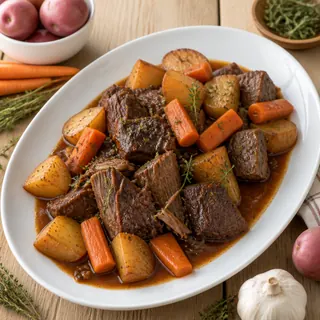
Classic beef stew is slow-cooked chunks of beef chuck with carrots, potatoes and a savory gravy. It is the kind of dinner that makes the whole house smell good, and most of the time is hands-off.
- 2 h 55 minTotal time
- 6Servings
- 430kcal / serving
- 34 gProtein
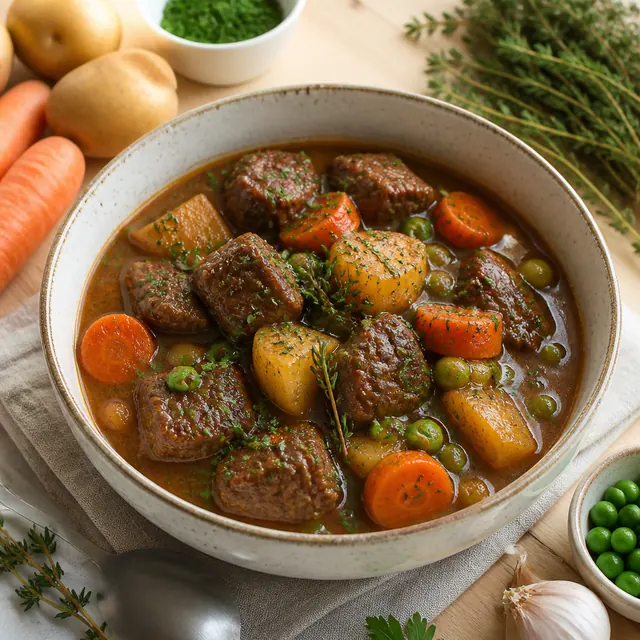

This version builds flavor in layers: a hard sear, a little tomato paste, and a gentle simmer. The flour on the beef thickens the broth as it cooks, so there is no last-minute slurry.
The science: why this works
- Browning the floured beef creates Maillard flavor and a thin crust that dissolves into the broth as gravy.
- Tomato paste cooked until it darkens adds deep savory notes without making the stew taste like tomatoes.
- Beef chuck is full of collagen, which melts into gelatin over a long, gentle simmer and makes the broth silky.
- Adding potatoes late keeps them in neat pieces instead of dissolving into the sauce.
Collagen turns to gelatin
Beef chuck is tough because it has lots of connective tissue. Held at a gentle simmer for a couple of hours, that collagen melts into gelatin. This is why the meat turns tender and the broth feels rich and slightly sticky on your lips.
Learn: Braise tough cuts slowly →Why browning matters
Browning meat is the Maillard reaction, where amino acids and sugars react above about 300°F (150°C) to form hundreds of new flavor compounds. Dry meat browns; wet meat steams. That is why you pat the cubes dry and cook them in batches.
Learn: Maillard vs. caramelization →Classic Beef Stew
2 h 55 min · 6 servings · American · Main course
Ingredients
Makes 6 servings
- 900 gbeef chuck, cut into 4 cm cubes
- 1½ tsp1/2 tsp salt, divided
- ½ tspblack pepper
- 3 tbspall-purpose flour
- 3 tbspolive oil, divided
- 1large onion, diced
- 3carrots, cut into thick coins
- 2stalks celery, sliced
- 3cloves garlic, minced
- 2 tbsptomato paste
- 240 mlbeef broth
- 2cups water
- 2 tspWorcestershire sauce
- 2bay leaves
- 4sprigs fresh thyme
- 500 gbaby potatoes, halved
- 240 mlfrozen peas
Method

Tips for the best result
- Cut the beef into big 4 cm cubes so it stays juicy after hours of cooking.
- Keep the liquid at a bare simmer, never a rolling boil, or the meat turns stringy.
- Stew tastes even better the next day, so make it ahead if you can.
Mistakes to avoid
- Crowding the pot when browning: the beef steams and turns gray, so brown in two batches.
- Boiling hard to hurry it up: fast bubbles tighten the muscle fibers and the beef ends up tough, so keep the heat low.
- Cutting lean beef like round instead of chuck: it dries out, so choose a marbled, collagen-rich cut.
Variations and swaps
- Swap 1 cup of the water for a dark beer or red wine for a deeper, slightly tangy gravy.
- Add 250 g sliced mushrooms with the onions for an earthier stew.
- Stir in a spoonful of Dijon mustard and a handful of chopped parsley at the end for brightness.
- Swap the baby potatoes for parsnips or turnips to change the sweetness and keep it lower in starch.
- Swap the all-purpose flour for a 2 tbsp cornstarch slurry at the end for a gluten-free thickener.
Storing and reheating
Cool within 2 hours and refrigerate in a covered container for up to 4 days, or freeze for up to 3 months. Reheat on the stove until it reaches 165°F (74°C).
Classic Beef Stew: questions
What is the best cut of beef for beef stew?
Beef chuck is the best cut for stew. It has plenty of collagen and fat, so it turns tender and juicy after a long simmer instead of drying out.
How long does beef stew take to get tender?
Beef stew usually needs about 2 to 2 1/2 hours at a gentle simmer. The beef is ready when a cube falls apart easily when pressed with a fork.
Why is my beef stew meat tough?
Tough stew meat is usually undercooked or boiled too hard. Keep the heat low and give it more time, since the connective tissue needs time to melt.
How do I thicken beef stew?
Coating the beef in flour before browning thickens it naturally. If it is still thin, simmer uncovered for 10 minutes or stir in a cornstarch slurry.