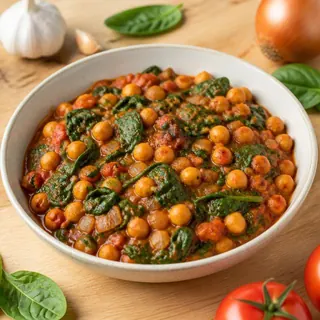
Chickpea spinach curry with rice
One jar of curry powder stands in for a whole shelf of spices here. A typical blend already contains turmeric, coriander, cumin, chilli and fenugreek, which makes this a friendly first curry: no toasting whole seeds, no long ingredient list, just a few minutes of attention at the start.
- 30 minTotal time
- 2Servings
- 560kcal / serving
- 17 gProtein
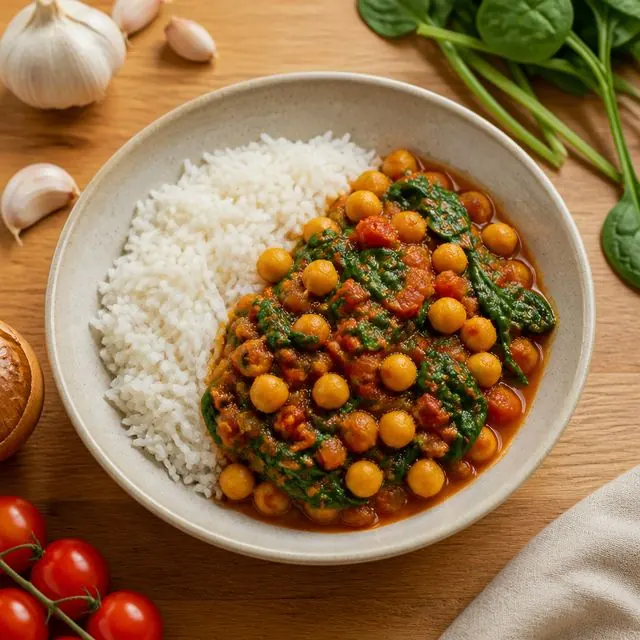

The result is in the spirit of chana palak, chickpeas with spinach, and it is vegan, dairy-free and good for the wallet. It also hides a small nutrition trick: the tomato in the sauce helps your body absorb more of the iron in the spinach and chickpeas.
The science: why this works
- Ground spices have an enormous surface area, so they release their aroma in about 30 seconds. Whole seeds would need several minutes. That is why the curry powder gets such a short time before the tomatoes go in: any longer and the fine powder scorches.
- Turmeric's bright yellow pigment, curcumin, dissolves in fat rather than water, so the oil carries its colour evenly through the whole sauce.
- Acid keeps beans firm. The canned tomatoes slow down the softening of the chickpeas' cell walls, so they keep their shape through the simmer instead of falling apart.
- Plant iron, from the spinach and chickpeas, is harder for the body to absorb than iron from meat, and spinach also contains oxalates that hold some of it back. Vitamin C helps, and tomatoes supply some, so the pairing works in your favour.
- Basmati is a long-grain rice rich in amylose, a straight-chain starch that sets firm as it cooks. That keeps the grains separate and fluffy under a saucy curry, unlike sticky short-grain rice.
Why the curry powder is stirred in oil
Many flavor compounds in spices dissolve in fat but not in water. Stirring the curry powder in hot oil for 30 seconds pulls those flavors out and spreads them through the dish. It also cooks off the raw, dusty taste.
Learn: Bloom spices in hot oil →Why the onion cooks until see-through
Heat softens the onion and turns its sharp compounds into sweeter ones. Five minutes of gentle cooking gives the sauce a mellow base. Rushing this step leaves a harsh, raw onion edge. This is why patient onions taste so different from raw ones in the finished dish.
Learn: Why cooked onions turn sweet →Why the sauce thickens as it simmers
As the canned tomato simmers, water evaporates and the flavors concentrate. The chickpeas also release a little starch, which helps the sauce turn thick and cling to the rice. Taste near the end, because concentrating a sauce also concentrates its salt.
Learn: Why reducing strengthens a sauce →Chickpea spinach curry with rice
30 minutes · 2 servings · Indian · Dinner
Ingredients
Makes 2 servings
Method

Tips for the best result
- Open the can of tomatoes before you start the onion. Once the curry powder is in, 30 seconds goes by fast.
- Sniff your curry powder before using it. Ground spices fade after about a year, so if the smell is faint, add an extra 1/2 tsp.
- Swirl 50 ml water around the empty tomato can and keep it nearby. If the sauce gets too thick before the 10 minutes are up, add it.
- If the canned tomatoes taste sharp, stir in a small pinch of sugar.
- Rinse the basmati 2–3 times before cooking for fluffier, more separate grains.
- Finish with a squeeze of lemon or lime to lift the whole pot.
Mistakes to avoid
- Letting the curry powder and garlic go dark brown — they turn bitter, and the bitterness will not cook out. If it smells acrid, wipe the pan and start the spice step again.
- Simmering with the lid on — the sauce cannot reduce and stays thin. Leave it uncovered.
- Using a hot curry powder without tasting it first — blends vary a lot in heat. If yours says hot, start with 1 1/2 tsp.
- Dropping both handfuls of spinach into a small pan at once — it spills over and wilts unevenly. Add it one handful at a time.
Variations and swaps
- Stir in a few spoonfuls of coconut milk with the tomatoes for a creamier, milder curry.
- Add 1 tsp grated ginger with the garlic for extra warmth.
- Use about 100 g frozen spinach instead of fresh, stirred in straight from frozen.
- Add a small diced potato with the tomatoes and simmer about 15 minutes longer, until tender.
- Top with plain yogurt and chopped cilantro if you are not keeping it vegan.
- Swap the spinach for kale, but simmer it for 3 to 4 minutes so it turns tender.
Storing and reheating
Refrigerate the curry within 2 hours (1 hour above 32°C/90°F) and eat within 3–4 days. It often tastes better the next day as the spices settle. Cool the rice quickly by spreading it out, refrigerate within 1 hour if possible (2 hours max), eat within a day or two and reheat only once. Keep the fridge at 4°C (40°F) or below. The curry thickens in the fridge, so reheat it in a pan with a few spoonfuls of water until bubbling and steaming hot, at least 74°C (165°F). The spinach darkens slightly but tastes fine. The curry freezes well for 2–3 months at −18°C (0°F), best frozen flat in a bag for quick thawing in the fridge.
Chickpea spinach curry with rice: questions
Is it gluten-free?
It can be. Everything else is naturally gluten-free, but some curry powder blends contain wheat flour as a filler, so choose one labelled gluten-free.
Can I use frozen spinach instead of fresh?
Yes. Use about 100 g and stir it in straight from frozen, simmering for 2–3 minutes until hot and the extra water has cooked off.
Why is my curry bitter?
The most common cause is scorched garlic or curry powder. Keep the heat at medium during the 30-second spice step and add the tomatoes the moment it smells fragrant.
Why does it taste sour?
Canned tomatoes can be quite acidic. Simmer a few minutes longer to mellow them, and add a pinch of sugar or a spoonful of coconut milk to round it out.
How spicy is curry powder?
It depends on the brand. Mild blends are warm rather than hot, while blends labelled hot or Madras can be quite fiery, so check the label and taste before adding more.
Can I freeze it?
Yes. Freeze the curry without the rice for up to 2–3 months, then thaw in the fridge and reheat until steaming hot.
Can you make chickpea curry without coconut milk?
Yes, this recipe uses canned tomato as the base and has no coconut milk. The sauce gets body from simmering and from mashing a few chickpeas.
Is chickpea spinach curry vegan?
Yes, as written it uses only plant ingredients: rice, chickpeas, tomato, onion, spices, spinach and oil. Check that your curry powder has no added dairy.
How do you stop rice from sticking together?
Use the right ratio of water to rice and do not lift the lid while it cooks. Resting it off the heat for 5 minutes lets the grains firm up and separate.