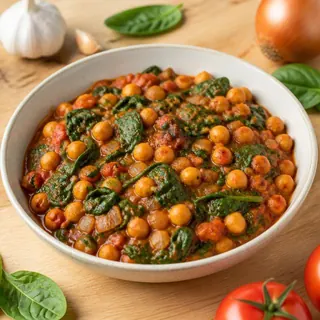
Canned tomatoes and beans

Canning seals food in a can and heats it hot enough to kill spoilage microbes, so cans last for years. The food inside is already cooked. Skip any can that's bulging, leaking or badly dented at the seam, which can mean spoilage.
Rinse the beans or keep the liquid
The liquid in a can of beans is starchy and salty. Rinse for salads and tacos, where you want clean beans and control over the salt. Keep the liquid for soups and stews, where the starch thickens the pot.
Whole peeled or diced tomatoes
Whole peeled tomatoes are usually the best base. Crush them by hand and they melt into a sauce as they simmer. Diced tomatoes often contain calcium chloride, which keeps the pieces firm, so they stay chunky instead of melting.

Test yourself
Questions from the interactive lesson, with the answer and the why.
Why do you simmer canned tomatoes into a sauce?
To thicken and deepen the flavor. Simmering drives off water and concentrates the sauce.
True or false: Canned beans are fully cooked when they come out of the can.
True. Canned beans are already cooked, so they only need warming or seasoning.
Fill the blank: Diced canned tomatoes often hold their shape because of added calcium ___.
Diced canned tomatoes often hold their shape because of added calcium chloride. Calcium chloride firms up the tomato pieces.
What went wrong? You drain and rinse canned white beans, then wonder why the soup is thin.
The starch that thickens the soup went down the drain. The can liquid is starchy. Keep it for soup.
You want a silky, smooth tomato sauce for pasta. Which can do you open?
Whole peeled tomatoes, crushed by hand. They break down easily and give a smoother texture.