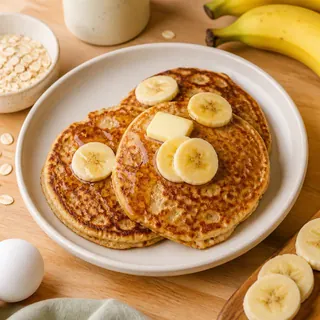
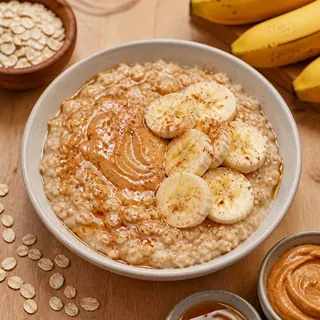
Oats
Also called rolled oats
Oats are a nutritious grain, breakfast staple, or in baked goods, providing nutty flavor and chewy texture.
Oats are a cereal grain, sold as steel-cut pieces, flattened rolled flakes or thin, quick instant oats. They taste mild, nutty and lightly sweet, and cook from chewy to silky depending on the type.
Cooks love oats because they are cosy and versatile. They become creamy porridge and overnight oats, add chew to cookies and flapjacks, form crunchy crumble toppings over apples and pears, and toast into golden granola with honey or maple syrup.
Flavor profile
Aroma: nutty, mild
Good to know
Origin: Eurasia
Forms: steel-cut, rolled, instant
Season: Available year-round; porridge is a winter favourite, while overnight oats suit summer with berries.
Nutrition: A source of fibre, including beta-glucan, plus starchy carbohydrate; may contain gluten unless labelled gluten-free.
Storage: Keep oats in an airtight container in a cool, dry, dark cupboard. Rolled and instant oats keep for about 1 year; steel-cut oats for up to 2 years. Oats contain natural oils, so a bitter, paint-like or musty smell means they have turned rancid. In warm, humid kitchens, store them in the fridge or freezer. Cooked porridge keeps 4–5 days in the fridge and reheats well with a splash of milk.
How to use oats
Achieve Creamy Texture
Cook slowly; oats' starch swells, creating creaminess.
Enhance Baking
Briefly soak to soften oat beta-glucans, improving tenderness in pastries.
The science of oats
- Oats contain beta-glucan, a soluble fibre that dissolves into a thick, gel-like liquid when heated or soaked. That is what gives porridge and overnight oats their creamy, silky texture.
- Oat starch gelatinises as it absorbs hot liquid, swelling and softening the flakes. Thinner, more processed oats absorb water faster, which is why instant oats cook in a minute and steel-cut oats take 20–30.
- Most oats are lightly steamed and kilned during processing, which deactivates fat-splitting enzymes that would otherwise make them taste bitter and rancid.
- Toasting oats in a dry pan or oven at 180°C (350°F) drives Maillard browning, giving a deeper, biscuity flavour to granola, crumbles and cookies.
How to choose oats
Rolled oats are the all-rounder for porridge, baking and overnight oats. Steel-cut oats give a chewier, nuttier porridge, while instant oats are best for speed or smooth batters. If you need to avoid gluten, choose oats labelled gluten-free, since ordinary oats are often contaminated with wheat during farming and milling.

Substitutes for oats
| Swap | Amount | What changes |
|---|---|---|
| Quinoa flakes | 1:1 | Gluten-free and quick-cooking; slightly more earthy. |
| Barley flakes | 1:1 | Similar texture for porridge and baking; contains gluten. |
| Desiccated coconut | 1:1 in toppings | Good in crumbles and cookies; richer and sweeter. |
| Instant oats for rolled oats | 1:1 | Softer, less chewy cookies and quicker porridge. |
What goes with oats
- Cinnamon. Cinnamon provides a warm, spicy contrast to oats' earthiness.
- Honey. Honey's sweetness contrasts oats' earthy, bitter notes.
- Apple. Soft baked apple pairs with nutty, toasty oats in crisps and crumbles.
- Banana. Mashed banana sweetens and binds oats, which add toasty chew.
- Maple Syrup. Maple's caramel sweetness suits oats' nutty, toasty flavor.
- Yogurt. Yogurt's tang and cream soften oats overnight.
- Milk. Milk softens oats, creating a creamy texture and mellow taste.
- Almond. Almonds add crunchy texture and nutty flavor to soft, mild oats.
- Flour. Oats add chewy texture to flour doughs and cookies.
- Pear. Pear's juicy sweetness softens oats' chew in crisps.
Mistakes to avoid
- Skipping soak keeps oats chalky; starch stays dense.
- Overcooking evaporates water, making oats pasty.
Ideas for tonight
- Make overnight oats with milk and fruit.
- Bake into fiber-rich cookies.
- Cook into oatmeal for breakfast.
Oats: questions
What is the difference between rolled and steel-cut oats?
Steel-cut oats are whole oat groats chopped into pieces, so they are chewy and take 20–30 minutes. Rolled oats are steamed and flattened, so they cook in about 5 minutes and turn creamier.
Are oats gluten-free?
Oats do not contain gluten themselves, but they are often contaminated with wheat, barley or rye. Choose oats labelled gluten-free if you need to avoid gluten.
Can you eat raw oats?
Yes. Rolled oats are already steamed during processing, so they are fine soaked in overnight oats or stirred into muesli. Soaking makes them softer and easier to eat.
How do you make porridge creamy?
Use about 1 part rolled oats to 2 parts milk or water, add a pinch of salt and stir gently over low heat for 5 minutes. Stirring releases beta-glucan and starch, making it silky.
How long do oats last?
About 1 year for rolled oats and up to 2 years for steel-cut, stored airtight. Throw them out if they smell bitter or musty.
Can you use oats instead of flour?
Yes. Blitz rolled oats in a blender into oat flour and swap up to a quarter to a third of the flour in most recipes. Oat flour has no gluten structure, so it gives a softer, denser crumb.
What does oats taste like?
Oats are a nutritious grain, breakfast staple, or in baked goods, providing nutty flavor and chewy texture., with an aroma that is nutty, mild.
What goes well with oats?
Oats pairs best with cinnamon, honey, apple, banana, maple syrup. Cinnamon provides a warm, spicy contrast to oats' earthiness.
How do you use oats in cooking?
Achieve Creamy Texture: cook slowly; oats' starch swells, creating creaminess.
How should you store oats?
Store in a cool, dry place in an airtight container to prevent moisture uptake and spoilage.
What is the most common mistake with oats?
Skipping soak keeps oats chalky; starch stays dense.
 Milk
 Honey
 Maple Syrup
 Cinnamon
 Apple
 Banana
 Yogurt
 Flour