Easy French Crepes
Crepes are thin, tender French pancakes with lacy golden edges. The batter takes 5 minutes in a blender, and a 30 minute rest makes them easy to flip.
- 30 minTotal time
- 4Servings
- 240kcal / serving
- 8 gProtein
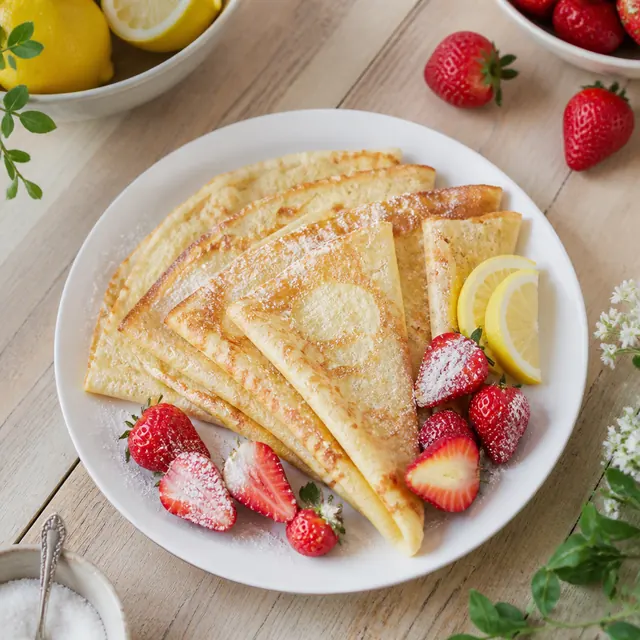

Fill them with lemon and sugar for a classic breakfast, or with ham and cheese for something savory.
The science: why this works
- A thin batter spreads easily, so the crepe cooks in a thin, even layer.
- Blending the batter smooths out lumps and develops no tough texture because it rests afterward.
- Resting lets the flour absorb the liquid and the gluten relax, so the crepes are tender and do not tear.
- Butter in the batter helps the crepes brown and release from the pan.
- A hot, lightly buttered pan gives the delicate lacy edges.
Why rest the batter
Blending develops some gluten, which can make crepes chewy or rubbery. Resting the batter lets the gluten relax and the flour fully hydrate. The air bubbles from blending also rise out, so the crepes cook up with fewer holes.
Learn: Resting pancake batter →Thin batter, quick cook
A crepe is mostly liquid, with a small amount of flour and egg for structure. A thin layer cooks in about a minute, so egg proteins set quickly and the sugar and milk proteins brown lightly in the Maillard reaction.
Learn: Maillard vs. caramelization →Easy French Crepes
30 min · 4 servings · French · Breakfast
Ingredients
Makes 4 servings
- 130 gcup (125 g) all-purpose flour
- 2eggs
- 240 mlcup (240 ml) whole milk
- 120 mlcup (120 ml) water
- 2 tbspbutter, melted, plus more for the pan
- 1 tbspsugar
- ¼ tspsalt
- 1 tspvanilla extract
- Lemon wedges and sugar, for serving
Method

Tips for the best result
- Stir the batter before each crepe; the flour can settle.
- Make the first crepe a test; it is normal for it to be rougher.
- Stack finished crepes on a plate under a towel to keep them warm.
Mistakes to avoid
- A pan that is too hot sets the batter before you can swirl it, so use medium heat.
- Skipping the rest makes tougher crepes that tear, so rest for at least 30 minutes.
- Using too much batter makes thick, pancake-like crepes, so use about 1/4 cup per 10 inch pan.
Variations and swaps
- Chocolate crepes: replace 2 tbsp of flour with cocoa powder.
- Savory crepes: skip the sugar and vanilla and fill with ham, Gruyere and a fried egg.
- Fill with sliced strawberries, whipped cream and a drizzle of chocolate.
- Swap all-purpose flour for buckwheat flour for a nutty, more traditional savory galette.
- Swap milk for a plant milk; the crepes are slightly paler but still tender.
- Swap vanilla for orange zest for a brighter flavor.
Storing and reheating
Stack cooled crepes with parchment between them and refrigerate for up to 3 days, or freeze for 2 months. Warm in a dry skillet for 20 seconds per side.
Easy French Crepes: questions
How do I make crepes thin and not rubbery?
Use a thin batter, rest it for at least 30 minutes and use just 1/4 cup per crepe, swirled quickly. A short rest keeps the gluten relaxed and the crepes tender.
Why do my crepes tear?
Crepes tear when the batter is too thick or was not rested, or the pan is not hot enough. Rest the batter and wait for the edges to lift before flipping.
Do I need a special crepe pan?
No, a flat nonstick skillet works well. A crepe pan has low sides that make flipping easier, but it is not required.
Can I make crepe batter ahead?
Yes, the batter keeps in the fridge for up to 24 hours. Stir it well and thin with a splash of milk if it has thickened.
What is the difference between crepes and pancakes?
Crepes use a thin batter with no leavening and cook into flat, delicate rounds. Pancakes use baking powder and are thick and fluffy.