Classic Vanilla Pound Cake
Pound cake is a rich, buttery loaf with a golden crust and a fine, tender crumb. It was once made with a pound each of butter, sugar, eggs and flour, and the flavor is simple and classic.
- 1 h 25 minTotal time
- 12Servings
- 360kcal / serving
- 5 gProtein
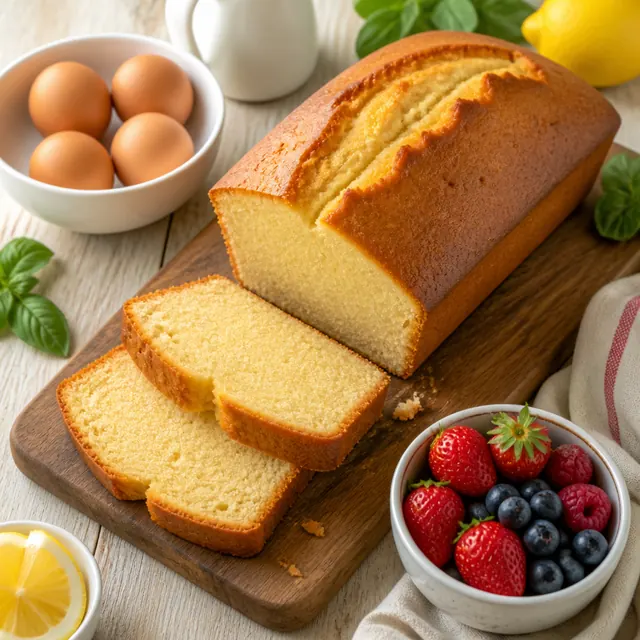

This version is lightly adapted for a modern kitchen with a splash of milk and a touch of baking powder. It bakes in one loaf pan and slices cleanly.
The science: why this works
- Creaming butter and sugar for 4 minutes traps air, which gives the cake its fine, tender crumb.
- Room temperature eggs go into the batter one at a time, so the batter stays smooth and does not curdle.
- Alternating flour and milk makes the batter smooth without overworking the gluten.
- A low oven at 325°F (165°C) bakes the center fully before the crust gets too dark.
Why long creaming matters
Sugar crystals cut tiny air pockets into butter as you beat. Those pockets are the only real leavening in a classic pound cake, so a full 4 minutes is the main step. Under-creamed batter bakes up dense and heavy.
Learn: Creaming butter and sugar →Why the batter can curdle
Butter is an emulsion of fat and water. Cold or fast-added eggs break that emulsion, and the batter looks cottage-cheese curdled. It still bakes, but the crumb is coarser. Room temperature eggs added one at a time prevent it.
Learn: How emulsions work →Why the crack on top
The crust sets first while the center keeps rising and expanding. The rising batter pushes through the firm crust and splits it. The crack is a sign of a good oven spring, and not a flaw.
Learn: What eggs do in cake →Classic Vanilla Pound Cake
1 h 25 min · 12 servings · British · Dessert
Ingredients
Makes 12 servings
- 290 gunsalted butter, softened (2 1/2 sticks)
- 300 ggranulated sugar (1 1/2 cups)
- 5large eggs, room temperature
- 2 tspvanilla extract
- 1 tsplemon zest
- 300 gall-purpose flour (2 1/2 cups)
- ½ tspbaking powder
- ½ tspfine salt
- 120 mlwhole milk, room temperature
Method

Tips for the best result
- Use a stand mixer or hand mixer for the 4 minutes of creaming.
- Bake on the lower rack so the top does not brown too early.
- Wrap the cake once cool for better texture the next day.
Mistakes to avoid
- Skipping the long creaming makes a heavy, dense pound cake, so beat for the full 4 minutes.
- Adding cold eggs curdles the batter, so leave them out for an hour.
- Overbaking dries the edges, so start checking at 60 minutes.
Variations and swaps
- Add 2 tbsp poppy seeds and extra lemon zest for a lemon poppy seed loaf.
- Swap half the vanilla for almond extract.
- Top slices with fresh berries and whipped cream.
- Swap whole milk for sour cream for a tangier, denser crumb.
- Swap all-purpose flour for cake flour in the same weight for a finer crumb.
- Swap salted butter for unsalted and skip the added salt.
Storing and reheating
Wrap tightly and keep at room temperature for 4 days. Freeze whole or sliced for up to 3 months and thaw at room temperature.
Classic Vanilla Pound Cake: questions
Why is my pound cake dense?
Usually the butter and sugar were not creamed long enough, or the eggs were cold. Cream for a full 4 minutes and use room temperature ingredients.
Why did my pound cake crack on top?
A crack is normal. The crust sets first, then the center rises and splits it. It is a sign of a good rise and not a problem.
How do I know pound cake is done?
A toothpick in the center comes out clean, the top is deep golden, and the center reads about 205°F (96°C). It should also pull slightly from the sides of the pan.
Can I make pound cake in a Bundt pan?
Yes. Grease and flour the pan well, then bake at 325°F (165°C) for 50 to 60 minutes. Check for doneness with a toothpick.
Is pound cake better the next day?
Many people think so. The crumb settles and the flavor deepens overnight. Wrap it well once it is fully cooled.