Classic Peanut Butter Cookies
Peanut butter cookies are tender, rich and nutty, with sweet, crunchy sugar edges and that classic crisscross top. They only need nine ingredients you probably have on hand.
- 27 minTotal time
- 24Servings
- 170kcal / serving
- 4 gProtein
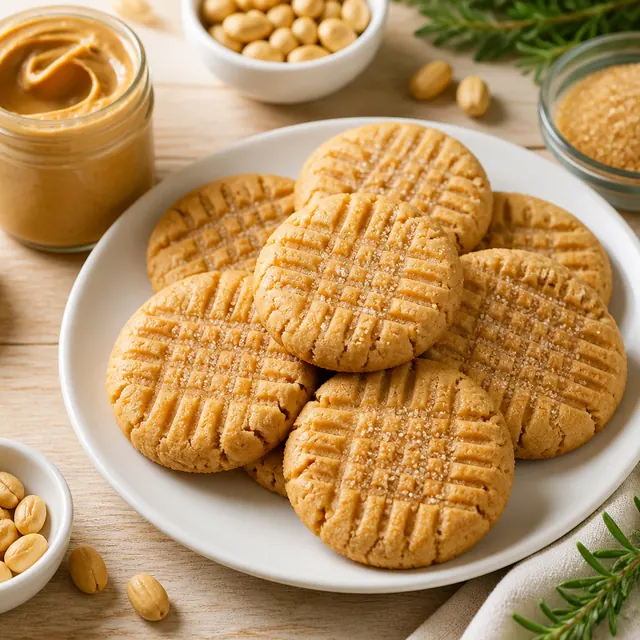

The dough comes together in one bowl and makes 24 cookies. A short chill makes shaping easy, and a fork press helps them bake evenly.
The science: why this works
- Peanut butter adds fat and protein, which make the cookies tender and give them a rich, roasted flavor.
- Both baking soda and baking powder lift the dense dough so the cookies are not heavy.
- Pressing the dough with a fork flattens it, since this dense dough does not spread much on its own.
- Rolling in sugar creates a crisp, sparkling surface and a bit of crunch.
Why you flatten the dough
Peanut butter dough is thick and holds its shape, so it does not spread like butter cookies. The fork press flattens the ball so the center cooks through at the same rate as the edges, and the crisscross is a bonus.
Learn: Why cookies spread →Why use regular peanut butter
Natural peanut butter has no stabilizer and its oil separates, which can leave greasy, crumbly cookies. Regular style peanut butter holds its oil in an emulsion, so the dough stays smooth and bakes up consistently.
Learn: How emulsions work →Why they firm as they cool
The cookies are very tender when they come out because the fat is still liquid. As they cool, the fat solidifies and the sugars set, so the cookies firm up. Leave them on the hot sheet for 5 minutes before moving them.
Learn: Creaming butter and sugar →Classic Peanut Butter Cookies
27 min · 24 servings · American · Baking
Ingredients
Makes 24 servings
- 130 gall-purpose flour (1 cup)
- ½ tspbaking soda
- ½ tspbaking powder
- ¼ tspfine salt
- 120 gunsalted butter, softened (1/2 cup)
- 130 gcreamy peanut butter, regular style (1/2 cup)
- 100 glight brown sugar (1/2 cup packed)
- 100 ggranulated sugar (1/2 cup)
- 1large egg
- 1 tspvanilla extract
- 2 tbspgranulated sugar, for rolling
Method

Tips for the best result
- Chill the dough 15 minutes so the crisscross holds its pattern.
- Dip the fork in sugar to stop it from sticking to the dough.
- Use a kitchen scale to portion 30 g balls for even baking.
Mistakes to avoid
- Using natural peanut butter makes crumbly, oily cookies, so choose the regular style.
- Overbaking makes dry, crumbly cookies, so take them out while the centers look soft.
- Skipping the press leaves thick, doughy centers, so flatten each cookie.
Variations and swaps
- Press a chocolate kiss into each warm cookie.
- Add 100 g chopped roasted peanuts to the dough.
- Sandwich two cookies with chocolate hazelnut spread.
- Swap creamy peanut butter for chunky for extra crunch.
- Swap half the granulated sugar for brown sugar for a chewier cookie.
- Swap unsalted butter for salted butter and cut the added salt in half.
Storing and reheating
Keep in an airtight container at room temperature for 5 days. Freeze baked cookies or dough balls for up to 3 months.
Classic Peanut Butter Cookies: questions
Why are my peanut butter cookies crumbly?
Crumbly cookies usually come from too much flour, overbaking or natural peanut butter. Weigh the flour, use regular peanut butter and take them out while the centers look soft.
Do I have to make the crisscross?
No, but flattening the dough is helpful because it does not spread much. The fork press also gives the classic look.
Can I make peanut butter cookies without flour?
A flourless version uses only peanut butter, sugar and egg. It is a different, denser cookie, and this recipe is not meant for that swap.
Should I chill peanut butter cookie dough?
A short 15 minute chill makes the dough easier to roll and helps the crisscross keep its pattern. A longer chill makes thicker cookies.
How do I know peanut butter cookies are done?
The edges should be set and lightly golden, while the centers still look slightly soft. They will firm up as they cool on the sheet.