Perfect Poached Eggs
A good poached egg has a soft, tender white wrapped around a glossy, runny yolk. It is a simple, quick breakfast that makes toast or salad feel special.
- 11 minTotal time
- 2Servings
- 200kcal / serving
- 13 gProtein
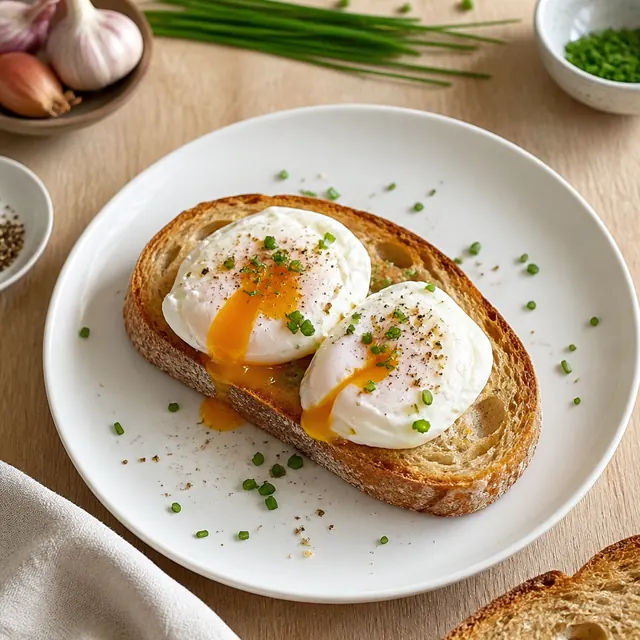

The tricks are fresh eggs, water that barely simmers, and a quick drain in a sieve so the loose white does not float away.
The science: why this works
- Fresh eggs have thick whites that hug the yolk, so the egg keeps a neat shape.
- Draining in a sieve removes the thin, watery white that would otherwise feather out in the water.
- A bare simmer sets the white gently so it stays tender instead of tough.
- Vinegar speeds up the setting of the egg white proteins, which helps it firm up before it spreads.
- Stopping at 3 minutes sets the white but leaves the yolk runny.
Thick and thin whites
An egg white has a thick gel layer and a thinner watery layer. The thin part spreads in water and forms wispy strands. Straining it off leaves only the thick white, which sets into a compact oval around the yolk.
Learn: Proteins set when they heat →Why low heat matters
Egg proteins set between about 140°F (60°C) and 180°F (82°C). Hard bubbles toss the egg around and tear it. Water just below a simmer gives you an even, tender set with a yolk that stays liquid.
Learn: Why poaching stays below a simmer →Perfect Poached Eggs
11 min · 2 servings · American · Breakfast
Ingredients
Makes 2 servings
Method

Tips for the best result
- Poach no more than 4 eggs in a pan at a time so the water stays hot.
- Use a wide, deep pan so eggs do not stick to the bottom.
- Poach ahead: chill eggs in ice water and reheat in hot water for 1 minute.
Mistakes to avoid
- Water at a rolling boil shreds the egg, so turn the heat down to a bare simmer.
- Using older eggs gives wispy, ragged whites, so use fresh ones or drain them in a sieve.
- Dropping the egg from a height breaks the yolk, so slide it in close to the water.
Variations and swaps
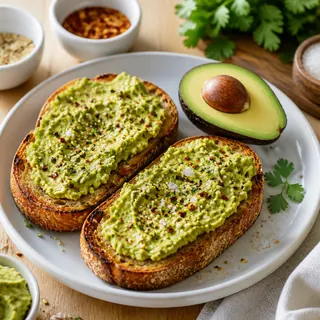
- Serve on smashed avocado toast with chili flakes.
- Set a poached egg on a bowl of garlicky greens and yogurt.
- Serve over a bowl of warm lentils or grits for a heartier meal.
- Swap vinegar for 1 tsp lemon juice; the effect is the same, with a faint citrus note.
- Swap the toast for an English muffin; the base is chewier and holds up to a runny yolk.
- Swap the toast for a bed of sauteed spinach to make it low-carb.
Storing and reheating
Poached eggs keep in cold water in the fridge for up to 2 days. Rewarm in hot, not boiling, water for about 1 minute. Do not freeze them.
Perfect Poached Eggs: questions
How long does it take to poach an egg?
It takes about 3 minutes for a runny yolk and set white. For a firmer, jammy yolk, cook it for 4 minutes.
Do I need vinegar to poach eggs?
No, but a splash helps the white set faster, so the egg stays neater. If you use very fresh eggs and a sieve, you can skip it.
Why do my poached eggs fall apart?
Eggs fall apart when the water is boiling or the eggs are old. Use a bare simmer, fresh eggs, and strain off the thin white first.
Can I poach eggs in advance?
Yes. Poach them, then chill in ice water and store for up to 2 days. Reheat in hot water for 1 minute before serving.
Are poached eggs safe with a runny yolk?
A runny yolk carries a small risk of salmonella. Use fresh, refrigerated eggs, and cook them until the white is fully set. People at higher risk should cook yolks firm.