Cook eggs gently

Egg proteins unfold and link up as they heat. Yolks set around 65 to 70°C, whites between 60 and 80°C. So a 63°C egg is soft and custardy, and a 75°C egg is fully firm.
Cook eggs over low heat
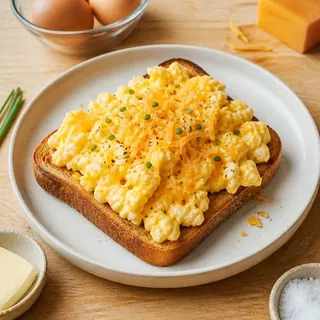
Cook scrambled eggs over medium-low heat for about 3 to 5 minutes. Slow heat lets the proteins link loosely, so the curds hold water. Fast heat squeezes them tight, pushes the water out and leaves rubbery eggs.
Keep stirring and stop early
Keep the heat low and keep stirring. Stirring moves set egg off the hot pan, so the curds stay small and soft. Pull the pan while the eggs still look slightly wet, because they keep cooking from their own heat.

Test yourself
Questions from the interactive lesson, with the answer and the why.
You scramble eggs in two pans, one on low heat and one on high. What does the high-heat pan give you?
Tight, dry, rubbery curds. High heat tightens the proteins fast and squeezes the water out.
True or false: Cooking eggs on the highest heat is the best way to keep them tender.
False. Gentle heat lets proteins hold water, while high heat squeezes it out.
What went wrong? You scramble eggs on high heat. The curds come out firm and dry, sitting in a puddle of water.
The heat was too high. High heat tightens the proteins fast and squeezes out water.
Fill the blank: Gentle heat keeps eggs soft by not squeezing out ___.
Gentle heat keeps eggs soft by not squeezing out water. Tight proteins push water out, which is the puddle under dry eggs.
A poached egg's white spreads into wispy strands in the water. What helps keep it together?
A splash of vinegar. Acid helps the white proteins link up sooner, so the white holds together.
Low and slow scrambled eggs
Same eggs, two very different breakfasts.
Do the 10-minute experiment