Classic French Omelette
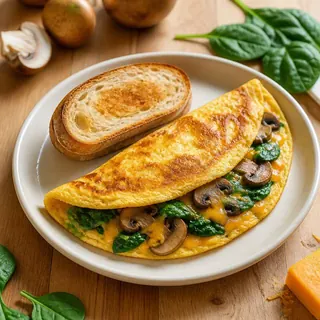
A French omelette is smooth, pale yellow and rolled into a neat cylinder, with a soft, creamy center. It has no browning and no filling, just eggs, butter and technique.
- 6 minTotal time
- 1Serving
- 290kcal / serving
- 14 gProtein
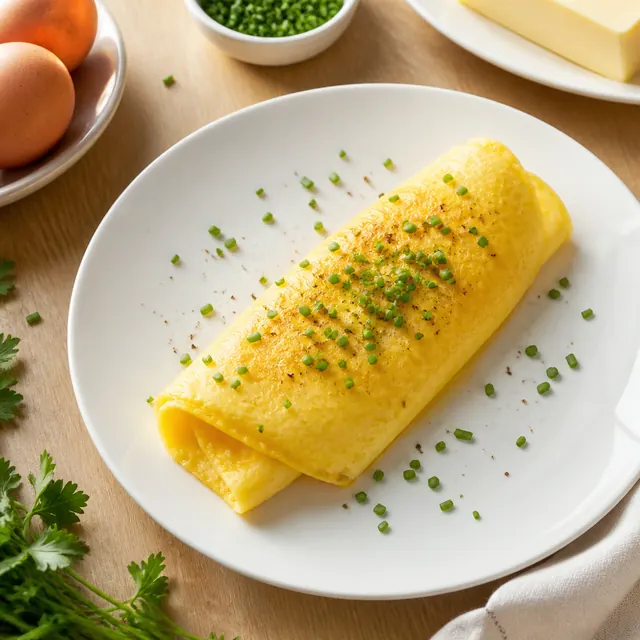

It cooks in under a minute once the pan is hot, so have your plate and toppings ready before you start.
The science: why this works
- Beating the eggs thoroughly blends the yolks and whites so the omelette cooks evenly.
- Butter foam signals the pan is hot enough to set the eggs quickly without browning them.
- Stirring constantly breaks the eggs into tiny curds, which keeps the texture silky instead of rubbery.
- Folding while the center is still glossy lets carryover heat finish the cooking on the plate.
- Leaving out browning keeps the exterior pale and the flavor delicate.
Tiny curds mean creaminess
When egg proteins set, they link into a network. Stirring while they set breaks the network into very small pieces, so the omelette is made of tiny soft curds instead of one firm sheet. That is what makes it silky.
Learn: Proteins set when they heat →Why you stop early
Eggs keep cooking after they leave the pan, because the hot egg and the pan hold heat. If you cook until the omelette looks done, it will be overcooked on the plate. Folding while it is still glossy leaves it creamy.
Learn: Carryover cooking →Classic French Omelette
6 min · 1 serving · French · Breakfast
Ingredients
Makes 1 serving
- 3large eggs
- 1 tbspbutter, plus a little for finishing
- 1 pinchsalt
- 1 tspchives, finely chopped
- Black pepper, optional
Method

Tips for the best result
- Use a nonstick pan that is just 8 inches; a bigger pan makes a thin omelette.
- Have your plate next to the stove so you can roll the omelette onto it right away.
- Take the pan off the heat while folding if things are moving too fast.
Mistakes to avoid
- Browning the butter makes a brown, rubbery omelette, so turn the heat down if it browns.
- Cooking until fully set makes it dry, so pull it while the center is still glossy.
- Using a pan that is too large makes the omelette thin, so use 8 inches for 3 eggs.
Variations and swaps
- Add a spoonful of creamy goat cheese or Boursin to the center before rolling.
- Add fines herbes: chives, parsley, tarragon and chervil.
- Fold in sauteed mushrooms and Gruyere for a heartier omelette.
- Swap butter for olive oil; the omelette is lighter but less rich.
- Swap chives for parsley or tarragon.
- Swap a nonstick pan for a well-seasoned carbon steel pan, using a little more butter.
Storing and reheating
An omelette is best eaten immediately. Leftovers keep in the fridge for 2 days; reheat gently in a skillet until they reach 165°F (74°C), though they will be firmer.
Classic French Omelette: questions
How is a French omelette different from an American omelette?
A French omelette is cooked quickly without browning, so it is pale, silky and rolled with a creamy center. An American omelette is usually browned, filled and folded in half.
What size pan do I need?
Use an 8 inch (20 cm) nonstick pan for a 3-egg omelette. A larger pan makes the omelette too thin.
Why is my omelette rubbery?
It was cooked too long or on too high heat. Keep the heat medium-high and stop while the center is still glossy.
Should I add milk to omelette eggs?
A classic French omelette uses only eggs, salt and butter. Milk can make eggs watery, so leave it out.
Is a runny center safe?
A creamy center carries a small risk if the eggs are not fresh. Use fresh refrigerated eggs, and cook them to 160°F (71°C) if you are serving anyone at higher risk.