Cinnamon French toast
This French toast keeps the batter simple on purpose: two eggs, 100 ml of milk and cinnamon, with no vanilla and no sugar. The sweetness comes at the end from sliced banana and honey, so the custard browns slowly and evenly instead of scorching.
- 15 minTotal time
- 2Servings
- 430kcal / serving
- 14 gProtein
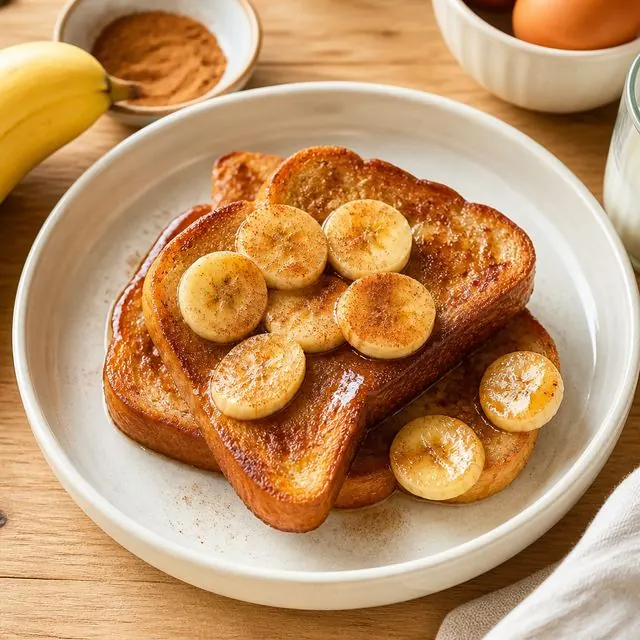

The two tricks that make it work are a 1:1 egg-to-milk ratio, which sets soft without tasting like an omelette, and turning the cinnamon into a paste before it meets the eggs, so it doesn't float to the top. It's a 15-minute weekend breakfast for two that's easy to pull off on a weekday.
The science: why this works
- Two eggs are about 100 ml, so this custard is roughly equal parts egg and milk. That ratio sets into a soft, tender layer; more egg tastes like an omelette, and more milk stays wet in the middle.
- Ground cinnamon resists getting wet. Its fine bark particles and natural oils make it float and clump in liquid, which is why stirring it into a spoonful of milk first gives an even, speck-free custard.
- Much of the 'eggy' taste comes from sulphur compounds in egg white. Whisking until no clear streaks remain spreads the white through the milk, so no strings of plain white cook onto the surface.
- With no sugar in the custard, browning relies on lactose from the milk and natural sugars in the bread. That's why each side needs a full 3 minutes and why it's less likely to burn than a sweetened batter.
- Day-old bread holds up better because of retrogradation: as bread sits, its starch molecules re-crystallize and firm the crumb, so the slice stays standing once it's wet.
Why a quick dip is enough
The bread soaks up the egg mix through tiny air pockets. A 10 second dip per side fills it without turning it to mush. Too long and the slice falls apart, too short and the middle stays dry.
Learn: What eggs do in cake →Why the egg must be fully set
Egg proteins firm up as they heat, turning the soaked bread from wet to custard-like. Cooking 3 minutes per side sets the egg all the way through. Raw egg in the middle makes the toast soggy and unsafe.
Learn: Proteins set when they heat →Why butter and medium heat give a golden crust
Butter carries flavor and helps the surface brown evenly. Milk sugars and egg proteins in the coating brown through the Maillard reaction. Medium heat browns the outside without burning the butter before the middle sets.
Learn: Browning butter →Cinnamon French toast
15 minutes · 2 servings · American · Breakfast
Ingredients
Makes 2 servings
Method

Tips for the best result
- Stir the cinnamon into 1 tbsp of the milk to make a paste, then whisk in the eggs and the rest of the milk.
- Lift each soaked slice with a fork and let it drip for 2 seconds. Puddles of custard on the surface fry into a scrambled-egg crust.
- Add the bread when the butter's foam starts to settle. That's the sign the pan is ready.
- Cook two slices at a time in a pan about 26 cm (10 in) across, so they never overlap.
- Hold the first batch on a rack in a 90°C (200°F) oven, not on a plate, so the bottoms don't steam soft.
- Warm the honey for 10 seconds so it runs into every crevice of the toast.
Mistakes to avoid
- Under-whisking the custard — strands of egg white cook into pale, rubbery streaks. Whisk until the mix is one even colour.
- Flipping back and forth — the crust never gets a chance to form. Turn each slice once, at 3 minutes.
- Drizzling honey on before cooking — it burns in the pan. Honey goes on at the table.
- Squeezing three slices into the pan — the pan cools and the toast steams pale. Two at a time is plenty.
Variations and swaps
- Add a few drops of vanilla extract or a pinch of nutmeg to the custard.
- Use whole milk and an extra egg yolk for a richer, more custardy middle.
- Make French toast sticks: cut each slice into three strips and cook them for about 1½ minutes per side.
- Sprinkle a little cinnamon sugar on the top side just before flipping for a crackly crust.
- Stuff it: spread a thin layer of peanut butter between two thin slices, press together, then dip and cook.
- Swap the banana for sliced strawberries or apple for a different fruit topping.
Storing and reheating
Freeze cooled slices on a tray until firm, then bag them, so they don't stick together; they keep 2–3 months at −18°C (0°F), or 3–4 days in the fridge at 4°C (40°F) or below if refrigerated within 2 hours. Reheat from frozen in a toaster or a 200°C (400°F) oven for 8–10 minutes until hot through, 74°C (165°F). Skip the microwave, which turns the custard spongy. Never freeze them with banana on top: it turns black and slimy. Add fresh banana and honey after reheating.
Cinnamon French toast: questions
Why does my batch taste too eggy?
There's too much egg for the milk, or the white wasn't fully whisked in. Keep to about equal volumes of egg and milk and whisk until no clear streaks remain.
Why does the cinnamon float on top of the egg mix?
Ground cinnamon doesn't absorb liquid easily, so it floats and clumps. Mix it into a spoonful of milk to form a paste first, then add the rest.
Can I bake French toast in the oven instead?
Yes. Lay the soaked slices on a buttered, lined tray and bake at 200°C (400°F) for about 15 minutes, flipping halfway, until golden and set in the middle. It's handy for a crowd but less crisp than pan-fried.
Is French toast safe if it's soft inside?
Soft and moist is fine; liquid egg is not. The middle should be fully set with no wet spots, which means it has reached about 71°C (160°F).
Can I use cinnamon-raisin bread?
Yes, and you can cut back on the cinnamon in the custard. Raisin bread has more sugar, so lower the heat slightly to stop it browning too fast.
Can I make the custard ahead?
Yes. Whisk it the night before and keep it covered in the fridge, then give it a quick whisk before dipping, since the cinnamon settles.
What bread is best for French toast?
Thick-sliced bread that is a day or two old works best because it soaks up the egg without falling apart. Brioche, challah and plain sandwich bread all work. Very thin or fresh bread can turn soggy.
How do you keep French toast from getting soggy?
Dip each slice for only about 10 seconds per side and cook until the egg is fully set. Medium heat gives time for the middle to cook while the outside browns. Do not stack hot slices on top of each other.
How do you know when French toast is done?
It is done when both sides are deep golden and the middle feels firm with no wet spots when pressed. This takes about 3 minutes per side. Egg should be fully set for food safety.
Can I make French toast without milk?
Yes, you can use water or any plant milk. The toast will be a little less rich but still works. The eggs do most of the work.