Authentic-Style Pad Thai
Pad thai is Thailand's famous stir-fried rice noodle dish, with a sweet, sour and salty tamarind sauce, scrambled egg, tofu, bean sprouts and crushed peanuts. It is chewy, tangy and full of texture.
- 55 minTotal time
- 4Servings
- 590kcal / serving
- 30 gProtein
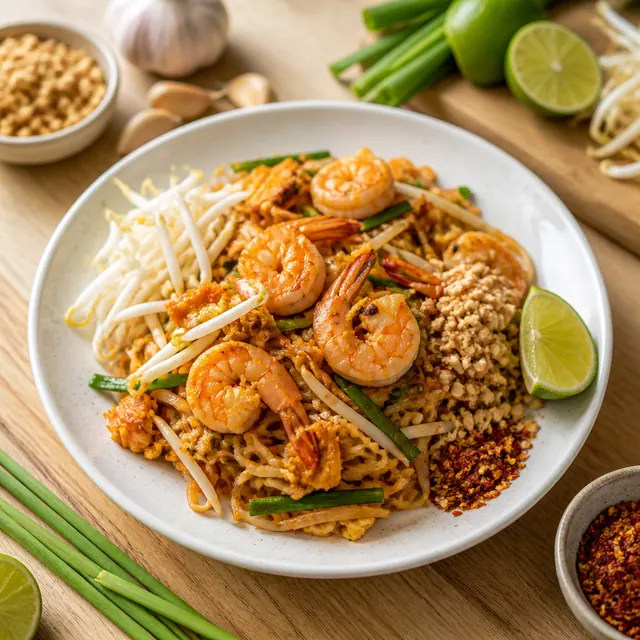

Most of the time is soaking the noodles. Once they are ready, the actual cooking takes only about 10 minutes.
The science: why this works
- Soaking the noodles in warm water hydrates them gently, so they finish cooking in the sauce without turning mushy.
- Tamarind brings a fruity sourness, fish sauce adds savory depth, and palm sugar balances both.
- Cooking in a very hot pan quickly browns the tofu and shrimp without drying them out.
- Scrambling the egg into the pan gives the noodles richness and body.
- Finishing with lime and peanuts adds freshness and crunch just before eating.
Why rice noodles are soaked
Dry rice noodles are packed with starch that needs water to soften. Soaking in warm water hydrates them slowly and evenly. Boiling them hard turns the outside gummy before the middle is cooked, so they finish in the wok instead.
Learn: Soak rice noodles, don't boil →Balancing sweet, sour and salty
Pad thai tastes good because three strong flavors keep each other in check. Sugar softens the sharp tamarind, salt from the fish sauce adds savoriness, and acid wakes up the sweetness. Taste the sauce first and adjust before it hits the pan.
Learn: Balancing sweet, sour, salty, hot →Authentic-Style Pad Thai
55 min · 4 servings · Thai · Main course
Ingredients
Makes 4 servings
- 230 gflat rice noodles (about 1/4 inch wide)
- 3 tbsptamarind concentrate
- 3 tbspfish sauce
- 3 tbsppalm sugar or brown sugar
- 2 tbspwater
- 3 tbspneutral oil, divided
- 340 gmedium shrimp or chicken breast, sliced
- 200 gfirm tofu, cut into small cubes
- 3 clovesgarlic, minced
- 2shallots, thinly sliced
- 2eggs, lightly beaten
- 480 mlbean sprouts
- 4scallions, cut into 1-inch pieces
- 80 mlroasted peanuts, crushed
- 2limes, cut into wedges
- Red pepper flakes, to taste
Method

Tips for the best result
- Taste the sauce before cooking and adjust, because tamarind brands vary in sourness.
- Cook in a large wok or skillet and do not double the recipe in one pan.
- Have everything prepped in bowls by the stove, because the stir-fry takes only minutes.
Mistakes to avoid
- Boiling the rice noodles, which makes them mushy and clumpy, so soak them in warm water.
- Crowding the pan, which steams the noodles instead of frying them, so cook in one batch for four servings only.
- Skipping the taste test of the sauce, which can leave the dish too sour or salty, so balance it first.
Variations and swaps
- Make it vegetarian with extra tofu and soy sauce in place of fish sauce.
- Use chicken thighs sliced thin instead of shrimp.
- Add a spoonful of chili garlic sauce for spicy pad thai.
- Swap tamarind concentrate for 2 tbsp lime juice plus 1 tbsp ketchup if you cannot find it, which gives a tangy but less authentic flavor.
- Swap palm sugar for brown sugar, which is a little less complex but works well.
- Swap fish sauce for soy sauce and a squeeze of lime for a vegetarian option.
Storing and reheating
Refrigerate within 2 hours and eat within 2 days. Reheat in a skillet with a splash of water until hot throughout to 165°F (74°C). The noodles will be a little softer.
Authentic-Style Pad Thai: questions
What is in pad thai sauce?
Pad thai sauce is made from tamarind, fish sauce and palm sugar, sometimes with a little water or lime. It should taste sweet, sour and salty in balance.
Can I make pad thai without tamarind?
You can, though it will taste different. A mix of lime juice and a little ketchup or rice vinegar gives a similar tang. Tamarind has a fruity depth that is hard to match.
How do I keep pad thai noodles from sticking?
Soak them just until pliable, drain well and toss them with the sauce right away. Use enough oil and keep them moving in a hot pan.
Why are my pad thai noodles hard or mushy?
Hard noodles were under-soaked or the pan was too dry, so add a splash of water. Mushy noodles were soaked too long or boiled, so soak in warm water instead.
Is pad thai gluten-free?
Rice noodles are naturally gluten-free, and the sauce here uses no soy sauce. Check that your fish sauce and tamarind are gluten-free, as some brands add wheat.