Reverse Sear Steak
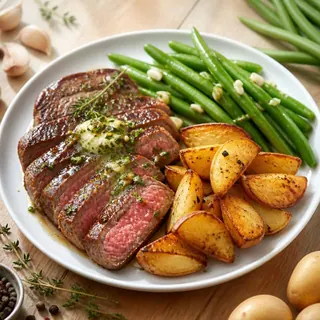
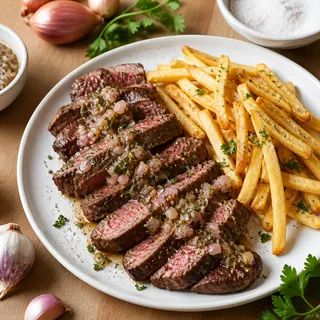
Reverse sear steak flips the usual order: you cook it slowly in a low oven first, then finish with a very fast sear. The result is a steak that is evenly pink from edge to edge with a dark, crisp crust and almost no gray band.
- 1 h 5 minTotal time
- 2Servings
- 650kcal / serving
- 55 gProtein
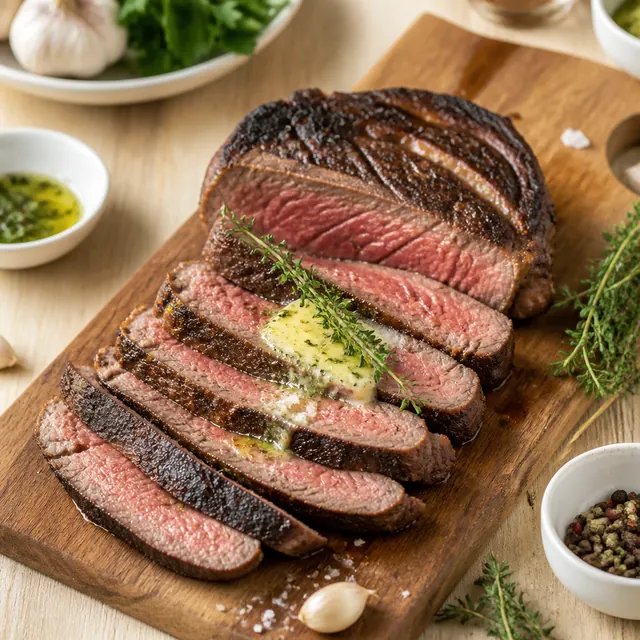

It works best on thick cuts and takes the stress out of timing, because the slow oven gives you a large window. A thermometer is the one tool you need.
The science: why this works
- A low 250°F (120°C) oven warms the steak gently, so the temperature rises evenly from the outside in rather than overcooking the outer layer.
- Salting early and leaving the steak uncovered in the fridge dries the surface, which lets it brown fast later instead of steaming.
- The dry surface after the oven sears in about a minute per side, so the inside barely cooks more.
- Resting between the oven and the pan lets the surface cool slightly and gives you time to heat the pan screaming hot.
- Basting with butter at the end adds flavor and helps brown the surface without burning it.
Why the gray band disappears
In a hot-pan-first steak, the outer layer overshoots the target temperature while the center catches up. A low oven keeps the temperature difference small, so the whole steak lands near the same doneness and there is little gray meat.
Learn: Sous vide: even doneness →Dry surface, better crust
Browning only happens once surface water has boiled away, and water is the enemy of a crust. Dry-brining and the oven both remove surface moisture, so the pan can go straight to Maillard browning instead of spending time drying the steak.
Learn: Salt meat ahead of time →Reverse Sear Steak
1 h 5 min · 2 servings · American · Main course
Ingredients
Makes 2 servings
- 2thick-cut steaks, ribeye or strip, 1 1/2 inches (4 cm) thick, about 350 g each
- 1½ tsp1/2 tsp kosher salt
- ½ tspblack pepper
- 1 tbspavocado or other high-heat oil
- 2 tbspbutter
- 3cloves garlic, smashed
- 3sprigs fresh thyme
Method

Tips for the best result
- Use an instant-read thermometer and check from the thickest part, away from bone and fat.
- Pull the steaks from the oven 10°F (6°C) below your target to account for the sear and rest.
- Open a window and turn on the fan; the final sear gets smoky.
Mistakes to avoid
- Using a thin steak, which overcooks during the sear; choose steaks at least 1 1/2 inches (4 cm) thick.
- Skipping the thermometer, which turns timing into guesswork; the oven time varies with thickness.
- Searing in a pan that is not hot enough, which gives a gray, soft crust; wait until it smokes lightly.
Variations and swaps
- Finish with a pat of garlic-herb compound butter instead of basting.
- Rub the steaks with smoked paprika and garlic powder before the oven.
- Use a thick-cut pork chop and pull it from the oven at 135°F (57°C) for a 145°F (63°C) final.
- Swap ribeye for New York strip, filet mignon or thick sirloin.
- Swap avocado oil for ghee or refined peanut oil, which tolerate the heat.
- Swap thyme and garlic for rosemary for a piney note.
Storing and reheating
Refrigerate leftover steak within 2 hours and eat within 3 to 4 days. Reheat slices briefly in a skillet with a little butter; for best texture, eat them cold in salads and sandwiches.
Reverse Sear Steak: questions
What temperature do I pull a reverse sear steak from the oven?
Pull it at 115°F (46°C) for medium-rare, 125°F (52°C) for medium, or 130°F (54°C) if you want a final temperature near the USDA 145°F (63°C). The sear adds about 10 to 15°F (6 to 8°C).
What is the best oven temperature for reverse sear?
200 to 275°F (95 to 135°C) works. This recipe uses 250°F (120°C), which is a good balance between speed and evenness.
Is reverse sear better than regular searing?
For thick steaks, yes, because it gives more even doneness and a drier surface for a better crust. For thin steaks, a direct pan sear is simpler and just as good.
How long should I rest the steak after the sear?
Rest it 5 minutes. Because the interior is already at an even temperature, the steak needs less rest than a traditionally seared one.
Can I reverse sear on a grill?
Yes. Cook over indirect heat at 250°F (120°C) until 115°F (46°C), then sear directly over the hottest coals or burners for about 1 minute per side.