Classic Meatloaf with Ketchup Glaze
Classic meatloaf is simple comfort food: tender beef, a hint of onion and a sweet, tangy ketchup glaze. It is made to feed a family and even better as a sandwich the next day.
- 1 h 20 minTotal time
- 6Servings
- 430kcal / serving
- 32 gProtein
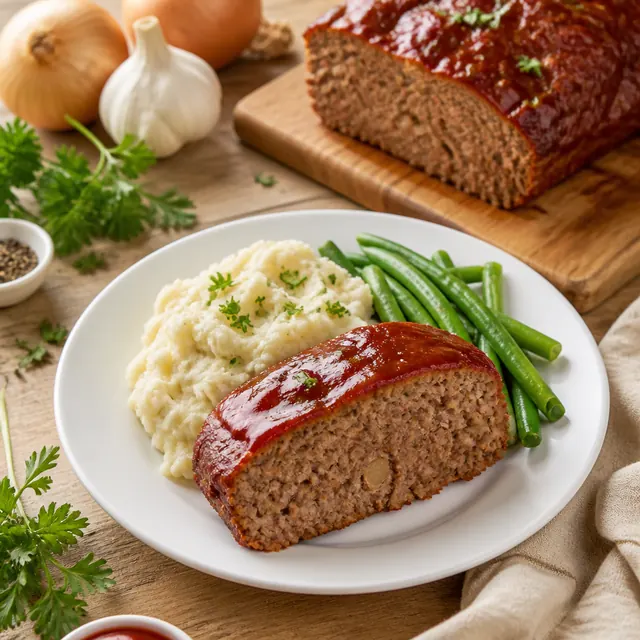

The secret to a juicy loaf is a milk and breadcrumb paste, a gentle hand when mixing and a proper rest before slicing. About 15 minutes of work, then the oven does the rest.
The science: why this works
- Soaking breadcrumbs in milk makes a panade, a paste that traps moisture between the meat proteins so the loaf stays tender instead of rubbery.
- Mixing the beef only briefly keeps the proteins from linking into a tight, dense network.
- Baking free-form on a sheet pan lets fat drain away and gives more surface area for browning.
- Applying the sugar-heavy glaze in two coats keeps it from burning while it still caramelizes into a sticky crust.
- Resting 10 minutes lets the juices redistribute so the slices stay moist.
The panade
Starch and water in the milk-soaked crumbs physically get between the meat proteins. When the loaf cooks, those proteins cannot squeeze together and wring out juice. The result is a softer, moister slice than a loaf made with meat alone.
Learn: Proteins set when they heat →Why resting works
As meat heats, the juices are pushed toward the center. A short rest lets the fibers relax and juices spread back out. Slice straight from the oven and they run out onto the board instead.
Learn: Rest meat before cutting →Classic Meatloaf with Ketchup Glaze
1 h 20 min · 6 servings · American · Main course
Ingredients
Makes 6 servings
Method

Tips for the best result
- Grate the onion on a box grater so it disappears into the loaf instead of leaving crunchy chunks.
- Use a thermometer; 160°F (71°C) in the center is the safe point for ground beef.
- Fry a small test patty to taste for seasoning before shaping the loaf.
Mistakes to avoid
- Overmixing the meat, which makes the loaf tough and bouncy; mix just until combined.
- Using very lean beef only, which bakes up dry; stick to 80% lean or blend with ground pork.
- Slicing right out of the oven, which lets juices pour out and the slices crumble; rest 10 minutes.
Variations and swaps
- Wrap the loaf in bacon strips for a smoky crust.
- Swap half the beef for ground pork for a richer, softer texture.
- Hide a cup of finely grated carrot and zucchini in the mix for extra vegetables.
- Swap breadcrumbs for crushed saltine crackers or rolled oats.
- Swap milk for buttermilk for a slightly tangier, more tender loaf.
- Swap the ketchup glaze for barbecue sauce if you like it smokier.
Storing and reheating
Refrigerate slices in an airtight container within 2 hours and eat within 3 to 4 days. Freeze wrapped slices up to 3 months and reheat to 165°F (74°C).
Classic Meatloaf with Ketchup Glaze: questions
What temperature should meatloaf be cooked to?
Meatloaf made with beef is safe at 160°F (71°C) in the center. Use an instant-read thermometer in the thickest part rather than guessing from color.
How long does meatloaf take at 350°F?
A 900 g (2 lb) loaf takes about 60 to 65 minutes at 350°F (175°C). Check the temperature at 55 minutes since oven and loaf shape vary.
How do I keep meatloaf from falling apart?
Use eggs and a breadcrumb panade as binders, and rest the loaf 10 minutes before slicing. Slice with a serrated knife using a gentle sawing motion.
Should meatloaf be covered with foil?
No, bake it uncovered so the top browns and the glaze sets. If the glaze darkens too fast, tent it loosely with foil for the last few minutes.
Can I make meatloaf ahead?
Yes. Shape the raw loaf, cover it, and refrigerate up to 24 hours before baking. Add 5 to 10 minutes of bake time since it starts cold.