Classic Greek Salad
Greek salad, or horiatiki, is chunky ripe tomatoes, crunchy cucumber, olives and a slab of feta, tossed in good olive oil and oregano. There is no lettuce in the classic version.
- 15 minTotal time
- 4Servings
- 260kcal / serving
- 7 gProtein
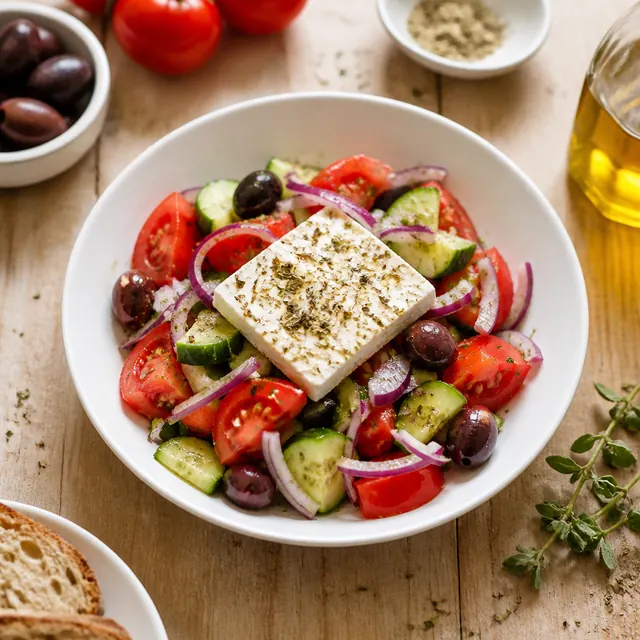

It is quick, fresh and full of flavor, with juices at the bottom of the bowl that are best mopped up with bread. It goes with grilled chicken, lamb or fish.
The science: why this works
- Salting the tomatoes first draws out their juices, which mix with the oil to make an instant dressing.
- Soaking the sliced onion in cold water removes the sharp sulfur bite, leaving it sweet and crunchy.
- Good extra virgin olive oil is the main flavor here, so it is worth using the best you have.
- Red wine vinegar adds acid without overpowering the tomatoes.
- Feta in a slab, rather than crumbled, stays creamy and gets seasoned by the dressing as you eat.
Tomato juice dressing
Salt pulls water and flavor compounds out of tomato cells. That juice, mixed with olive oil, creates a loose emulsified dressing that coats the vegetables and makes the whole salad taste more tomato-y. Letting it sit a few minutes is all it takes.
Learn: Salt draws water out of food →Why soak the onion
Raw onions release a sharp sulfur compound when cut. Soaking sliced onion in cold water rinses away part of that compound, so the onion tastes milder and sweeter while it keeps a satisfying crunch. It takes just ten minutes, and the onion keeps its color and crunch.
Learn: Why cooked onions turn sweet →Ripe tomatoes matter
Tomatoes lose flavor and turn mealy in the fridge because cold dulls the aroma compounds. Keep them on the counter and use ripe, in-season ones, since there is nowhere for weak tomatoes to hide in this salad. Ripe fruit is also sweeter and juicier, which dresses the salad for you.
Learn: Ripe tomatoes and the fridge →Classic Greek Salad
15 min · 4 servings · Greek · Salad
Ingredients
Makes 4 servings
- 4ripe tomatoes, cut into wedges (about 500 g)
- 1large cucumber, sliced into half moons
- ½red onion, thinly sliced
- 1green bell pepper, sliced into rings
- 120 mlKalamata olives
- 150 gfeta, in one thick slab
- 60 mlextra virgin olive oil
- 2 tbspred wine vinegar
- 1 tspdried oregano
- ½ tspkosher salt
- ¼ tspblack pepper
Method

Tips for the best result
- Use the ripest tomatoes you can find, and keep them out of the fridge.
- Add the feta last so it stays creamy and does not break apart.
- Serve with warm pita or crusty bread to soak up the dressing.
Mistakes to avoid
- Using cold, pale tomatoes, which taste of nothing; buy ripe ones and leave them at room temperature.
- Adding lettuce, which waters down the dressing; the classic version has none.
- Tossing the feta in, which crumbles it into the dressing; set it on top as a slab.
Variations and swaps
- Add 1 can (400 g) chickpeas, drained, and 1 tbsp capers for a heartier salad.
- Add 200 g grilled chicken strips to make it a main course.
- Add a handful of fresh mint and parsley for an herby version.
- Swap red wine vinegar for lemon juice for a brighter, citrusy dressing.
- Swap Kalamata olives for green olives if that is what you have.
- Swap feta for crumbled goat cheese for a milder, creamier cheese.
Storing and reheating
Best eaten right away. Refrigerate leftovers in a covered container for up to 1 day; the vegetables will soften and release water. Do not freeze.
Classic Greek Salad: questions
What is in a traditional Greek salad?
A traditional Greek salad has tomatoes, cucumber, red onion, green pepper, Kalamata olives and feta, dressed in olive oil, oregano and often red wine vinegar. It has no lettuce.
What is the best dressing for Greek salad?
Olive oil, red wine vinegar and dried oregano make the best dressing. Use about 2 parts oil to 1 part vinegar, and salt the tomatoes so their juices join in.
Does Greek salad have lettuce?
No. The classic Greek salad, called horiatiki, does not include lettuce. Many restaurants add romaine, but the original is chunky vegetables only.
How long does Greek salad last in the fridge?
It keeps about 1 day in the fridge. The vegetables release water over time, so for best results, store the cheese and dressing separately.