Basic Vinaigrette
A basic vinaigrette is just oil, vinegar, a little mustard and seasoning, shaken or whisked until creamy. It takes 5 minutes and tastes far better than anything from a bottle.
- 5 minTotal time
- 8Servings
- 140kcal / serving
- 0 gProtein
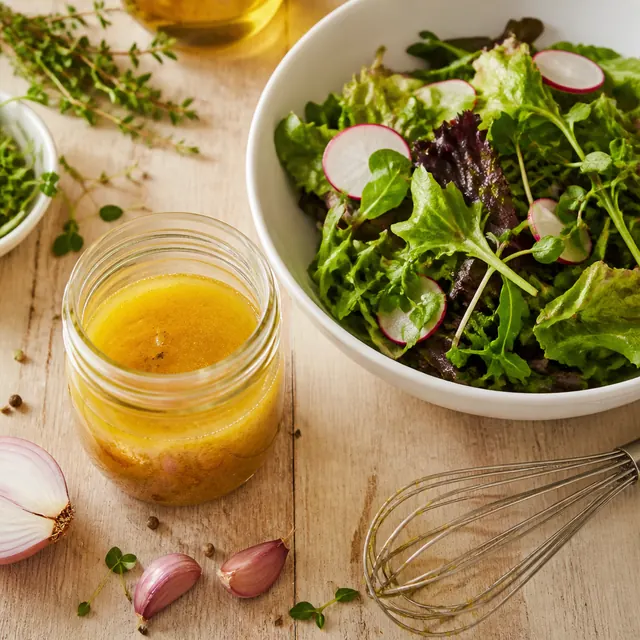

Once you know the 3 to 1 ratio, you can change the vinegar, oil and flavorings to match any salad, grain bowl or roasted vegetable.
The science: why this works
- A ratio of about 3 parts oil to 1 part vinegar balances richness and tang.
- Dijon mustard acts as an emulsifier, so the oil and vinegar blend and stay creamy.
- Soaking the shallot in vinegar and salt softens its raw bite.
- A touch of honey rounds the sharp edges of the vinegar.
- Drizzling the oil slowly gives the tiniest droplets and the thickest dressing.
The 3 to 1 ratio
Oil carries flavor and coats leaves, while vinegar adds sharpness. Three parts oil to one part vinegar is a starting point that tastes balanced to most people. Adjust to your vinegar, since stronger acids may need more oil.
Learn: Vinaigrette ratio →Mustard as emulsifier
Oil and vinegar naturally separate. Mustard contains mucilage and proteins that coat tiny oil droplets and keep them suspended in the vinegar. A little goes a long way, so one teaspoon is enough to hold a whole cup of dressing.
Learn: How emulsions work →Taste on a leaf
A vinaigrette tastes much sharper on a spoon than on lettuce, because greens dilute the acid. Dip a leaf to judge it, and remember that a dressing on a salad will taste milder than it does in the bowl.
Learn: Season in layers →Basic Vinaigrette
5 min · 8 servings · French · Sauce
Ingredients
Makes 8 servings
- 120 mlextra virgin olive oil
- 3 tbspred wine vinegar
- 1 tspDijon mustard
- 1small shallot, finely minced
- 1 tsphoney
- ½ tspkosher salt
- ¼ tspblack pepper
Method

Tips for the best result
- Make it in a jar; shaking is quicker than whisking and stores neatly.
- Use good extra virgin olive oil, since it is the main flavor.
- Dress the salad lightly and add more if needed; you can always add but not remove.
Mistakes to avoid
- Adding oil too fast, which splits the dressing; drizzle it in slowly.
- Tasting it on a spoon only, which misleads you; taste on a leaf.
- Over-dressing, which weighs down the leaves; start with a little and toss.
Variations and swaps
- Swap red wine vinegar for lemon juice and add 1 tsp zest for a lemon vinaigrette.
- Use balsamic vinegar and a pinch of dried oregano for a balsamic version.
- Stir in 1 tbsp chopped fresh herbs, such as parsley, chives or basil.
- Swap honey for maple syrup to keep it vegan.
- Swap red wine vinegar for sherry or apple cider vinegar.
- Swap shallot for a small clove of garlic, finely grated, for a sharper dressing.
Storing and reheating
Refrigerate in a sealed jar for up to 1 week (up to 2 weeks without shallot or garlic). The olive oil will firm up in the fridge; let it sit at room temperature 15 minutes, then shake.
Basic Vinaigrette: questions
What is the ratio for vinaigrette?
The classic ratio is 3 parts oil to 1 part vinegar. Adjust to taste if your vinegar is very sharp or you like a tangier dressing.
Why does my vinaigrette separate?
Oil and vinegar do not mix on their own. Add mustard and drizzle the oil in slowly, or shake it well just before using.
How long does homemade vinaigrette last?
It lasts up to 1 week in the fridge with fresh shallot or garlic. Shake it well before using.
What vinegar is best for vinaigrette?
Red wine, white wine, sherry and apple cider vinegar are all great. Balsamic is sweeter and works well with a bit more oil.
Can I make vinaigrette without mustard?
Yes. It will separate more quickly, but you can shake it well before each use. A little honey or mayonnaise can help hold it together.