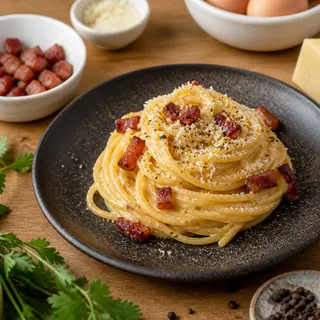
Cacio e Pepe (Creamy Roman Pasta)
Cacio e pepe means cheese and pepper, and that is nearly the whole recipe: spaghetti, Pecorino Romano, black pepper and starchy pasta water. Done right, it is creamy, sharp and peppery, with no cream at all.
- 20 minTotal time
- 4Servings
- 560kcal / serving
- 23 gProtein
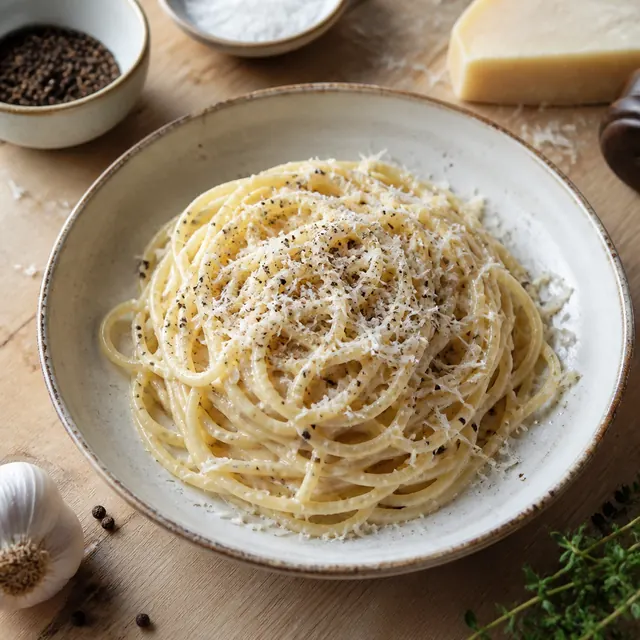

It is also famous for clumping. The fix is simple: make a cheese paste with warm water first, and add it off the heat.
The science: why this works
- Cooking pasta in less water makes the water extra starchy, which is the key to a smooth sauce.
- Toasting the pepper wakes up its oils, so the flavor is rounder and more aromatic.
- Making a paste of cheese and water first prevents the cheese from meeting direct heat, which makes it clump.
- Taking the pan off the burner keeps the Pecorino below the temperature where its proteins tighten and stringy lumps form.
- Finishing the noodles in a little water lets them absorb flavor and release more starch into the sauce.
Why cheese clumps
When Pecorino gets too hot or too dry, its proteins bond tightly together and squeeze out fat, forming rubbery clumps. Dispersing the cheese in warm starchy water first spreads those proteins out, so starch keeps them apart and the sauce stays smooth.
Learn: Melt cheese gently →Starch as a stabilizer
Starch granules released from pasta swell in hot water and thicken it. In cacio e pepe they coat the tiny fat droplets from the cheese and keep them suspended, forming an emulsion that tastes creamy even without cream.
Learn: How emulsions work →Cacio e Pepe (Creamy Roman Pasta)
20 min · 4 servings · Italian · Main course
Ingredients
Makes 4 servings
- 400 gspaghetti or tonnarelli
- 100 gPecorino Romano, finely grated (about 1 1/4 cups)
- 2 tspblack peppercorns, freshly cracked coarse
- 2 tbspbutter (optional, for insurance)
- 1 pinchSalt, a small pinch for the pasta water
Method

Tips for the best result
- Grate the Pecorino on the finest holes so it melts instantly.
- Crack the pepper coarsely with a pan or mortar rather than using fine pre-ground pepper.
- Serve on warm plates, because the sauce tightens as it cools.
Mistakes to avoid
- Adding cheese directly to a hot pan, which makes clumps, so use the paste and pull the pan off the heat.
- Using too much pasta water at once, which makes the sauce watery, so add it a spoonful at a time.
- Over-salting the pasta water, which makes the dish too salty because Pecorino is already salty.
Variations and swaps
- Use half Pecorino Romano and half Parmesan for a milder sauce.
- Add 1 tsp of olive oil and a squeeze of lemon at the end for brightness.
- Make it with rigatoni or bucatini instead of spaghetti.
- Swap Pecorino Romano for Parmigiano-Reggiano for a sweeter, nuttier version.
- Swap butter for extra-virgin olive oil to keep it closer to the traditional method.
- Swap spaghetti for tonnarelli, a thicker square-cut pasta, which holds the sauce well.
Storing and reheating
Cacio e pepe is best eaten fresh because the sauce tightens and separates. Leftovers keep in the fridge for 2 days, and should be reheated in a skillet with a splash of water to 165°F (74°C).
Cacio e Pepe (Creamy Roman Pasta): questions
Why does my cacio e pepe clump?
Clumps happen when the cheese hits heat that is too high or water that is too little. Mix the cheese with warm pasta water into a paste, and add it off the heat while tossing quickly.
What cheese is used in cacio e pepe?
Traditional cacio e pepe uses Pecorino Romano, a salty sheep's milk cheese. Some cooks blend in Parmigiano-Reggiano for a milder, sweeter flavor.
Can I make cacio e pepe without butter?
Yes, traditional recipes use no butter. The butter in this recipe is optional insurance that makes the sauce more forgiving for beginners.
Is cacio e pepe vegetarian?
It has no meat, so it is vegetarian by most definitions. Traditional Pecorino Romano is made with animal rennet, so strict vegetarians should look for a cheese made with vegetarian rennet.
How do I fix a broken cacio e pepe sauce?
Add a splash of hot pasta water and toss over very low heat, or whisk in a small knob of cold butter. This often brings the sauce back together.