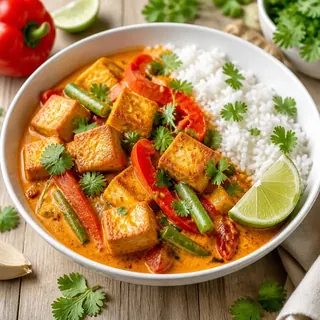
Tofu
Also called bean curd

Tofu adapts flavor and texture when its moisture and proteins are altered.
Tofu, or bean curd, is made by curdling soy milk and pressing the curds into blocks, a technique that began in China more than a thousand years ago. It comes soft and silken, firm or extra firm, and tastes mild, clean and faintly earthy with a gentle bitterness from the soybean.
That quiet flavour is its superpower. Tofu soaks up sauces and marinades, crisps beautifully in a hot pan and melts into soups and desserts, so cooks use it everywhere from mapo tofu and miso soup to curries, scrambles and stir-fries.
Flavor profile
Aroma: neutral, subtle
Good to know
Origin: China
Forms: soft, firm, extra firm
Season: Available year-round.
Nutrition: A good plant source of protein; tofu is made from soy, a common allergen.
Storage: Unopened tofu keeps in the fridge until its use-by date. Once opened, cover leftover tofu with fresh water in a sealed container, change the water daily and use it within 3–5 days. It freezes for up to 3 months; freeze it in its pack or drained in a bag, then thaw in the fridge and squeeze out the water. A sour smell, slimy surface or yellowish colour means it has spoiled.
How to use tofu
Stir-Fry Success
Press tofu to release water, which allows proteins like glycinin to brown nicely.
Grill Greatness
Its porous nature lets it soak up marinades, deepening the flavor.
The science of tofu
- Tofu is made the same way as fresh cheese. A coagulant such as nigari (magnesium chloride), calcium sulphate or an acid makes the soy proteins clump together, and the curds are pressed to squeeze out whey.
- How much water is pressed out sets the texture. Silken tofu is unpressed and custardy, while extra-firm tofu has had much of its water removed and holds its shape when fried.
- Tofu browns poorly when wet, because water at the surface keeps it below the temperature needed for the Maillard reaction. Pressing and patting it dry, or tossing it in cornstarch, gets a crisp golden crust.
- Freezing tofu turns its water into ice crystals that push the protein network apart. Thawed, it is spongy, chewy and soaks up marinade far more readily.
- Tofu's porous protein structure takes on salt and soy sauce easily, but oil-based marinades struggle to get in because the tofu is mostly water. Salty, watery sauces and glazes work best.
How to choose tofu
Match the type to the dish: silken for smoothies, dressings and desserts; soft for soups like miso; firm or extra firm for frying, baking and stir-fries. Check the use-by date and choose sealed packs with clear, not cloudy, water. Pre-pressed, high-protein blocks save time if you want crisp tofu.

Substitutes for tofu
| Swap | Amount | What changes |
|---|---|---|
| Tempeh | 1:1 | Firmer and nuttier, made from whole fermented soybeans; steam it briefly to mellow any bitterness. |
| Paneer | 1:1 | A dairy cheese that holds its shape when fried, great in curries. |
| Chickpeas | 1 cup per 200 g tofu | Hearty and protein-rich for curries and salads, though the texture is very different. |
| Eggs | 2 eggs per 150 g tofu | Swap for tofu scramble or soft tofu in soups. |
What goes with tofu
- Soy Sauce. Soy sauce's salt and umami penetrate tofu's porous structure.
- Miso. Miso's salty umami seasons mild tofu, as in miso soup.
- Bok Choy. Mild tofu soaks up the sauce while bok choy adds crisp texture.
- Scallion. Scallions bring a fresh, pungent note to the neutral backdrop of tofu.
- Ginger. Ginger's sharpness perks up tofu's blandness.
- Peanut. Peanut adds crunch and a nutty contrast to soft tofu.
- Sesame Oil. Sesame oil infuses tofu with a toasty aroma.
- Cashew. Cashew's crunch contrasts with soft, mild tofu.
- Pork Belly. Neutral tofu soaks up pork belly's braising liquid and relieves its richness.
- Radish. Radish's peppery crunch contrasts the softness of tofu.
Mistakes to avoid
- Waterlogged tofu won't brown. Patience in pressing pays off.
- Too long in marinade, and you've masked tofu's gentle soy note.
Ideas for tonight
- Mapo tofu
- Tofu vegetable stir-fry
- Tofu curry
Tofu: questions
Can you eat tofu raw?
Yes. Tofu is made from cooked soy milk, so it is ready to eat straight from the pack. Silken and soft tofu are often served cold with soy sauce, ginger and scallions.
Do you have to press tofu?
For frying and baking, pressing firm tofu for 15–30 minutes removes water so it browns and crisps. Silken and soft tofu should not be pressed, and many pre-pressed blocks skip this step.
What is the difference between silken and firm tofu?
Silken tofu is set without pressing, so it is smooth and custard-like and breaks easily. Firm tofu is pressed, which makes it denser and able to hold its shape in a pan.
How do you make tofu crispy?
Press it, cut it into pieces, pat dry and toss in a little cornstarch. Fry in hot oil without moving it until golden, or bake at 220°C (425°F) for about 25 minutes, turning once.
Can you freeze tofu?
Yes, and many cooks freeze it on purpose. Frozen and thawed tofu turns chewy and spongy, so it absorbs marinades and sauces much better.
What does tofu taste like?
On its own it is very mild, slightly beany and a little earthy. It takes on whatever flavours you cook it with, which makes it so versatile.
What goes well with tofu?
Tofu pairs best with soy sauce, miso, bok choy, scallion, ginger. Soy sauce's salt and umami penetrate tofu's porous structure.
How do you use tofu in cooking?
Stir-Fry Success: press tofu to release water, which allows proteins like glycinin to brown nicely.
How should you store tofu?
Refrigerate in water for up to a week, changing water daily, or freeze for a denser texture.
What is the most common mistake with tofu?
Waterlogged tofu won't brown. Patience in pressing pays off.
 Miso
 Soy Sauce
 Bok Choy
 Ginger
 Sesame Oil