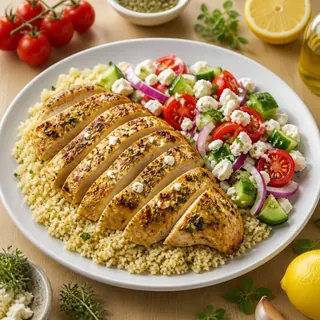
Couscous
Couscous, a semolina pasta, acts as a neutral base for many dishes.
Couscous is not a grain but a tiny pasta: durum wheat semolina rolled with water into little granules, then steamed and dried. The quick-cooking kind sold in most shops is already precooked, so it only needs hot liquid and five minutes. Its own taste is very mild, gently wheaty and almost neutral.
That neutrality is exactly why cooks love it. Couscous drinks up whatever you cook it in, from stock to the spiced juices of a tagine, and it takes happily to lemon, herbs, nuts and dried fruit. It is one of the fastest side dishes in the kitchen.
Flavor profile
Aroma: neutral
Good to know
Origin: North Africa
Forms: pearl, instant
Season: Available year-round as a pantry staple; it is lovely with summer vegetables and warming winter tagines alike.
Nutrition: Made from wheat, so it contains gluten; mostly carbohydrate, with wholewheat versions adding a little more fibre.
Storage: Keep dry couscous in an airtight container in a cool, dark cupboard for up to a year; discard it if it smells stale or shows any sign of pantry moths. Cool cooked couscous quickly and refrigerate it within 2 hours, then eat it within 3–4 days. It freezes well for up to 3 months in a flat bag. Fluff it with a fork and a splash of water when reheating.
How to use couscous
Fluff with a Fork
Use a fork to fluff cooked couscous, separating grains for a light texture.
Infuse with Broth
Cook using broth to add depth that pairs with various dishes.
The science of couscous
- Instant couscous has already been steamed, so its starch is gelatinised. Cooking it is really just rehydration: the dry granules absorb hot liquid in a few minutes, which is why it needs no simmering.
- Getting the ratio right matters. About 1 part couscous to 1–1.25 parts boiling liquid by volume gives separate grains; too much liquid swells the surface starch into a sticky paste.
- Fluffing with a fork breaks apart grains before their starchy surfaces set together as they cool. Rubbing in a little butter or oil coats each grain and keeps it from clumping.
- Toasting dry couscous in oil before adding liquid browns the surface through the Maillard reaction, giving a nuttier, deeper taste. It works especially well with larger pearl couscous.
- Because the grains absorb liquid so readily, they also absorb salt and aroma. Seasoning the cooking liquid well flavours couscous all the way through, which a sprinkle of salt afterwards cannot do.
How to choose couscous
Fine and medium instant couscous are best for quick sides and salads. Pearl (Israeli) couscous is larger, chewier and cooked like pasta, so it suits warm salads and soups. Wholewheat couscous has a nuttier taste and a little more fibre, and cooks the same way.

Substitutes for couscous
| Swap | Amount | What changes |
|---|---|---|
| Quinoa | 1:1 cooked | A gluten-free swap with a similar small grain; it takes about 15 minutes to simmer. |
| Bulgur wheat | 1:1 | Also soaks rather than boils when fine; slightly chewier and nuttier. |
| Cauliflower rice | 1:1 by volume | A low-carb, gluten-free option; sauté it briefly so it isn't watery. |
| Orzo | 1:1 cooked | Best substitute for pearl couscous in salads and soups. |
What goes with couscous
- Lemon. Lemon’s acidity makes couscous vibrant and lively.
- Parsley. Parsley's bright green notes bring life to couscous.
- Mint. Mint provides a refreshing contrast to couscous's neutrality.
- Chickpea. Chickpeas add protein and creamy texture to couscous.
- Feta. Salty, tangy feta contrasts with mild couscous.
- Lamb Shoulder. Couscous soaks up lamb's braising juices and spices.
- Pistachio. Pistachio's crunch and buttery sweetness contrast with soft couscous.
- Harissa. Couscous soaks up harissa broth, a North African staple.
- Preserved Lemon. Chopped preserved lemon seasons plain couscous with salt and citrus.
- Za'atar. Za'atar seasons plain couscous with herbs and tang.
Mistakes to avoid
- Hard grains from undercooking.
- Bland result without seasoning.
Ideas for tonight
- Serve with a vegetable stew.
- Mix with roasted vegetables and herbs.
- Use as a base for grilled fish.
Couscous: questions
Is couscous a grain or a pasta?
Couscous is a pasta. It is made from durum wheat semolina and water, rolled into small granules, then steamed and dried. It is often treated like a grain at the table because of its small size.
Is couscous gluten-free?
No. Couscous is made from wheat, so it contains gluten. Quinoa, millet or cauliflower rice are good gluten-free alternatives.
What is the water to couscous ratio?
Use about 1 cup of couscous to 1–1.25 cups of boiling stock or water. Pour it over, cover, and leave for 5 minutes, then fluff with a fork. Add a little more hot liquid if the grains still taste firm.
How do you stop couscous going clumpy?
Don't use too much liquid, and fluff it with a fork as soon as it has absorbed the water. Stirring in a spoonful of butter or olive oil coats the grains so they stay separate.
What is the difference between couscous and pearl couscous?
Regular couscous is fine and cooks by soaking in a few minutes. Pearl or Israeli couscous is a larger, toasted pasta ball that you simmer like pasta for about 8–10 minutes, and it stays chewier.
Can you freeze cooked couscous?
Yes. Cool it quickly, spread it in a flat freezer bag and freeze for up to 3 months. Reheat with a splash of water, covered, and fluff it before serving.
Why is my couscous bland?
Plain water gives plain couscous. Cook it in well-salted stock, then add lemon, herbs, olive oil or butter. A spoon of harissa or chopped preserved lemon also wakes it up fast.
What does couscous taste like?
Couscous, a semolina pasta, acts as a neutral base for many dishes., with an aroma that is neutral.
What goes well with couscous?
Couscous pairs best with lemon, parsley, mint, chickpea, feta. Lemon’s acidity makes couscous vibrant and lively.
How do you use couscous in cooking?
Fluff with a Fork: use a fork to fluff cooked couscous, separating grains for a light texture.
How should you store couscous?
Store in a dry, cool place in an airtight container.
What is the most common mistake with couscous?
Hard grains from undercooking.
 Chickpea
 Lemon
 Mint
 Parsley
 Quinoa
 Lamb Shoulder