Easy Miso Soup
Miso soup is a light Japanese soup of dashi broth, miso paste, tofu and seaweed. It is savory, warming and ready in about 15 minutes.
- 15 minTotal time
- 4Servings
- 80kcal / serving
- 7 gProtein
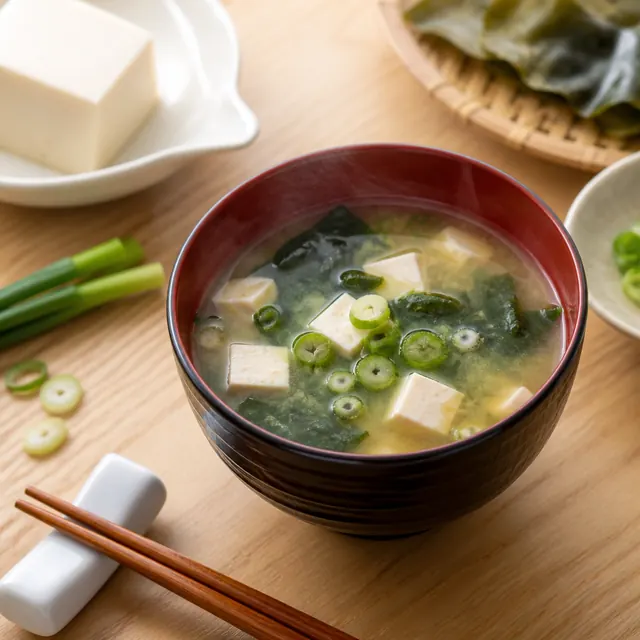

The two keys are a gentle dashi and adding the miso off the heat. Boiling miso destroys its delicate aroma, so stir it in last and serve right away.
The science: why this works
- Kombu and bonito flakes make dashi, a broth packed with natural umami in just a few minutes.
- Heating the kombu gently and removing it before boiling avoids a slimy, bitter broth.
- Dissolving the miso in a little hot broth first prevents lumps.
- Adding the miso off the heat preserves its aroma and live flavor.
Kombu and bonito double the umami
Kombu is rich in glutamate and bonito flakes are rich in inosinate. Two different umami compounds together taste far stronger than either alone, which is why dashi tastes so deep even though it is so simple and quick.
Learn: Dashi: steep, don't boil →Why miso should not boil
Miso is fermented, and its fragrance comes from delicate aroma compounds that are easily lost to heat. Boiling also dulls its flavor and makes the soup taste flat. Warming the dashi first, then stirring in the miso off the heat, keeps it lively.
Learn: Miso goes in last, off the heat →Easy Miso Soup
15 min · 4 servings · Japanese · Soup
Ingredients
Makes 4 servings
- 4cups water
- 1 piecekombu (10 cm square), wiped
- 120 mlbonito flakes (katsuobushi)
- 3 tbspwhite or yellow miso paste
- 200 gsilken tofu, cut into 1.5 cm cubes
- 2 tbspdried wakame
- 2scallions, thinly sliced
Method

Tips for the best result
- Dissolve the miso in a ladle with a little hot dashi before stirring it into the pot.
- Use instant dashi granules if you are short on time, but check the salt.
- Different miso varieties vary in saltiness, so add a little at a time and taste.
Mistakes to avoid
- Boiling the soup after adding miso: the aroma is lost, so stay below a simmer.
- Boiling the kombu: it turns bitter and slimy, so remove it before the water boils.
- Stirring miso straight into the pot: it clumps, so whisk it in a ladle first.
Variations and swaps
- Add sliced mushrooms or baby spinach with the tofu.
- Add a splash of sesame oil and a handful of cooked udon noodles.
- Use red miso for a deeper, saltier flavor or mix white and red.
- Swap bonito flakes for dried shiitake mushrooms in the water to make it vegetarian and vegan.
- Swap silken tofu for firm tofu if you want pieces that hold their shape.
Storing and reheating
Best fresh. Refrigerate leftovers within 2 hours for up to 2 days and reheat gently to steaming (not boiling), since the soup loses aroma when reheated.
Easy Miso Soup: questions
What is miso soup made of?
Miso soup is made from dashi (kombu and bonito broth), miso paste, tofu, seaweed and scallions.
Can I make miso soup without dashi?
Yes. Use instant dashi granules, or simmer dried shiitake mushrooms in water for a vegan version.
Why does my miso soup taste bland?
It likely needs more miso or a stronger dashi. Add miso a half tablespoon at a time and taste after each addition.
Can I reheat miso soup?
You can warm it gently, but do not boil it. Reheated miso soup loses some of its aroma, so it is best eaten fresh.