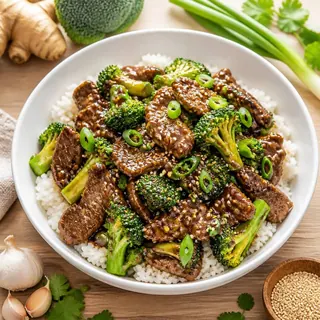
Velveting: tender stir-fry meat

Heat makes chicken proteins tighten and squeeze out moisture, so plain breast goes dry in a wok. Velveting prevents that. Coat the slices in cornstarch and egg white, or a pinch of baking soda, then cook briefly in oil or simmering water.
Use baking soda in small amounts
Baking soda raises the pH on the meat's surface, so its proteins tighten less. The slices stay juicier and softer. Too much soda or too long a soak turns the meat mushy and soapy. Use a little, rest it briefly, and rinse.

Test yourself
Questions from the interactive lesson, with the answer and the why.
What does a cornstarch and egg white coating do to the meat as it cooks?
Forms a thin gel that shields it and holds in juices. Starch gels and egg white sets, protecting the surface from harsh heat.
True or false: Baking soda raises the pH of the meat surface, which helps it hold more water.
True. A higher pH keeps proteins from bonding as tightly, so the meat squeezes out less moisture.
What went wrong? You soak chicken slices in baking soda overnight. They cook up mushy, with a soapy taste.
The soda stayed on too long and broke the meat down. Too much alkalinity turns the texture mushy and tastes soapy.
Fill the blank: Velveting keeps meat proteins from tightening and squeezing out ___.
Velveting keeps meat proteins from tightening and squeezing out moisture. Tight proteins push water out, which makes meat dry.
Which cut gains the most from velveting in a quick stir-fry?
Lean chicken breast slices. Lean meat has little fat to protect it, so it dries out fast.