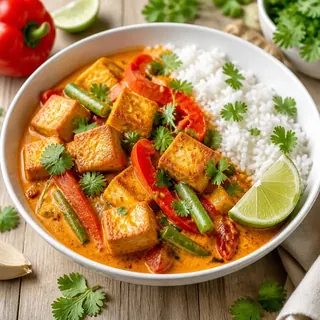
Curry paste: pound, then fry

Lemongrass, galangal, chilies and shallots hold their aroma oils inside tiny cells. Pounding in a mortar crushes those cells open, so the oils and juices mix into one paste. A blender also works, with a splash of liquid to help the blades catch.
Fat carries the aroma
Many aroma compounds dissolve in fat far better than in water. Thai cooks simmer thick coconut cream until its oil seeps out, then fry the paste in that oil. The heat drives off raw water, cooks the garlic and shallot, and spreads the aroma through the fat.

Test yourself
Questions from the interactive lesson, with the answer and the why.
Why does a pounded curry paste smell stronger than the same ingredients chopped coarsely?
It breaks cell walls, so aromatic oils are released. Crushed cells free oils and juices that stay sealed inside coarse pieces.
True or false: A blender can never make a good curry paste, because blades can't break open plant cells.
False. Fast blades also rupture cells, and a little liquid helps them catch, so a blender is a fair substitute.
What went wrong? You stir raw curry paste straight into coconut milk. The curry tastes sharp and raw, with little aroma.
The paste was never fried in fat first. Frying cooks off raw edges and dissolves aroma compounds into the oil.
Fill the blank: Many aroma compounds in a curry paste dissolve best in ___, which is why we fry the paste.
Many aroma compounds in a curry paste dissolve best in fat, which is why we fry the paste. Oil dissolves these aroma compounds and spreads them through the dish.
How do you prep a lemongrass stalk for a paste?
Peel off the tough layers and slice the pale base thin. Thin slices of the tender base break down and release oils when pounded.